
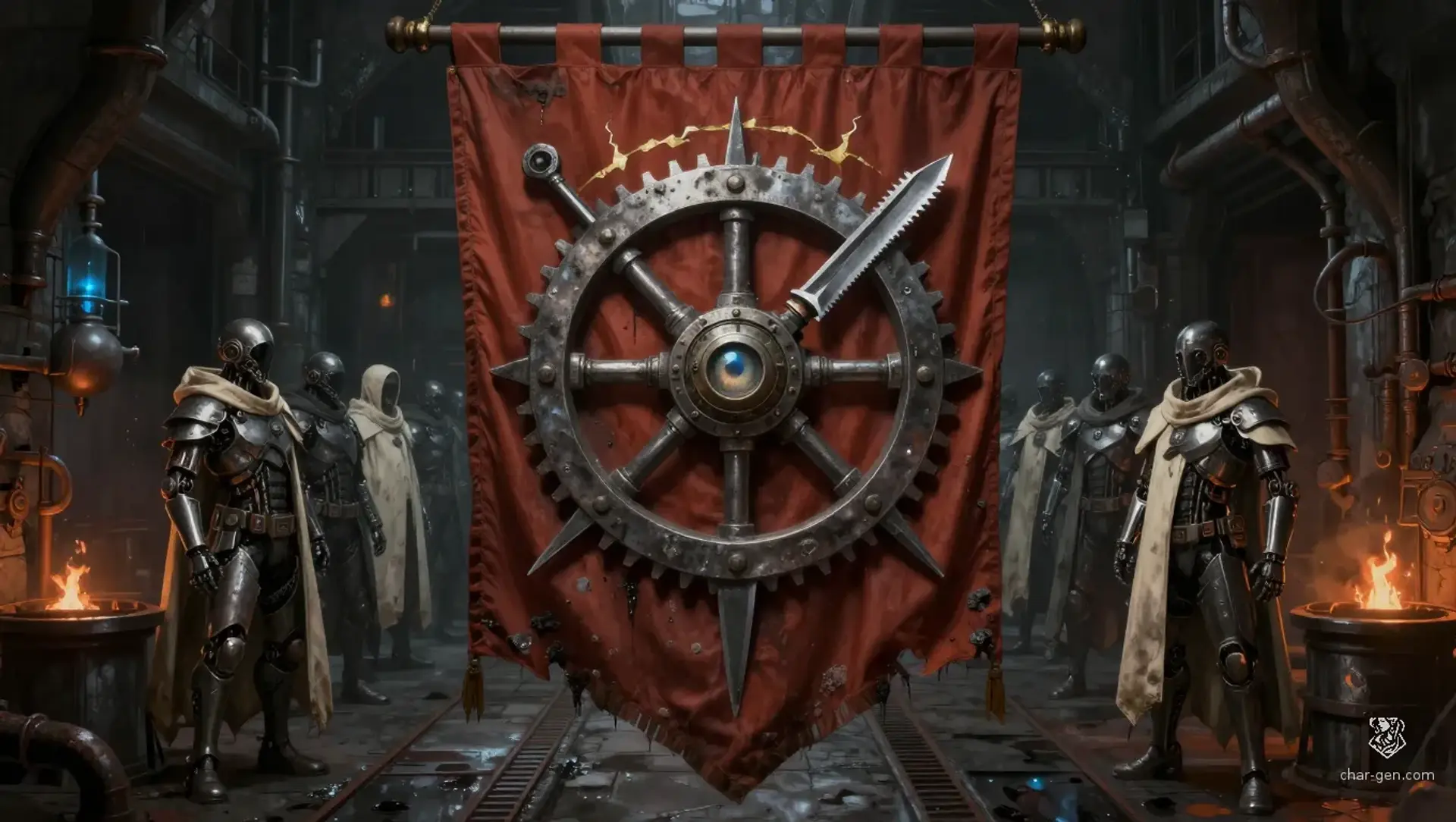
The Wheel Cabal
The Wheel Cabal's earliest records are scattered, but most scholars agree it emerged after the long wars that shattered the old kingdom roads. Its founders were not conquerors. They were salvage surgeons, dwarven artificers, and wreck-divers who noticed that every city that survived the chaos did so because it understood infrastructure better than heroism. They traded in repairs, prosthetics, and recovered weapons at first, then secretly built the first hidden workshops in abandoned cisterns and rail cuttings. For decades the Cabal grew as a quiet league of practical specialists. They earned their keep by curing siege rot, restoring aqueduct pumps, and adapting relic machinery that no one else could safely operate. Their reputation spread as useful but unsettling. Kings hired them. Priests denounced them. Bandit chiefs tried to extort them and vanished. The first major setback came in the Fracture Winter, when a supply network was exposed and six bases were burned. Many assumed the Cabal would collapse. Instead, the survivors learned compartmentalization, false routes, and dead-drop logistics. From then on, every base knew only fragments of the whole. The defining watershed moment was the Ashen Reassembly. Akashi, then known only as a radical physician-engineer, discovered that the Cabal's best minds were splintering into rival schools. Rather than mediate, he staged a ruthless consolidation. He opened sealed vaults, revealed forbidden prototypes, and used both charisma and terror to unify the faction under a new creed: research without restraint, efficiency without sentiment, progress without ethical delay. The resulting purge removed idealists, elevated hardliners, and transformed the Cabal into a technocratic paramilitary order. Since then, the Wheel Cabal has expanded by hidden outposts, covert recruitment, and predatory salvage campaigns. It has survived interdiction, betrayal, and several near civil wars between its own sects. Each crisis made it more secretive, more machine-bound, and more willing to treat people as systems. Today it moves through the wasteland like a rumor of iron, appearing where old things can be taken apart and the living can be improved, whether they consent or not.
Technocratic paramilitary research cabal · Pragmatic, amoral, authoritarian, and relentlessly inquisitive
The Wheel Cabal
“All things can be known. All known things can be used.”
Turn The Wheel Cabal into a sheet
A high-res, share-ready sheet you can post or print.