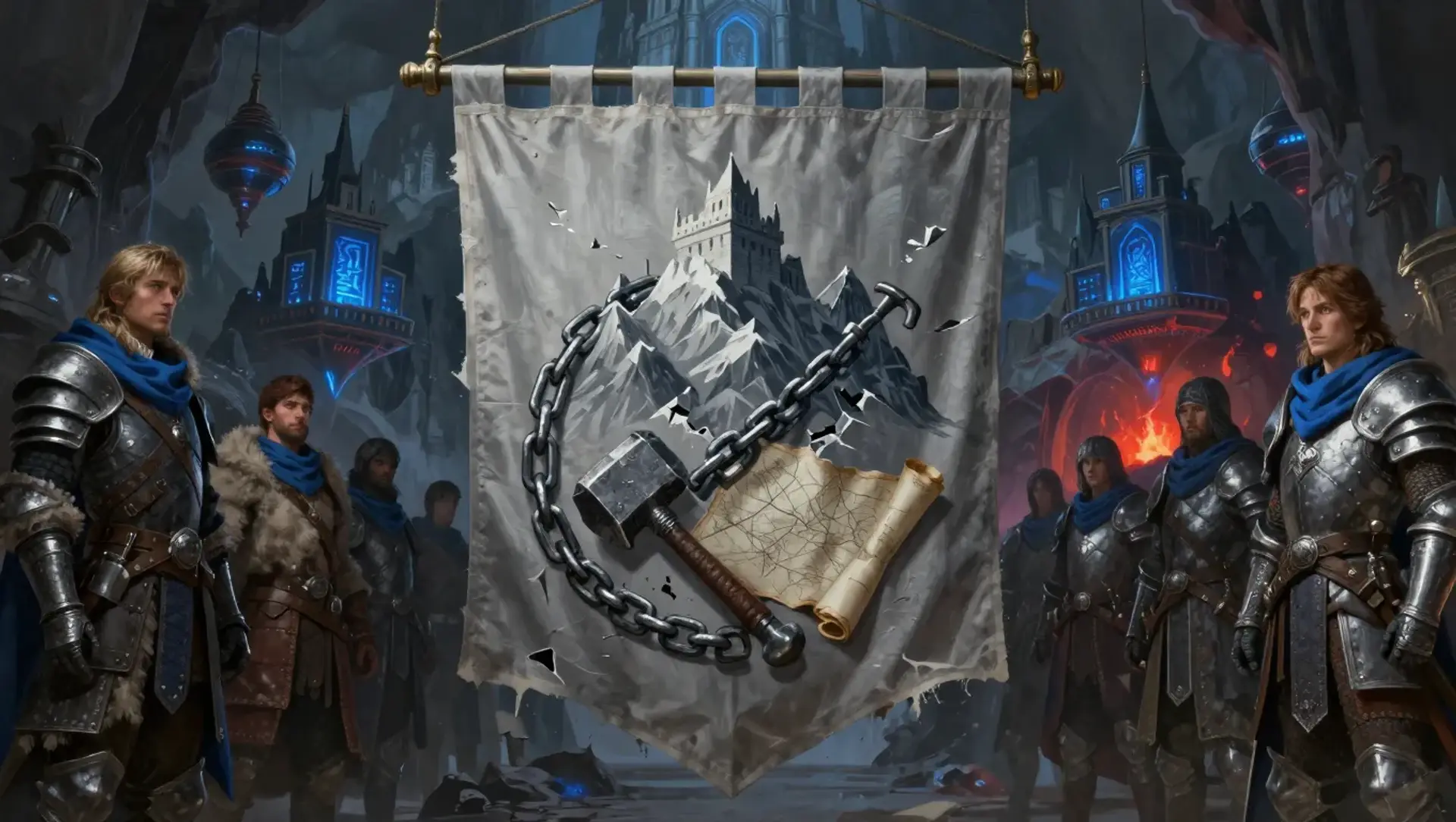
The Dwarves of the Citadels - AI-generated fantasy Faction

The Dwarves of the Citadels

The Citadels began as scattered dwarven refuges clinging to the Silver Marches after generations of raiders, cave-ins, and surface claims pushed them into isolation. For centuries they quarreled over water shafts, ore seams, and emergency tunnels until the Ashen Winter forced cooperation. During that catastrophe, a central granary collapsed, and Hadrin Voss organized a rescue chain that saved three citadels and condemned two others to be abandoned. The tragedy hardened them into a more unified people. In the decades that followed, they rebuilt the mountain network, codified tunnel law, and made their archive of maps sacred. Their greatest triumph came during the War of the Broken Passes, when they held a single ridge line against a coalition of invaders for eleven months by collapsing their own access roads and fighting from hidden galleries. Their greatest setback came later, not in war but in peace, when human settlement expanded into the valleys below and began issuing deeds over old grazing paths, timber rights, and mineral claims that the dwarves considered already spoken for by custom and use. The citadels refused to recognize such deeds, and that stance became central to their identity. The watershed moment that shaped the modern faction was the Night of Brass Seals. A human magistrate arrived with forged imperial authorization and tried to seize the Lower Tunnels by law and force. The citadels exposed the forgery, but only after an ugly skirmish that killed innocents on both sides. Afterward, reformers argued for diplomacy and written accords, while hardliners insisted that any paper could be faked and only stone, labor, and blood were real. The compromise created the modern faction: outwardly orderly and legally meticulous, inwardly suspicious, divided, and prepared to defend its claims at any cost.

The Dwarves of the Citadels

Mountain citadel confederation · Lawful neutral with pragmatic, factional subcurrents that can lean lawful good, neutral, or hard pragmatism depending on the clan in question.

The Dwarves of the Citadels

Stone remembers what paper forgets.

TypeMountain citadel confederation
SizeLarge, with roughly 8,000 to 1…
InfluenceRegional power with strong loc…
WealthComfortably wealthy in stone,…
AlignmentLawful neutral with pragmatic,…
AgeAncient, with its current form…

Chronology

The Citadels began as scattered dwarven refuges clinging to the Silver Marches after generations of raiders, cave-ins, and surface claims pushed them into isolation. For centuries they quarreled over water shafts, ore seams, and emergency tunnels until the Ashen Winter forced cooperation. During that catastrophe, a central granary collapsed, and Hadrin Voss organized a rescue chain that saved three citadels and condemned two others to be abandoned. The tragedy hardened them into a more unified people. In the decades that followed, they rebuilt the mountain network, codified tunnel law, and made their archive of maps sacred. Their greatest triumph came during the War of the Broken Passes, when they held a single ridge line against a coalition of invaders for eleven months by collapsing their own access roads and fighting from hidden galleries. Their greatest setback came later, not in war but in peace, when human settlement expanded into the valleys below and began issuing deeds over old grazing paths, timber rights, and mineral claims that the dwarves considered already spoken for by custom and use. The citadels refused to recognize such deeds, and that stance became central to their identity. The watershed moment that shaped the modern faction was the Night of Brass Seals. A human magistrate arrived with forged imperial authorization and tried to seize the Lower Tunnels by law and force. The citadels exposed the forgery, but only after an ugly skirmish that killed innocents on both sides. Afterward, reformers argued for diplomacy and written accords, while hardliners insisted that any paper could be faked and only stone, labor, and blood were real. The compromise created the modern faction: outwardly orderly and legally meticulous, inwardly suspicious, divided, and prepared to defend its claims at any cost.

Founder’s Story

The faction began after the Ashen Winter, when a chain of collapses, raids, and famine shattered the old holdfasts scattered across the Silver Marches. A veteran stone-lord named Hadrin Voss gathered survivors from seven isolated citadels and forced them to share grain, tunnels, and forgefire. His defining act was not conquest but refusal: when a human crown sent surveyors and deed-grants to claim the recovering valleys, Hadrin publicly burned the papers in the Gate Forge and declared that stone remembers labor, not parchment. That moment became the faction's founding myth. The citadels swore a common oath, bound their tunnel maps into a single archive, and formed a confederation to defend what they considered inherited from craft, blood, and endurance rather than titles. Over time, their alliance grew from a wartime compact into a living culture of measured speech, record-keeping, and hard-edged independence.

The Mechanism of Intent

Public Goals
  • Protect the mountain roads and settlements from raiders and collapse.
  • Preserve ancient dwarven holds and the labor of generations.
  • Maintain fair trade across the Silver Marches.
  • Prevent conflict by respecting hard boundaries and practical agreements.
  • Secret Goals
  • To force a regional reckoning that would replace deed law with use-right law across the Silver Marches.
  • To secure undisputed control of the deepest water table beneath the mountain range.
  • To find and permanently erase the archival proof that one founding citadel was purchased through coercion and fraud.
  • To ensure no single external power can ever map the full tunnel network.
  • Current Objectives
  • Prevent outside powers from forcing deed-based property law onto mountain lands.
  • Keep the citadels supplied through a coming winter while holding disputed passes.
  • Recover or destroy a lost charter-stone that could be used to challenge their border claims.
  • Contain political fractures between traditionalists, merchants, and isolationists.
  • Secure the unfinished lower vaults before a buried threat wakes fully.
  • Long-Term Vision

    To transform the scattered mountain holds into an enduring dwarven commonwealth that controls its own roads, mines, and waterworks without needing permission from surface powers, while preserving enough independence that no outside crown can legally or economically corner them again.

    StructureConfederated citadel alliance
    SuccessionThe Stone-Moot High Speaker is chosen by a weighted vote of the Forge-Lords, Clan Speakers, and Archive-Keepers after public debate, with emergency succession allowed if the current speaker dies or is incapacitated. Citadel lords usually inherit by clan tradition, but the moot can reject a successor if they are judged reckless, corrupt, or too tied to outside interests. This creates constant maneuvering among heirs, sponsors, and rival clans.

    Leadership

    Lady Brunna Stoneveil Stone-Moot High Speaker

    Calm under pressure, pragmatic, courteous to outsiders, and merciless toward anyone she believes is endangering the citadels.

    Lady Brunna Stoneveil Stone-Moot High Speaker

    Patient, exacting, deeply observant, and capable of abrupt steel when cornered.

    Thane Orsik Deepforge Forge-Lord of Deepforge Citadel

    Proud, formal, brilliant with strategy, and quietly vindictive.

    Mira Emberquill Archive-Keeper and reform advocate

    Sharp-tongued, inventive, restless, and idealistic in a way that can become dangerous.

    Captain Tharn Coalwatch Commander of the Stoneward

    Disciplined, grim, suspicious, and unsettlingly calm in crises.

    Visual sheet

    Turn The Dwarves of the Citadels into a sheet

    A high-res, share-ready sheet you can post or print.

    Gallery

    No images yet. Click to add.

    Relationships