
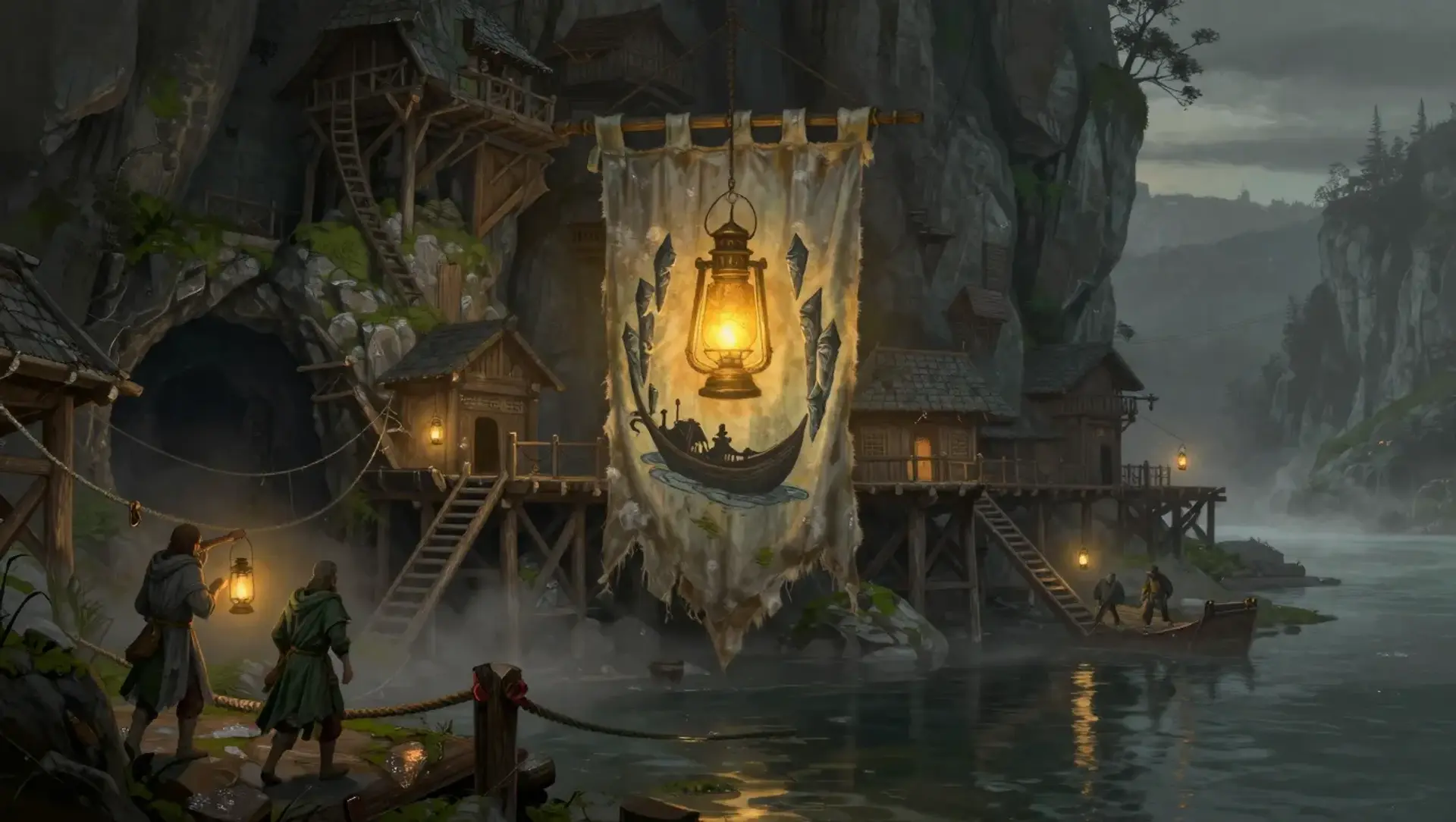
Jalanthar
After the war destroyed the original river hamlet, the survivors rebuilt in stages. First came the cave shelters, then the hidden moorings, then the wharf-town above. In the early years, Jalanthar was infamous for turning away strangers with one hand while feeding them with the other, a contradiction born from fear and compassion in equal measure. They survived several raids by disappearing into the cliffs, but each success taught neighboring powers that Jalanthar was hard to conquer and useful to pressure. Trade grew. So did corruption. A generation later, the town was pulled apart by the Salt Ledger Scandal, when it was discovered that several merchants had been selling false cargo records to avoid tribute and to mask weapons shipments. The scandal nearly fractured the settlement into rival households. It was only after the Black Flood Year, when those same merchants helped rescue refugees alongside ordinary dockworkers, that the town found a new identity: not innocent, not united, but bound by the belief that survival could be organized. Since then, Jalanthar has become a place of wary discipline, civic memory, and constant compromise. Every family knows which caves are safe, which ferryman can be trusted, and which smile means a deal is about to become dangerous.
frontier settlement and river compact · Pragmatic good with hard edges. Jalanthar genuinely protects its own, but it will lie, smuggle, and cut deals if survival demands it.
Jalanthar
“We endure, we remember, we return.”
Turn Jalanthar into a sheet
A high-res, share-ready sheet you can post or print.