
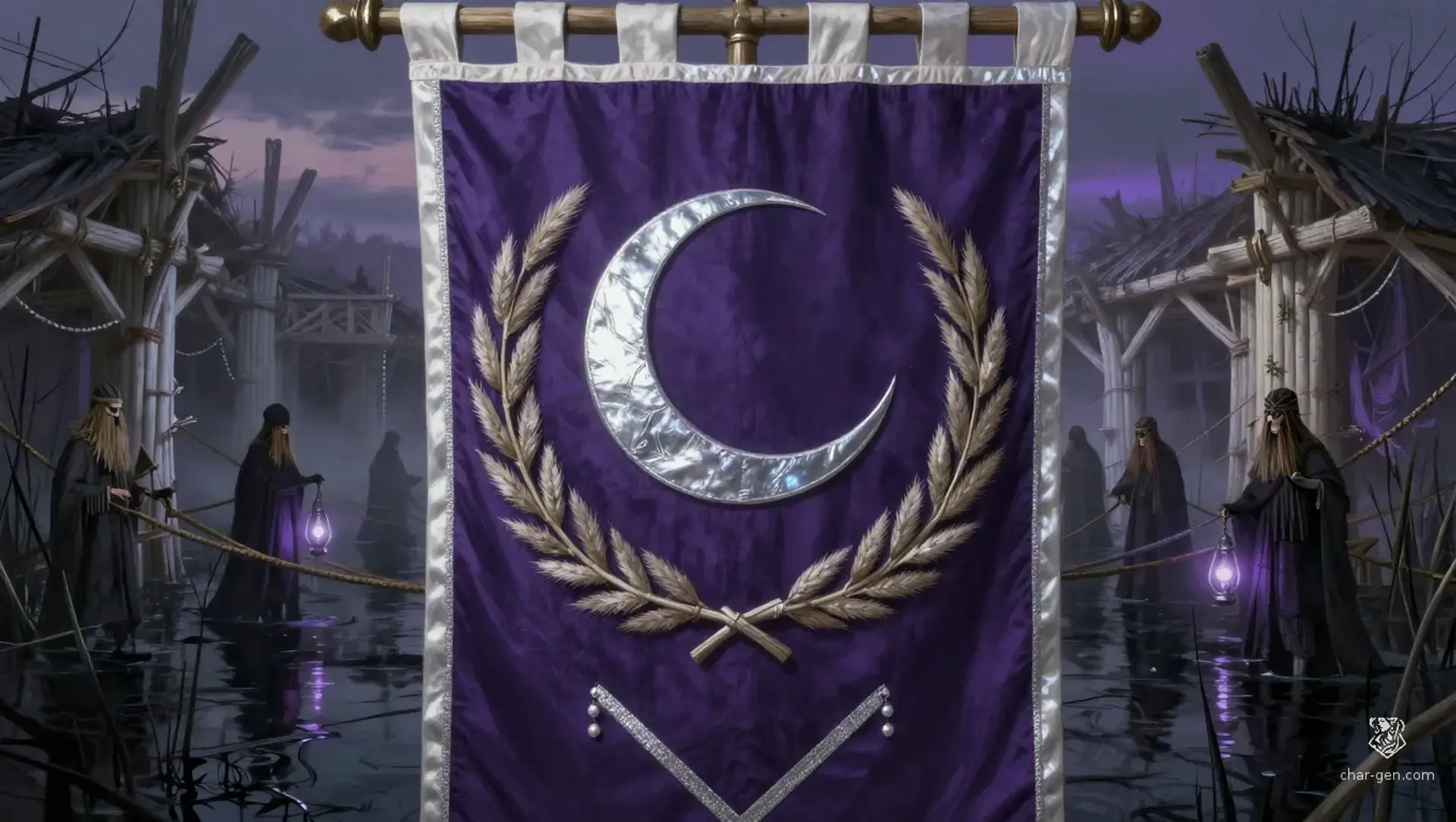
The Hollow Lantern Covenant
After its founding in the Sable Thaw, the faction first existed as mobile aid circles that moved with the flood cycle, carrying medicines, burial cloth, and coded song-maps. During the next fifty years they became indispensable to isolated Moonmold settlements, then dangerous to neighboring powers because they could move people without permits and preserve histories that tax collectors wanted erased. Their first era of growth ended in the Marsh Ledger Purge, when a coalition of landholders seized their records and executed three archive-knotters. In response, the faction abandoned centralized paper archives and began encoding law, ancestry, and route knowledge into wax, beadwork, tattoo, and living oral recitation. This made them harder to destroy and far more mysterious. The Ember Reed Night later transformed them from a hidden mutual-aid web into a political force, because survivors from many settlements swore common cause after the burning of Hollow Lanterns. In the last two decades they have expanded beyond the marshes into river cities, plague districts, and border baronies, where they operate as healers, interpreters, and discreet problem-solvers. That expansion brought wealth and influence, but also moral compromise, internal schisms, and a constant danger that they will become the kind of institution they once feared.
Diasporic covenant, ritual mutual-aid network, covert sanctuary fraternity · Pragmatic, factional, and morally mixed. Its public face leans lawful-neutral, while its inner circles range from compassionate idealists to ruthless occult conservatives.
The Hollow Lantern Covenant
“We remember what the flood tries to take.”
Turn The Hollow Lantern Covenant into a sheet
A high-res, share-ready sheet you can post or print.