Harbormark - AI-generated fantasy Settlement

Harbormark

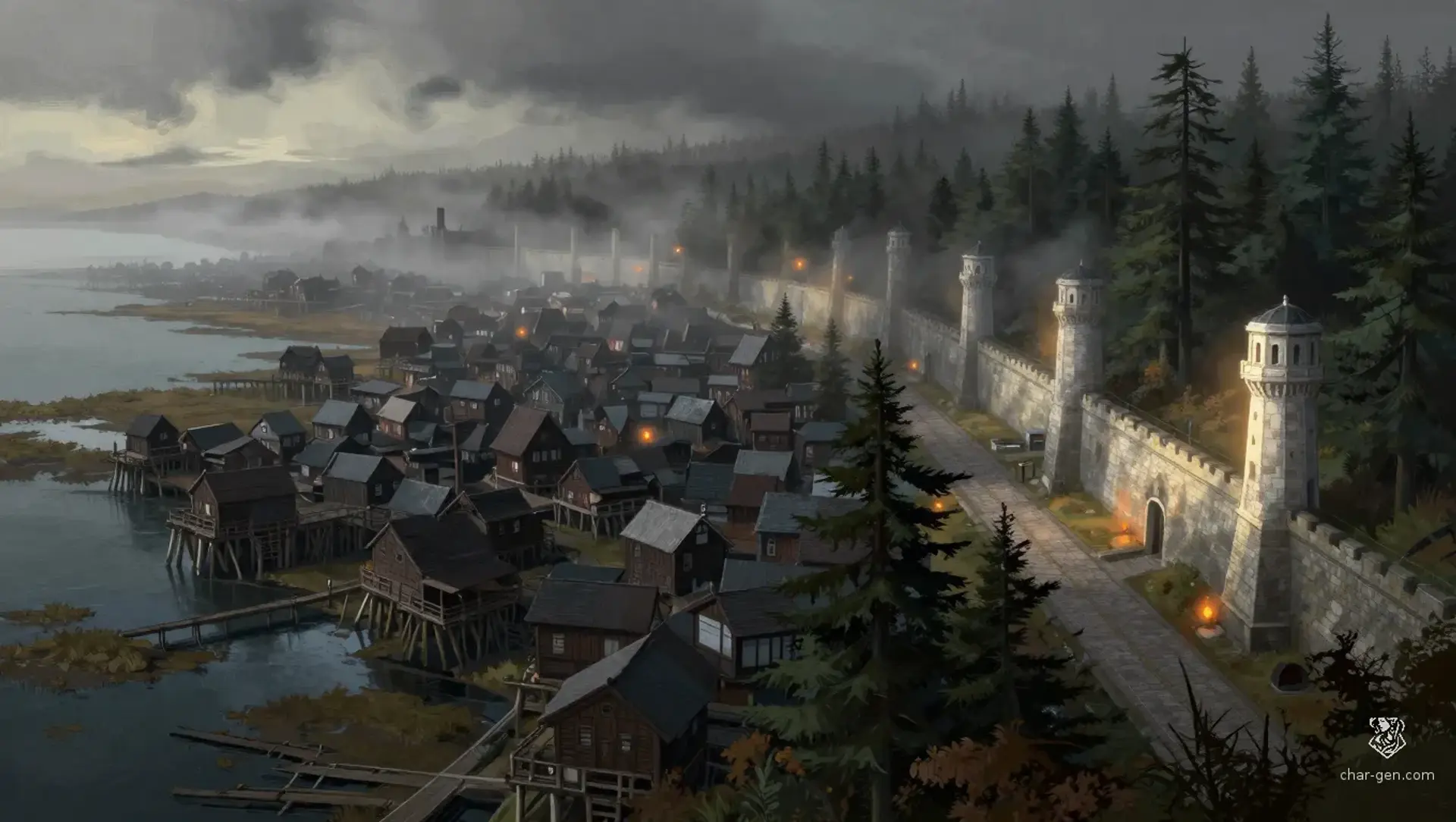
A large coastal metropolis built where the forest meets deep water, its wealth gathered from timber, fish, tar, and ship repair. The city is split between rough, crowded Old Town in the northwest and paved New City in the southeast. The hidden truth is that power here follows debt ledgers more than law. Whoever controls old obligations can command docks, elections, and evictions without drawing a sword.

Metropolis

Harbormark

A harbor city where the rich live behind stone and the poor live inside the paperwork.

TypeMetropolis
PopulationAbout 42,000 permanent residents, with another 6,000 sailors, laborers, and seasonal woodsmen moving through in busy months
WealthWealthy on the surface, with sharp inequality underneath
GovernmentChartered city under a lord mayor and harbor council
ReadinessHigh on paper, uneven in practice. New City can field disciplined patrols quickly, but Old Town holds most of the population and knows every alley, cellar, and crawlspace. The city is prepared for riots and smugglers, less so for a coordinated strike from the docks or forest roads. The watch can react fast in the southeast and is often too slow, or too bribed, in the northwest.
A large coastal metropolis built where the forest meets deep water, its wealth gathered from timber, fish, tar, and ship repair. The city is split between rough, crowded Old Town in the northwest and paved New City in the southeast. The hidden truth is that power here follows debt ledgers more than law. Whoever controls old obligations can command docks, elections, and evictions without drawing a sword.

A wet, busy harbor city where pine resin, tar, and salt hang in the air. The northwestern Old Town is crowded, loud, and half in shadow from the forest edge, while the southeastern New City has straight streets, stone drains, and watchtowers that pretend order is stronger than hunger. Everyone knows the city survives because timber, fish, and debt keep moving. Everyone also knows those things are easiest to steal.

Gallery

No images yet. Click to add.

Connections

Geography

RegionA coastal forest mouth where a broad river or sheltered bay meets old pinewoods and logging routes.
ClimateCool maritime climate with frequent rain, sea fog, and damp winters. Storms drive ships onto the coast in autumn, while summer brings mist off the water and mosquitoes from the marshy forest edge.
TerrainHarbor quays to the northwest, low hills and warehouses through the middle, and higher, better-drained stone streets in New City to the southeast. The forest presses close on the landward side, and much of Old Town was built by filling marsh and clearing trees, which makes the ground uneven and prone to sinkholes.
Travel Links
Northwestern docks connect to coastal trade routesForest roads run inland to logging camps and shrine clearingsA stone causeway leads southeast to inland farms and the duke’s roadShallow ferry crossings serve the outer bay

Culture

People respect usefulness more than virtue. A person who can keep a boat moving, a saw sharp, or a debt from souring is forgiven almost anything. New City values order, stone, and written terms. Old Town values loyalty, leverage, and the ability to survive winter. The city praises law in daylight and compromise after dark, and most citizens have learned the difference between justice and settlement terms.

Races
HumansElvesDwarvesHalflingsHalf-orcs
Religions
Alder's Lantern, god of roads and safe returnThe Tide Mother, honored by fishers and dockhandsThe Green Saint, patron of the deep forest and honest cuttingThe Silent Saints, a civic cult of witnesses and sworn oaths
Arts & Entertainment

Songs are working songs, dock plays, and ballads about forest roads gone wrong. New City patrons favor clean glass, carved bone, and formal music in counting halls. Old Town prefers drums, dice, and rude puppet shows that name living officials. Public performances often double as gossip delivery, with half the audience listening for trade news, and the other half listening for who owes a blood debt.

History

Government

LeaderLord Mayor Halven Dorr, a polished administrator who talks like a judge and panics like a merchant. He is intelligent, vain, and deeply dependent on the Ledger House for information. He wants order, but he cannot decide whether the city’s biggest threat is crime in Old Town or the people who finance his authority. His flaw is hesitation disguised as caution.
Chartered city under a lord mayor and harbor council
Key Laws
All dock leases must be witnessed by a licensed clerkNo building may extend over public drains in New CityForest timber may not be cut above the seasonal quotaArmed brawls in the marketplace are punished by bond labor or coin forfeitureDebt contracts signed before a notary are binding unless overturned by council vote
Problems
The city needs Old Town working, but every attempt to tighten control makes the streets angrier.

Old Town is large enough to riot and organized enough to resist, but the council still treats it like a problem of sanitation and policing. Food prices are climbing, dock rents are overdue, and the Ashcutters are threatening to shut the northwestern quays unless debt seizures stop. One bad week could turn a labor dispute into open street war.

The paperwork itself has become a weapon, and nobody trusts the man in charge to admit it.

The harbor ledger has been altered by someone with high access, and the changes favor dead merchants, disputed heirs, and a handful of New City contractors. If exposed, the city’s elections, evictions, and tax claims may unravel. If ignored, the same forged entries will quietly transfer entire blocks to new owners.

Economy

Industries
ShipbuildingLoggingFishingWarehouse tradeLedger financeDock labor
Scarcity

Grain is always tight, and dry timber is treated like wealth. Good housing is scarce in Old Town, while honest credit is scarce everywhere. A poor family may have work, but not enough coin to escape debt, and a merchant may have coin, but not the leverage to move a single crate without the harbor clerks noticing.

Wealth LevelWealthy on the surface, with sharp inequality underneath
Exports
Masts and ship timberTar and pitchSalt fishFinished ropeCask stavesHarbor charts
Imports
GrainIron nails and toolsWineFine clothLamp oilTemple goods

Defenses

ReadinessHigh on paper, uneven in practice. New City can field disciplined patrols quickly, but Old Town holds most of the population and knows every alley, cellar, and crawlspace. The city is prepared for riots and smugglers, less so for a coordinated strike from the docks or forest roads. The watch can react fast in the southeast and is often too slow, or too bribed, in the northwest.
Fortifications
Stone walls around New CityTimber palisades and chained dock gates in Old TownSignal towers facing the coastWatch barges anchored off the northwestern docks
Harbor Watch(about 600 sworn, with 200 more militia available on short notice)

A mixed city watch of armored patrols, dock wardens, and a small militia of shipwrights and coopers called up in emergencies. They are competent in formation, but their loyalty is split between the lord mayor, the harbor ledgers, and the employers who actually pay the late watches.

Law & Order

crime Level
High in Old Town, moderate in New City, with smuggling treated as normal commerce if it pays the right hands
enforcement
The Harbor Watch patrols New City and the main quays, while dock wardens, informants, and paid toughs keep Old Town under uneven control. Arrests are often negotiated after the fact, and the ledger office can make a criminal disappear into debt labor or make a debt vanish into a favor.
typical Punishment
Fines in gold pieces, confiscation of goods, bond labor on the docks, or temporary confinement in the harbor cells

Calendar of Events

Visual sheet

Turn Harbormark into a sheet

A high-res, share-ready sheet you can post or print.