
The Grand Arena
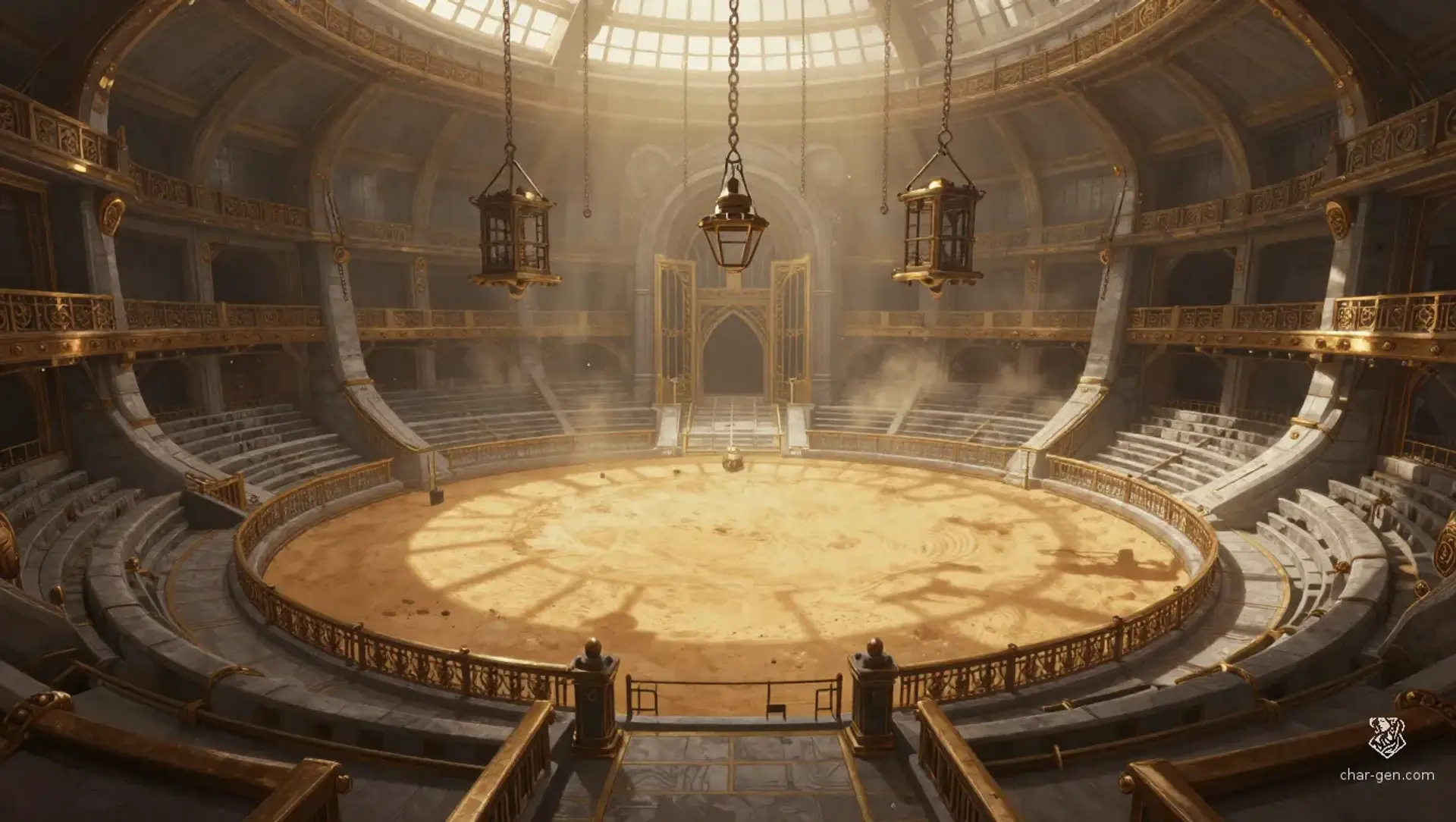
The Grand Arena is the city's largest public spectacle house, a colossal circular pit surrounded by polished stone seating, bronze railings, and wide processional gates. Officially, it hosts trials, contests, and civic celebrations. In practice, it is where the condemned are thrown into ritual combat, where the dead are harvested and raised, and where the city feeds the hidden chittering folk below in exchange for labor, silence, and the continued removal of corpses. Every surface is clean, every corridor swept, and every mechanism maintained with obsessive care, because this place is not a ruin or a memorial. It is a working machine for death, spectacle, and survival.
The Grand Arena
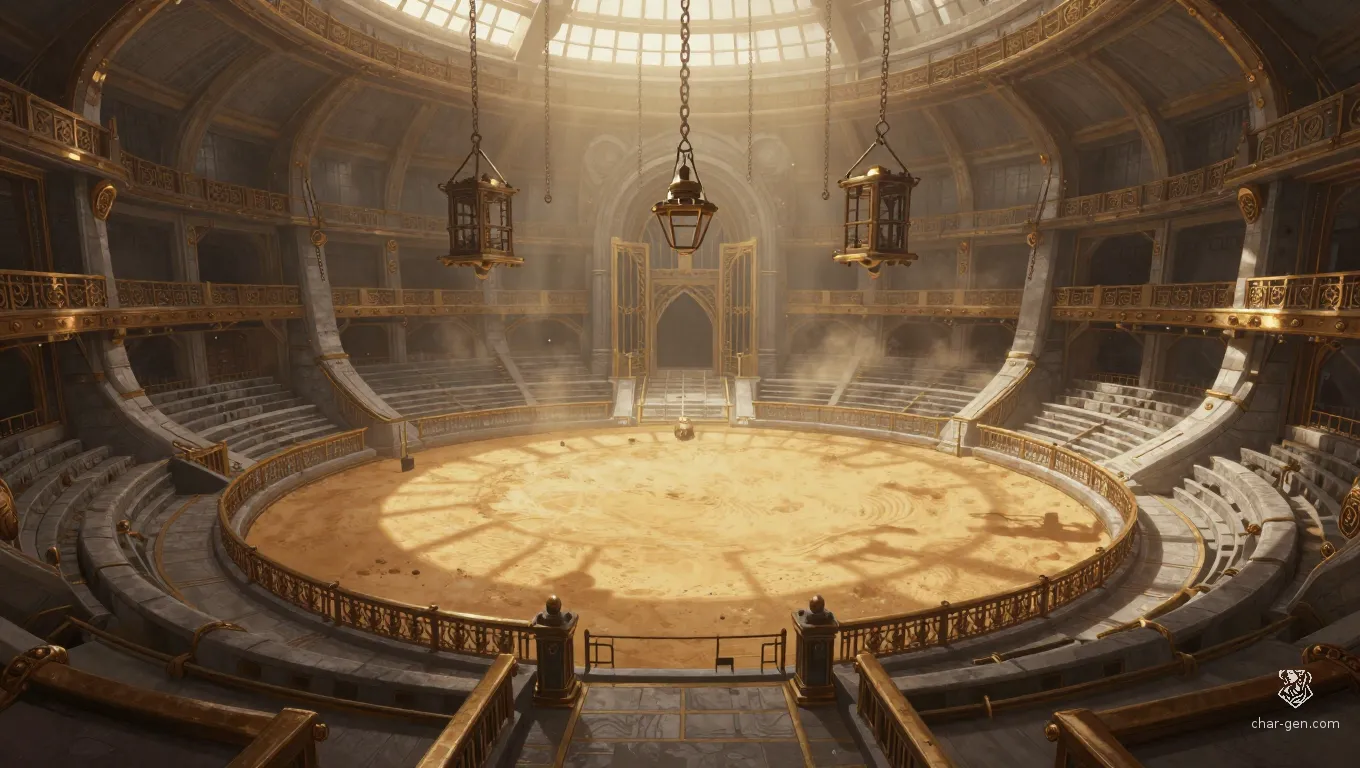
Loud, tense, and strangely orderly, with the smell of dust, blood, oil, and hot bread drifting over everything. Even when the stands are full of cheering people, the place feels watched, like the building itself is counting breaths and waiting for the next body to fall.
The Grand Arena is the city's largest public spectacle house, a colossal circular pit surrounded by polished stone seating, bronze railings, and wide processional gates. Officially, it hosts trials, contests, and civic celebrations. In practice, it is where the condemned are thrown into ritual combat, where the dead are harvested and raised, and where the city feeds the hidden chittering folk below in exchange for labor, silence, and the continued removal of corpses. Every surface is clean, every corridor swept, and every mechanism maintained with obsessive care, because this place is not a ruin or a memorial. It is a working machine for death, spectacle, and survival.
Pragmatic, ruthless, and publicly respectable. The true control of the arena is shared by magistrates, sponsors, and buried agreements, but all of them value profit and order over compassion.
History
Arena Games and Death Matches
The arena's public blood sport is only part of its use. Each week, condemned prisoners, debtors, raiders, and selected volunteers are marched into the sand under heavy guard. The fights are staged to be seen from every tier of the stands, with trumpet calls, drumbeats, and shouted odds. The rules are simple enough for the crowd to follow and cruel enough to keep them coming back. Weapons are allowed, but most bouts begin with shackles still on the fighters' wrists, or with one combatant given a handicap for the sake of drama. Matches rarely end at first blood. The crowd wants a show, and the officials know it.
The Lower Tunnels
Beneath the arena lies a maze of drain channels, ash pits, holding cells, and meat hooks. The lowest tunnels are shared with the chittering folk, a pale underclass of tunnel-dwellers who live on scraps, marrow, and what the arena can provide. They collect the dead after each bout, strip armor and valuables, and feed the remains to hidden hoppers and root vats. In exchange, they keep the pipes clear, the corpse-pens organized, and certain secrets buried. Outsiders rarely see them, and those who do usually leave believing they saw rats in lantern light.
Records and Sentences
The arena keeps careful records of every condemned fighter, every purchased slave, every revived corpse, and every delivery sent below. Names are painted on slate boards near the gates, along with the cause of sentencing, the sponsor of the match, and whether the body was claimed for reanimation. This ledger is not only for bookkeeping. It is also a warning system, a political tool, and a source of leverage. A skilled clerk can ruin a noble, free a prisoner, or hide a death from the city by altering one line and one seal.
The Dead Returned
The arena's healers, corpse-handlers, and grave-priests maintain a grim ritual after each day's bloodshed. The dead are sorted by condition. Some are burned. Some are buried in the arena's crypt. Some are stitched, branded, and raised to serve in the next spectacle or in labor below. The rite is never called necromancy in public. The officials prefer words like restoration, sanction, and public duty. The crowd knows better, but as long as the show continues and the price of food stays low, most people choose not to ask where the risen go when the torches go out.
Denizens
Pragmatic, ruthless, and publicly respectable. The true control of the arena is shared by magistrates, sponsors, and buried agreements, but all of them value profit and order over compassion.
A broad-shouldered arena master who speaks with calm precision and never raises his voice unless someone is about to die. He believes order is mercy and that spectacle keeps the city stable.
A sharp-eyed woman who oversees the corpse registry and keeps the public records tidy. She is polite, efficient, and dangerous if cornered, since she knows exactly which names were meant to disappear.
An old priest who blesses the dead, oversees sanctioned reanimation, and insists the risen are still part of the city's sacred duty. Whether he believes this or only says it is hard to tell.
A small, masked chittering liaison who delivers supplies requests from below and negotiates for fresh meat, bones, and salvage. It is unnervingly patient and understands more Common than it admits.
Rumors & Plot Hooks
- 1.Some condemned fighters are given winning odds on purpose so the crowd will never know who is supposed to survive.
- 2.A hidden gate beneath the pit opens into older tunnels that even the arena master claims not to know about.
- 3.The chittering folk can identify which corpses are safe to raise and which ones carry something dangerous from below.
- 4.A noble family once tried to shut the arena down, and their heirs still pay in secret for a match every year.
- 5.Not all of the dead returned from the arena are truly dead, and some of them remember being below ground before they ever reached the sand.
- 6.There is a sealed chamber under the lowest tunnels where the first bargain with the chittering folk was written on metal plates.
Classified Entry
Beneath the corpse vaults is a sealed feeding chamber where select prisoners are not killed in the arena at all. They are taken below, drugged, and used to sustain the chittering folk and whatever older thing lives deeper in the tunnels. The public dead are only the visible part of the bargain.
Turn The Grand Arena into a sheet
A high-res, share-ready sheet you can post or print.