
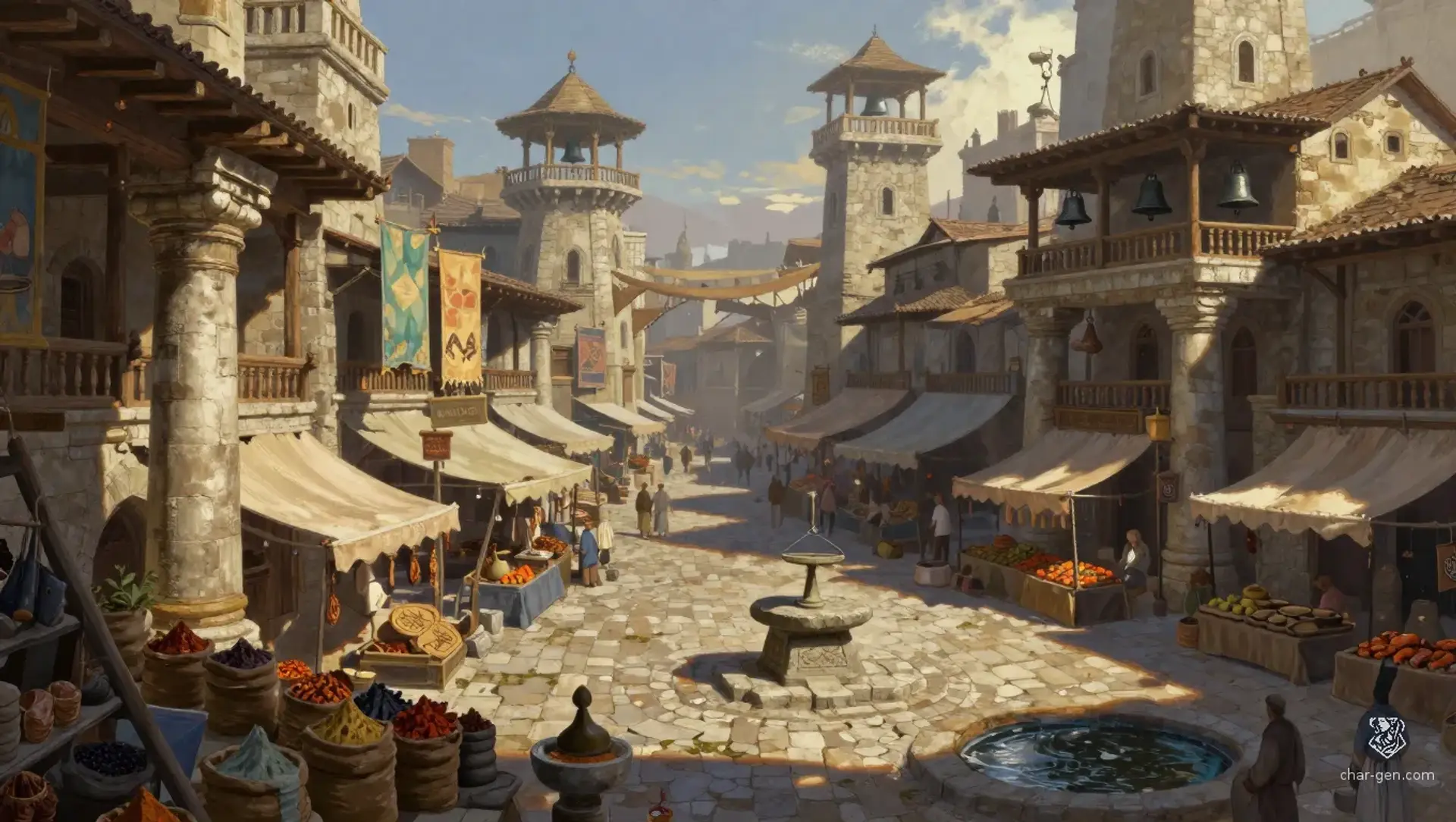
The Silver Market
The Silver Market is a grand open-air bazaar packed beneath old awnings, leaning signs, and stone colonnades worn smooth by years of foot traffic. It sprawls across several city blocks, with permanent shops on the edges and rows of movable stalls filling the center. Despite peeling paint, cracked paving, and sun-faded banners, it remains the beating heart of local trade. Merchants from nearby farms, river towns, and distant roads bring food, tools, cloth, charms, and curios here every day, making it the best place in town to find supplies, hire help, or hear what the city is whispering about.
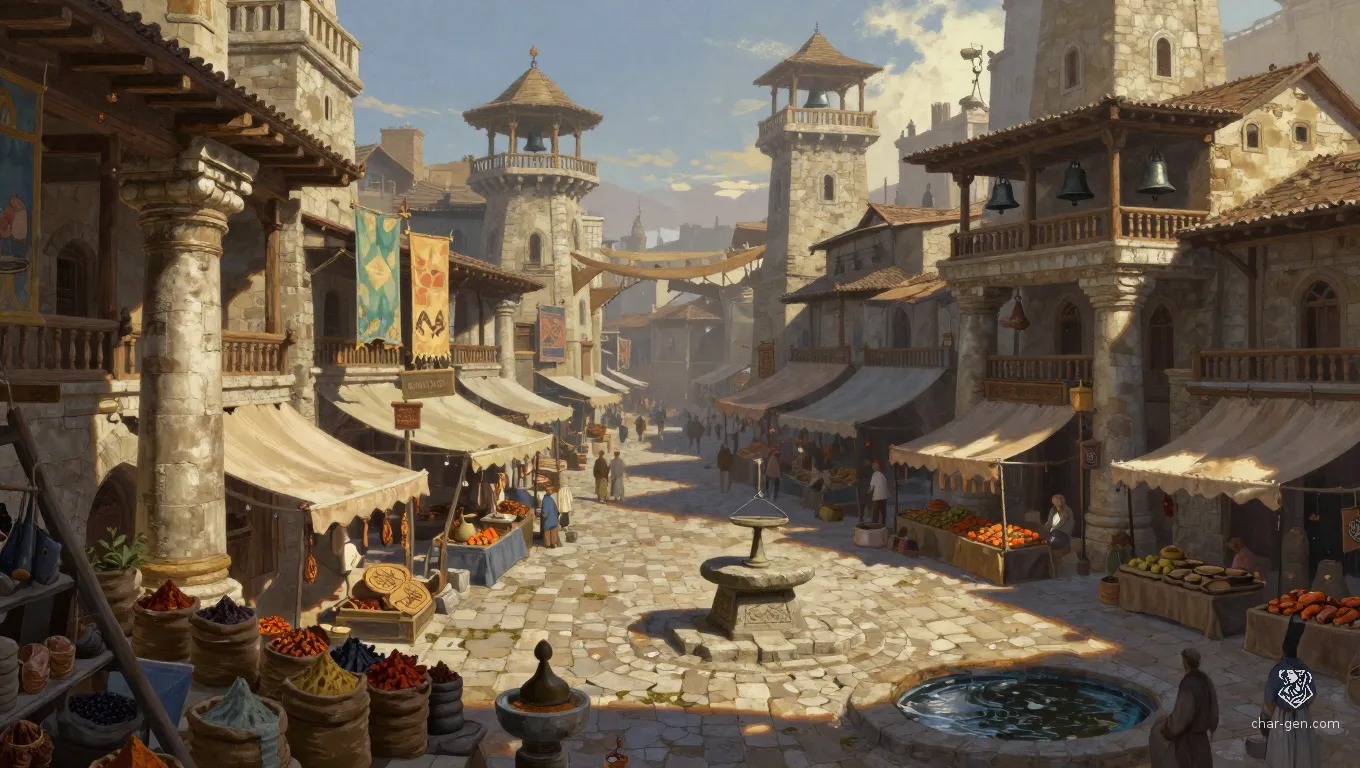
The Silver Market
Busy, loud, and weathered, with the smell of spices, wet rope, horse sweat, and roasted meat hanging over constant bargaining and shouted greetings
The Silver Market is a grand open-air bazaar packed beneath old awnings, leaning signs, and stone colonnades worn smooth by years of foot traffic. It sprawls across several city blocks, with permanent shops on the edges and rows of movable stalls filling the center. Despite peeling paint, cracked paving, and sun-faded banners, it remains the beating heart of local trade. Merchants from nearby farms, river towns, and distant roads bring food, tools, cloth, charms, and curios here every day, making it the best place in town to find supplies, hire help, or hear what the city is whispering about.
Disciplined, fair, dryly humorous, and impossible to bully
History
Market Layout and Trade Lanes
The bazaar is organized into broad lanes around a central square, with permanent stalls along the outer arcades and rented tables in the open air. Goods are sorted by trade rather than by class, so one street may hold cloth, dyes, and ribbons while the next sells nails, grain, tools, and cured meat. Bargaining is expected, but open cheating is frowned on by the stall wardens and usually settled with fines or a public apology.
Fees, Licenses, and Services
Most merchants pay a daily stall fee to the market clerk, with higher fees for covered space, prime corners, and storage access. Travelers can rent lockboxes, weighing tables, and guarded wagons in the north yard. A small tithe from every sale supports street cleaning, lamp oil, and the watch posts that keep the place from turning into a thieves' den.
Common Goods and Special Stalls
The bazaar is known for its practical variety rather than rare luxuries. Common stock includes vegetables, fish, bread, leather goods, candle wax, simple tools, rope, medicines, salts, and everyday spell components. More unusual offerings appear on certain days, such as river pearls, foreign spices, carved bone charms, secondhand maps, and odd relics brought in by caravan or ship.
Rumor Trade and Street News
The market's best information comes from people who spend all day listening. Porters, weighers, spice sellers, and tea hawkers know which caravan arrived late, which noble is buying armor in secret, and which district is short on grain. A careful listener can learn a great deal here without ever entering a tavern.
Denizens
Disciplined, fair, dryly humorous, and impossible to bully
An efficient older woman who keeps the market running with ledgers, stern warnings, and a surprising talent for remembering debts. She dislikes chaos, loves punctuality, and can spot a fake permit at a glance.
A broad-shouldered former sailor who now oversees deliveries, loading crews, and warehouse keys. He speaks little, settles disputes with a look, and is quietly respected by the laborers.
A young tea seller with sharp ears and a habit of pretending not to listen. She knows who is buying what, who is lying, and which stall owner is hiding something worth hearing about.
A scarred watch captain assigned to keep order in the bazaar. He is practical, patient until he is not, and prefers warning someone once before dragging them off to the gatehouse.
Rumors & Plot Hooks
- 1.A spice merchant in the north row is quietly buying up lamp oil and iron nails for reasons he will not explain.
- 2.One of the covered stalls is said to have a hidden compartment beneath the floorboards left from an old smuggling ring.
- 3.A caravan from the east arrived missing two wagons, but the drivers refuse to say what happened on the road.
- 4.People claim the market bells ring by themselves on nights before a major theft or fire.
- 5.A beggar near the fish alley can identify noble seals and coinmint stamps better than some tax clerks.
Classified Entry
Beneath the old caravan yard is a sealed smugglers' tunnel that still connects to a forgotten drain under the city wall. Mira knows about it, but she keeps the entrance hidden because the tunnel is also the fastest way to move goods during riots or sieges.
Turn The Silver Market into a sheet
A high-res, share-ready sheet you can post or print.