
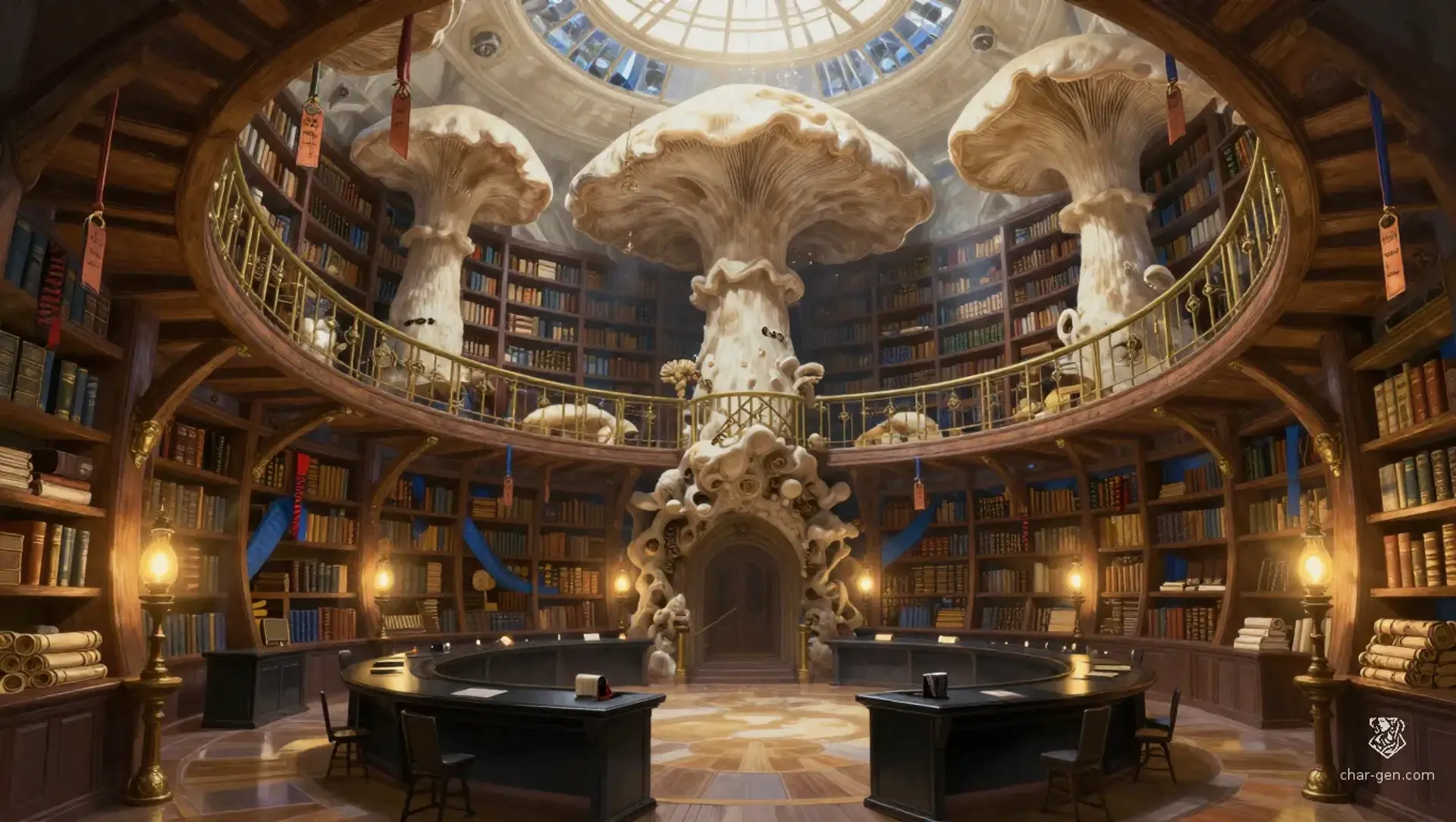
The Grand Library of Blackmarsh
The Grand Library of Blackmarsh is the world's central archive, a vast and ever-expanding repository of history, law, maps, letters, trade records, and chronicles gathered from every corner of the world. Built into a colossal mushroom structure chosen by the World Council as the most sustainable way to preserve the world's memory, it has been maintained in immaculate condition for millennia. Its halls are carefully guarded, endlessly cataloged, and expanded as new histories are written and old truths are uncovered.
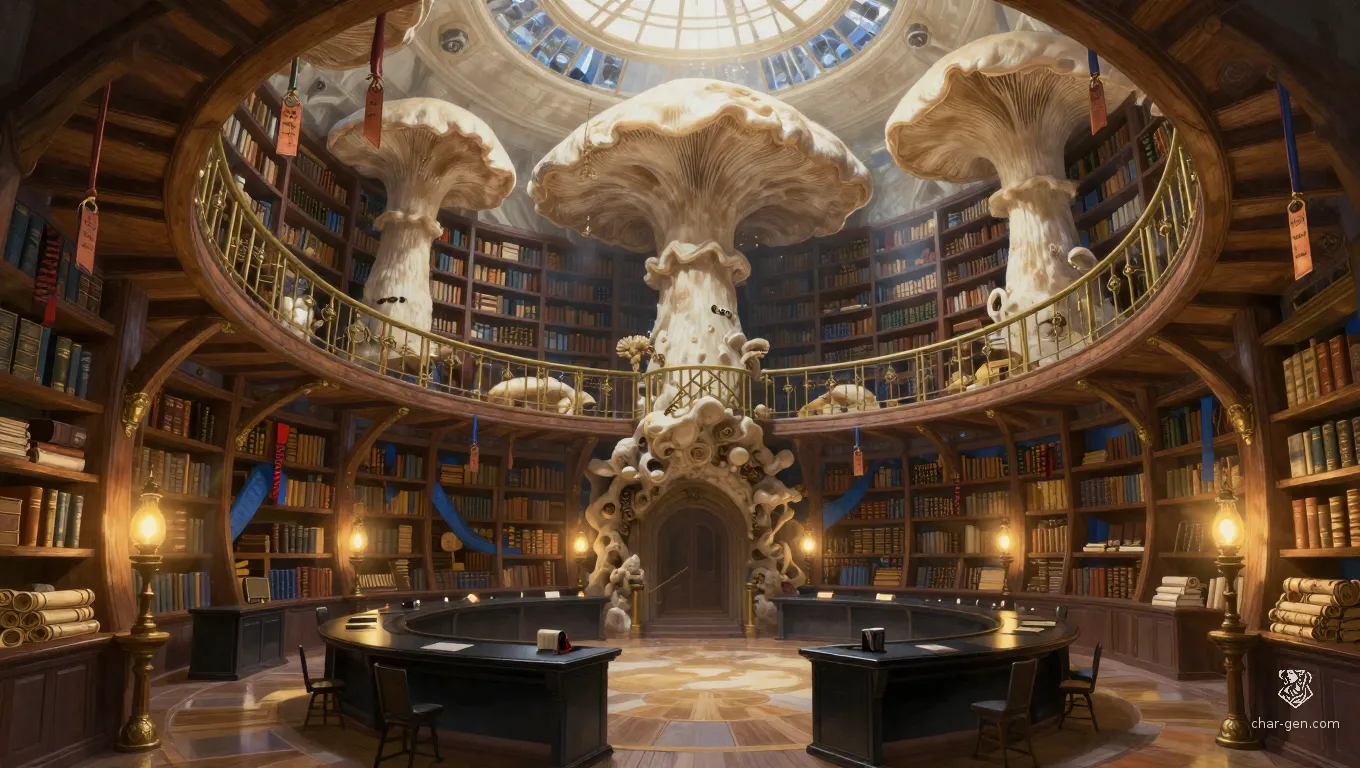
The Grand Library of Blackmarsh
Quiet, cool, and reverent, with the faint scent of wet earth, old paper, lamp oil, and drying ink. Even at full staff, the place feels controlled and watchful, like history itself is being guarded in silence.
The Grand Library of Blackmarsh is the world's central archive, a vast and ever-expanding repository of history, law, maps, letters, trade records, and chronicles gathered from every corner of the world. Built into a colossal mushroom structure chosen by the World Council as the most sustainable way to preserve the world's memory, it has been maintained in immaculate condition for millennia. Its halls are carefully guarded, endlessly cataloged, and expanded as new histories are written and old truths are uncovered.
Practical, cautious, and deeply protective of shared history
History
Rare Tomes
The Blackmarsh archive keeps the world's oldest and most useful records in broad, climate-stable halls beneath the main reading floors. The collection is organized by region, era, and subject, with color-coded shelf bands and clay tag markers for fast retrieval. Scribes are trained to copy fragile texts by hand before any repair work is done, and every volume is logged twice, once by catalog and once by witness seal.
Restricted Collections
Several wings are sealed behind iron lattice doors and require a signed writ from the World Council, a sworn archivist, or a sitting magistrate to enter. These rooms hold war records, forbidden rituals, bloodline ledgers, plague notes, and maps of places that no longer exist. Two wardens are posted at all times, and visitors are searched for ink, acid, fire, and spell focuses before they are allowed through.
Research Services
The archive employs teams of copyists, restorers, indexers, and shelf-runners who work in quiet shifts from dawn to midnight. Visitors may request guided research, translation help, or certified copies for legal disputes and trade claims. The most respected staff can track a family line, a ship route, or a lost treaty in a single afternoon if given enough clues and patience.
Maintenance and Growth
Because the building is a mushroom-grown structure, upkeep is a living craft. Caretakers tend the walls, prune growth channels, and replace softened support ribs with treated timber and stone braces. The archive uses controlled moisture, filtered lantern light, and scent wards to preserve parchment, while fungus-garden workers harvest the outer chambers for useful fibers, inks, and binding resins.
Denizens
Practical, cautious, and deeply protective of shared history
Head archivist of the Grand Library, she speaks softly, never wastes words, and can recall the location of nearly any document in the building. She trusts procedure, respects competence, and has little patience for theatrics.
A broad-shouldered warden captain who oversees the library's guards and restricted floors. He is courteous but unshakable, and treats every visitor as a possible thief until proven otherwise.
A young translator with ink-stained fingers and a sharp memory for dead languages. She is curious, eager, and often one discovery away from trouble.
An elderly preservationist who tends the living walls and fungal supports. He mutters to the building as if it were a stubborn old friend, and somehow the structure always seems to listen.
Rumors & Plot Hooks
- 1.A hidden chamber holds the first record ever written in the world, but no one can agree where it is or what language it uses.
- 2.Some visitors claim the library quietly edits certain histories overnight when a truth becomes too dangerous for public view.
- 3.The oldest mushroom walls can remember voices, and careful listeners may hear arguments from centuries ago.
- 4.A missing indexer vanished after discovering a sealed shelf that listed events that have not happened yet.
Classified Entry
Beneath the oldest vault lies a sealed root chamber containing a private index of altered and suppressed histories, created by early council members to prevent wars that the truth might have started. The chamber is hidden behind living walls that only open for a librarian holding the original council key and speaking the archive's founding oath.
Turn The Grand Library of Blackmarsh into a sheet
A high-res, share-ready sheet you can post or print.