

The Silver Basin
The Silver Basin is a medium-sized neighborhood shrine built around a raised inner hall and a small stone courtyard. The site is clean, cared for, and active, with swept steps, trimmed hedges, fresh offerings, and polished floors. For tabletop combat, the map should be gridless and top-down, with distinct movement paths from the front gate to the altar, side lanes around the prayer hall, and a rear service passage. Include cover from pillars and benches, elevated access via a short dais and balcony-like prayer ledge, hazards such as burning braziers, shallow water channels, and breakable ceremonial screens, plus interactive objects like bells, offering bowls, sliding doors, incense stands, and a sacred font. The overall visual tone should be highly detailed, vibrant, and cinematic, with anime-inspired drama and strong atmospheric lighting while remaining readable for tactical play.
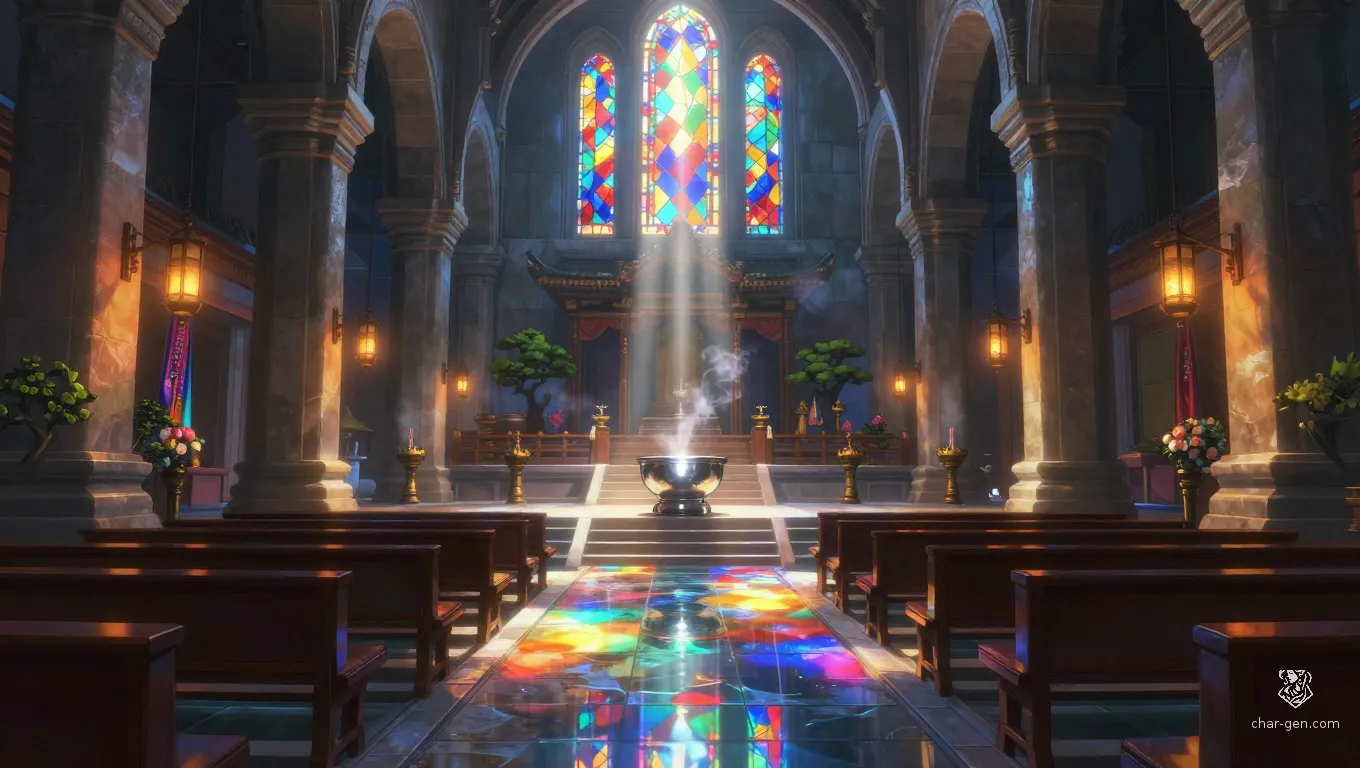
The Silver Basin
Quiet, reverent, and intensely controlled, with a faint sense that powerful vows are being watched. The air smells of incense, wax, rain on stone, and fresh-cut flowers. Though peaceful, the shrine has a dramatic, high-contrast presence that suits tense tactical encounters, with bright sacred light against deep shadows and a ceremonial stillness that can break into sudden violence.
The Silver Basin is a medium-sized neighborhood shrine built around a raised inner hall and a small stone courtyard. The site is clean, cared for, and active, with swept steps, trimmed hedges, fresh offerings, and polished floors. For tabletop combat, the map should be gridless and top-down, with distinct movement paths from the front gate to the altar, side lanes around the prayer hall, and a rear service passage. Include cover from pillars and benches, elevated access via a short dais and balcony-like prayer ledge, hazards such as burning braziers, shallow water channels, and breakable ceremonial screens, plus interactive objects like bells, offering bowls, sliding doors, incense stands, and a sacred font. The overall visual tone should be highly detailed, vibrant, and cinematic, with anime-inspired drama and strong atmospheric lighting while remaining readable for tactical play.
Calm, disciplined, and compassionate, with a practical streak and a sharp eye for trouble
History
Divine Services
The shrine serves as a local place of prayer, healing, and oath-making. Morning rites begin at first light with incense, washing at the stone basin, and a short communal blessing. Villagers leave coin, bread, or flowers at the altar, while travelers may request safe passage, honest bargains, or recovery from illness. On holy days, the priesthood opens the side hall for candlelit vigils and guided offerings.
Sacred Relics
The shrine keeps a few sacred items in constant use. The oldest is a silver bell said to calm the sick when rung during prayers. A carved sun disk hangs above the altar and catches torchlight in a bright halo. A sealed relic box beneath the dais holds tokens from past miracles, including prayer ribbons, dried herbs, and a cracked votive mask used in remembrance ceremonies.
Security Measures
The building is small enough for fast defense but layered with practical safeguards. The outer courtyard has narrow approaches that can be blocked with chained gates, while raised walkways give defenders a clear view of the entry path. Hidden latch doors in the side rooms provide escape routes to the garden and the rear lane. The well-kept stonework also conceals a few alarm bells and marked safe spots for civilians during trouble.
Visitors and Customs
Pilgrims come here to leave offerings, seek guidance, or ask for blessings before journeys and contracts. The shrine is known for a calm, disciplined riteskeeper who settles disputes quietly and never raises their voice unless a sacred rule has been broken. Locals also trust the place to witness binding promises, since a lie spoken at the altar is believed to invite bad luck before the week is out.
Denizens
Calm, disciplined, and compassionate, with a practical streak and a sharp eye for trouble
The keeper of the shrine, known for careful manners, exact ritual timing, and a surprising ability to notice small lies. She maintains the grounds personally and treats visitors with calm, measured courtesy.
A quiet assistant who tends the lamps, arranges offerings, and memorizes the names of every regular visitor. He is friendly, observant, and always seems to be standing near a useful door or hidden supply shelf.
An elderly flower seller who often lingers in the courtyard, bringing fresh wreaths and gossip in equal measure. She knows which pilgrims are sincere, which are desperate, and which are hiding trouble.
Rumors & Plot Hooks
- 1.The silver bell in the altar chamber can quiet a raging spirit if rung at dawn.
- 2.A tunnel behind the rear sanctum leads to an old cellar used during wartime, though the entrance has not been opened in years.
- 3.The shrine accepts no false oaths, and those who swear lies at the basin often suffer bad luck before sunset.
- 4.Someone has been replacing the sacred oil with a strange black resin that burns with no smoke.
Classified Entry
Beneath the rear sanctum is a sealed cache containing records of old vows, debts, and confessions from local nobles and merchants. Mara guards it because the shrine once saved the town by keeping those secrets hidden, and exposing them now could spark a political feud.
Turn The Silver Basin into a sheet
A high-res, share-ready sheet you can post or print.