
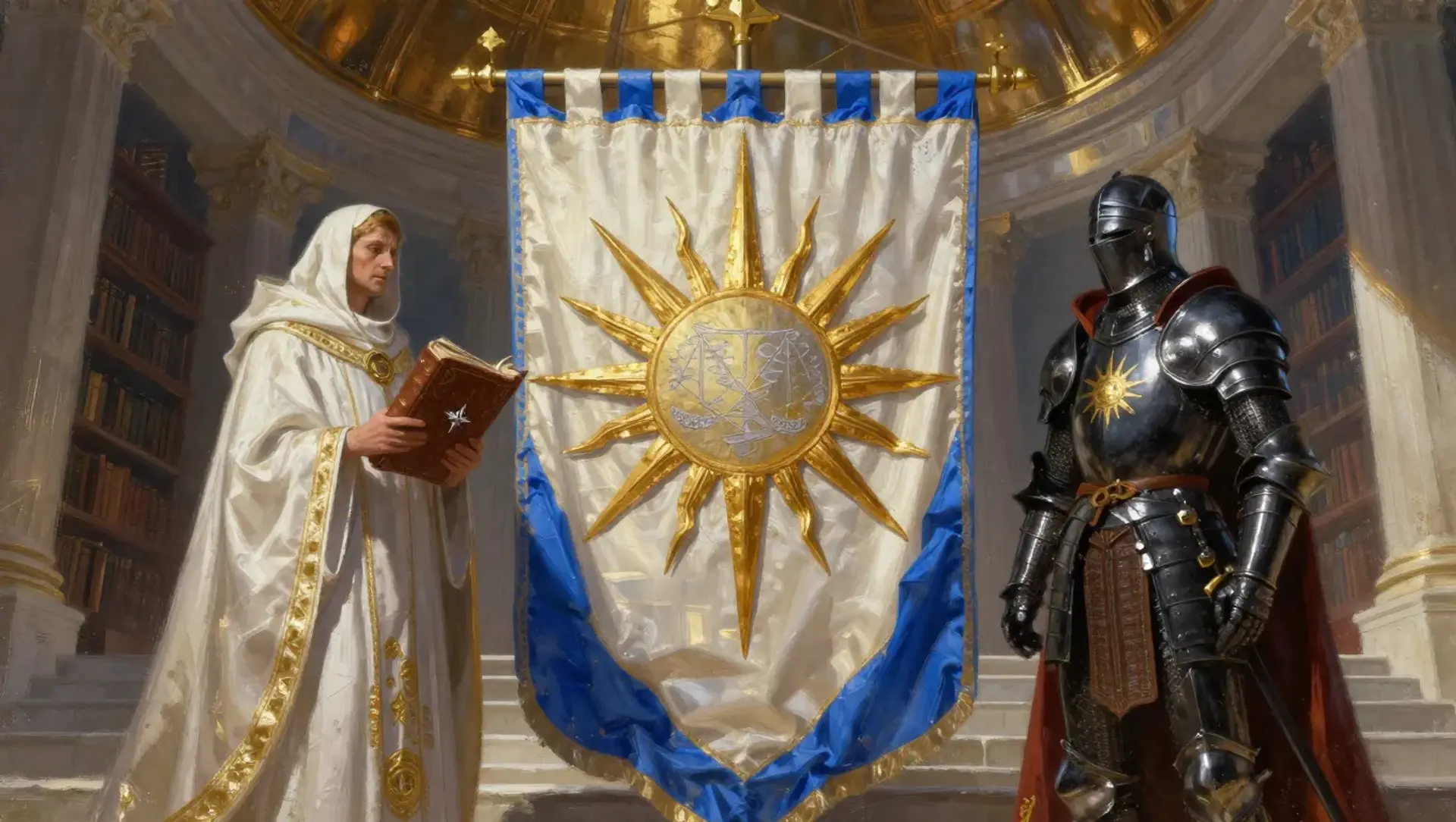
The Church of Galbadois
After its founding in 1503 AC, the church expanded by solving practical problems that no other institution could solve as well. It standardized calendars, legitimized marriages, authenticated contracts, and turned temple schools into the best route for upward mobility. During the first forty years, the church's greatest strength was its ability to translate spiritual language into civic order. House Outhum made law portable. House Sidurie made labor sacred. House Nissabeau turned literacy into devotion. House Seres and House Aziza made trust enforceable with oaths and messengers. The church's first watershed moment was the Concord of Thirteen Lamps, when the houses agreed that no single Scion could claim total authority over the others. That compromise saved the church from immediate fragmentation, but it also ensured permanent internal rivalry. A second defining era came during the Black Comet Years, when unusual signs in the sky led to famine panic and multiple prophetic movements. The church suppressed open panic, but in doing so it created a tradition of controlled revelation, where dangerous truths are released only when the institution is ready to survive them. Over time, the Houses of Ainqui, Guestinanne, and Zodiarque became the most tightly watched because their domains touched hope, mercy, and secrets, the three forces most likely to unravel official certainty. Today the church remains beloved by many common folk as a source of order, education, healing, and burial rites, while quietly feared as the kingdom's most efficient machine for turning belief into law.
Religious Order · Lawful Neutral
The Church of Galbadois
“Order is the lantern by which Heaven is read.”
Turn The Church of Galbadois into a sheet
A high-res, share-ready sheet you can post or print.