
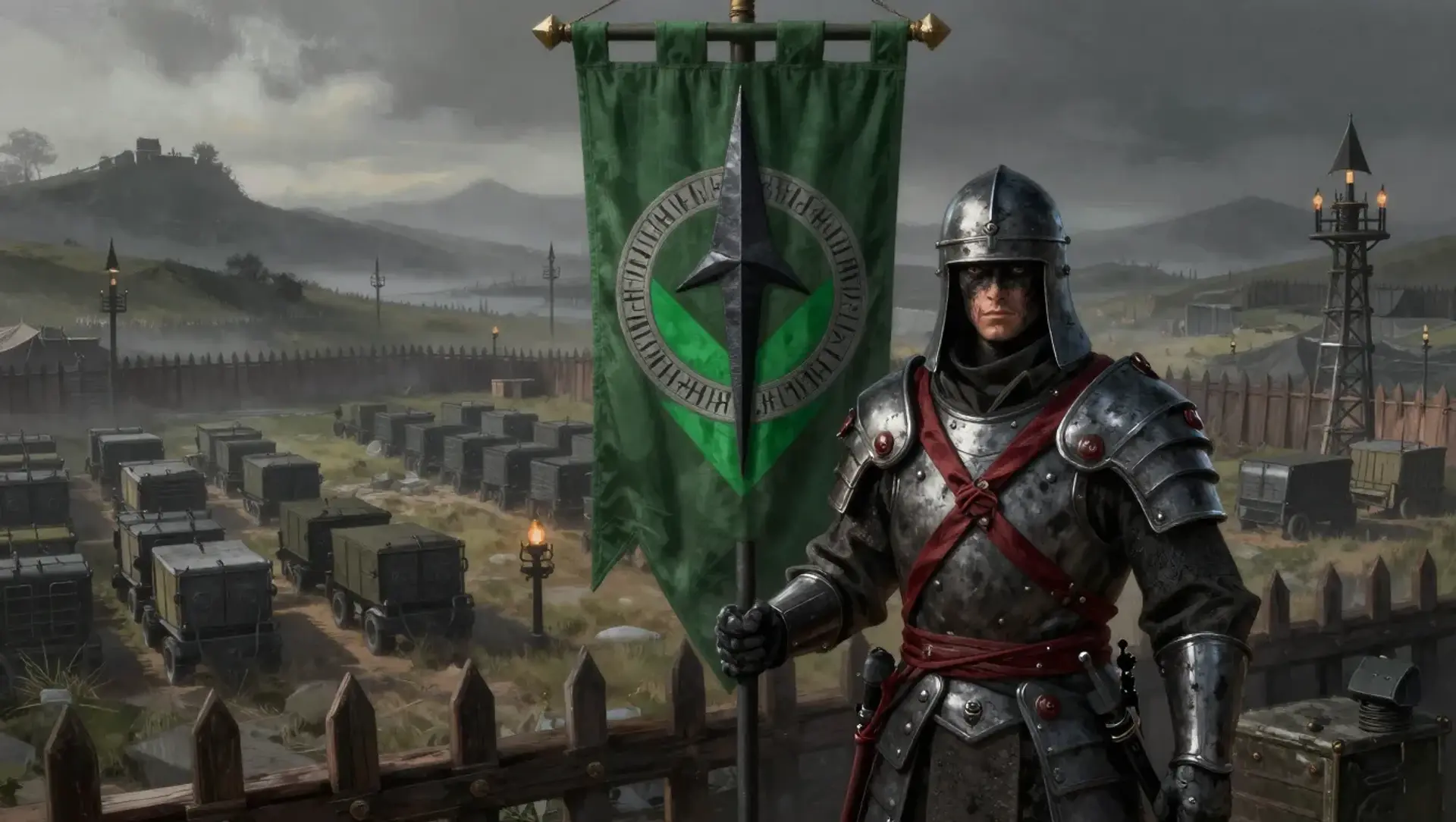
The Iron March
For its first decade, the Iron March survived as a roaming war-host that hired itself to border lords, then sold its loyalty to the highest bidder. That changed during the Siege of Black Reed, when a rival host betrayed them mid-assault and nearly annihilated their companies. The survivors adopted a colder creed: never trust a lord's banner without your own maps, stores, and fallback lines. Under Chieftain Drathkaw, they grew sharper and harsher, specializing in occupation warfare, patrol discipline, and methodical pressure. They took Thornwatch Keep after a winter campaign that starved the defenders and broke the outer roads. For a time they ruled it like an iron machine, with worg stables, barricaded courtyards, and layered patrols feeding raids from a war room of ledgers and route maps. The defining watershed came when the party shattered their outpost leadership and exposed their intelligence network, forcing the host to confront a truth they had long denied: they could no longer hold territory by fear alone. The subsequent rise of General Rascal, a name that many outsiders assumed meant foolishness until they met his precision, marked the second founding of the March. He negotiated the peace accord after a hard defeat, then redirected the host into a lawful border force. The old conquerors remain alive inside the new order, which means the Iron March is both reformed and not reformed at all.
Military border host, occupation force turned accord-bound security legion · Lawful neutral with ruthless pragmatists, honorable idealists, and a few quiet extremists pulling in different directions.
The Iron March
“Hold the line, know the ground, leave no route unmeasured.”
Turn The Iron March into a sheet
A high-res, share-ready sheet you can post or print.