
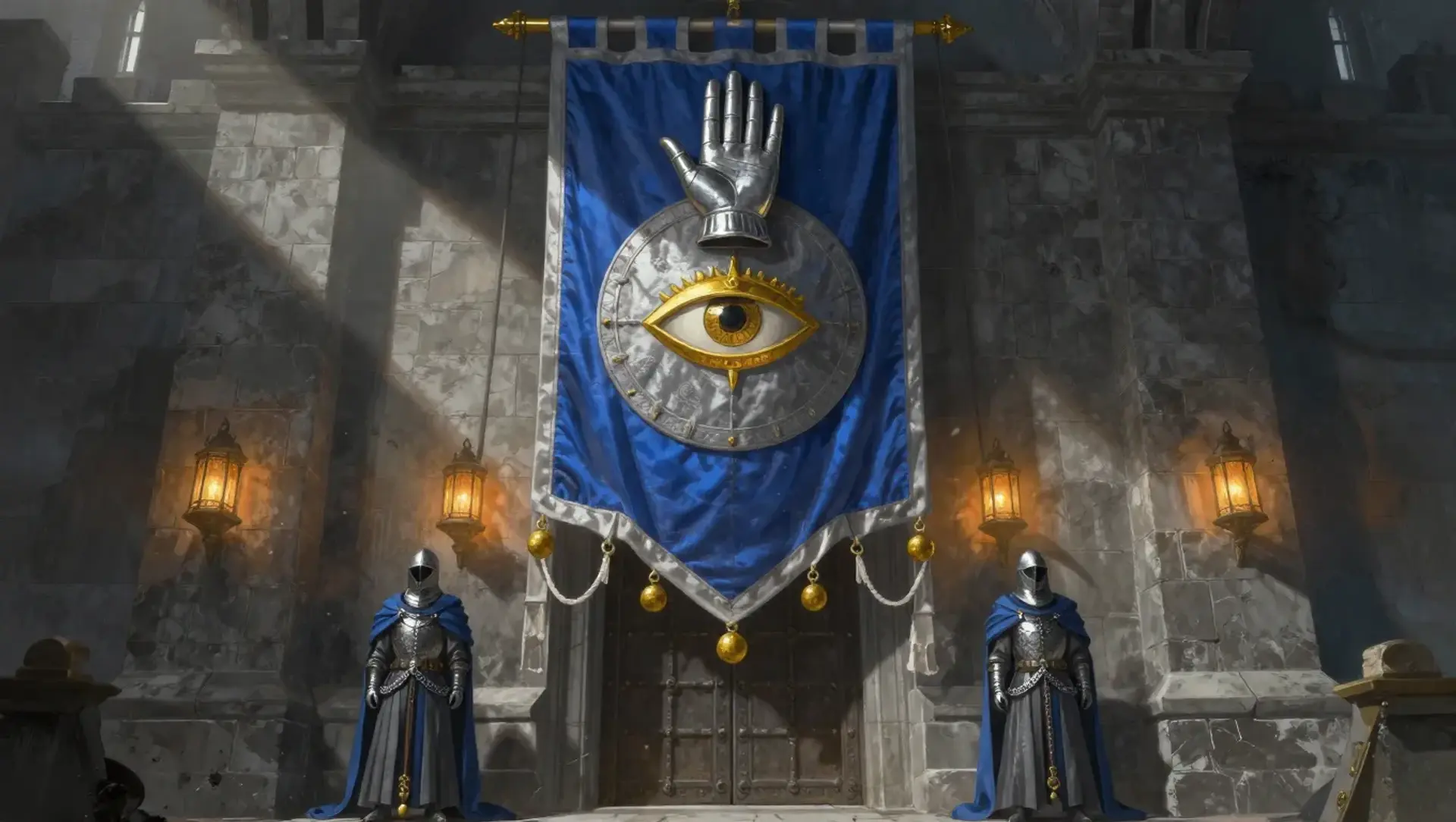
Church of Helm
At first the church was a loose coalition of survivors from raids, border wars, and temple desecrations. Over generations it learned to pair devotion with procedure: locks on relic chambers, layered passwords, rotating watches, and written chains of authority. Its first great triumph was the Shielding of Greenmill Pass, where its wardens held a bridge shrine long enough to evacuate three villages. That victory made it famous and wealthy, because merchants and nobles began paying for blessings, secure tombs, and protected routes. But prosperity also sharpened its contradictions. Some members became wardens of noble treasure instead of guardians of the vulnerable, and the church repeatedly had to purge those who treated protection as ownership. The Night of Broken Vows changed everything. Internal betrayal nearly shattered the order, and in the aftermath the church split into competing interpretations of Helm's will: one faction emphasized obedience and hierarchy, another emphasized discernment and mercy, and a third turned toward secrecy, believing the greatest protection is the protection of information. Today the Church of Helm is respected, feared, and often reluctantly summoned when a place, relic, or promise must be made impossible to violate.
Religious order and protective institution · Lawful Good in its ideal self-image, though its methods can drift toward stern pragmatism, secrecy, and control when its members fear a threat to the innocent.
Church of Helm
“Stand watch. Hold fast. Let nothing pass unchallenged.”
Turn Church of Helm into a sheet
A high-res, share-ready sheet you can post or print.