
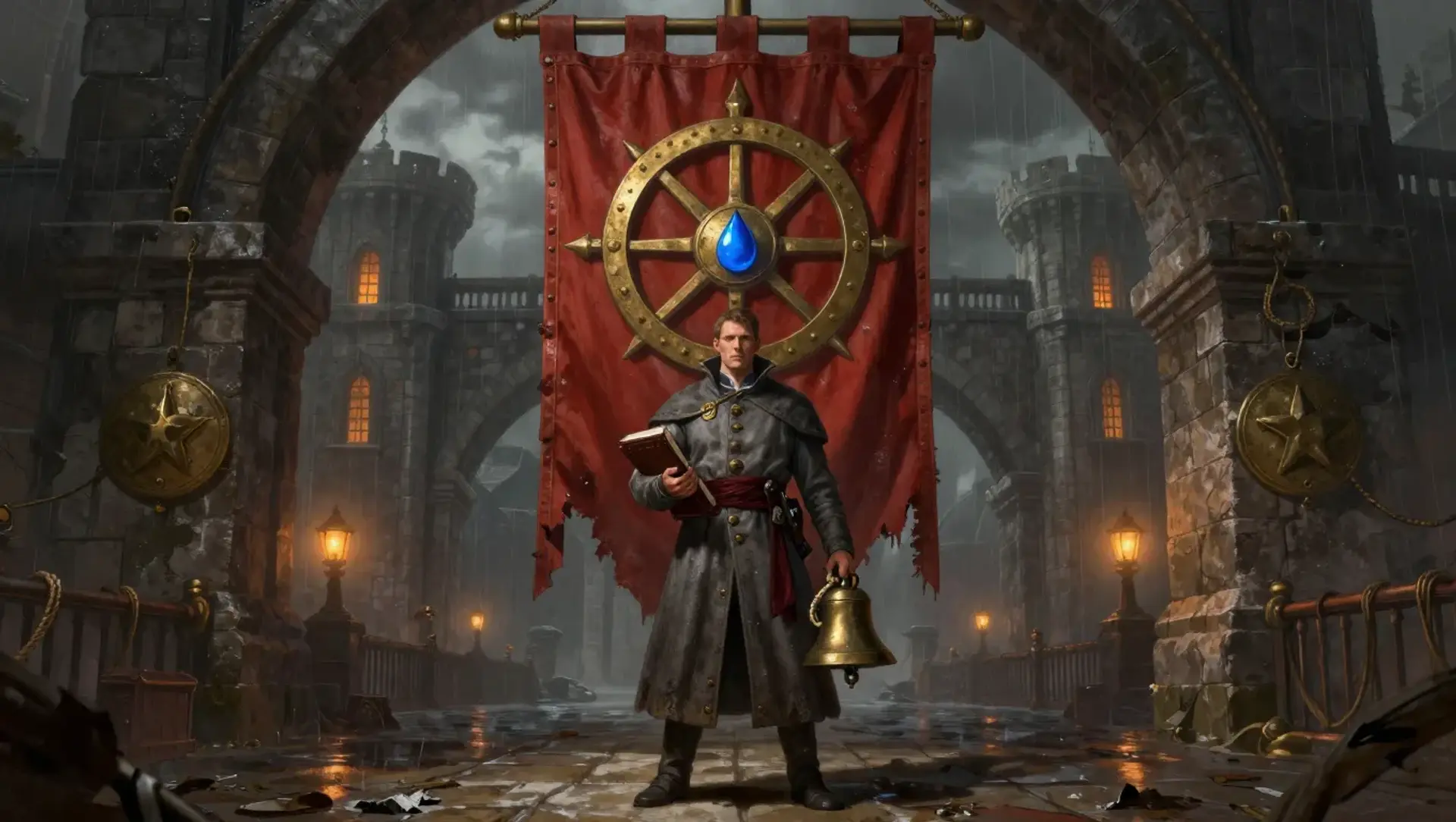
The Road Guild
In its first decades, the Road Guild was celebrated as a civilizing force. They standardized road markers, introduced stamped water allotments, and built a network of roadside safehouses that made travel possible again after years of collapse. Their prosperity came from necessity, and their authority was first tolerated because it worked. The second age began with expansion: they gained Senate charters, purchased old bridge rights, and made emergency powers permanent by arguing that roads and wells were inseparable. The third age was consolidation, when they crushed or absorbed competing caravan companies, and when the well ledgers became more important than the roads themselves. The Guild discovered a brutal truth. Whoever controls measured water controls the speed of migration, the price of grain, and the patience of a town. That discovery shaped everything that followed. Their public story says they became stricter because the world became harsher. Their private truth is that harshness proved profitable. Today they are a vast machine of logistics, taxation, and selective mercy, admired by merchants, feared by peasants, and distrusted by anyone who has ever watched a cask roll past a thirsty gate.
Merchant league, transport authority, and quasi-state logistics consortium · Lawful neutral with mercantile opportunism and a growing hard edge that tilts toward ruthless utilitarianism.
The Road Guild
“No road without measure. No well without law.”
Turn The Road Guild into a sheet
A high-res, share-ready sheet you can post or print.