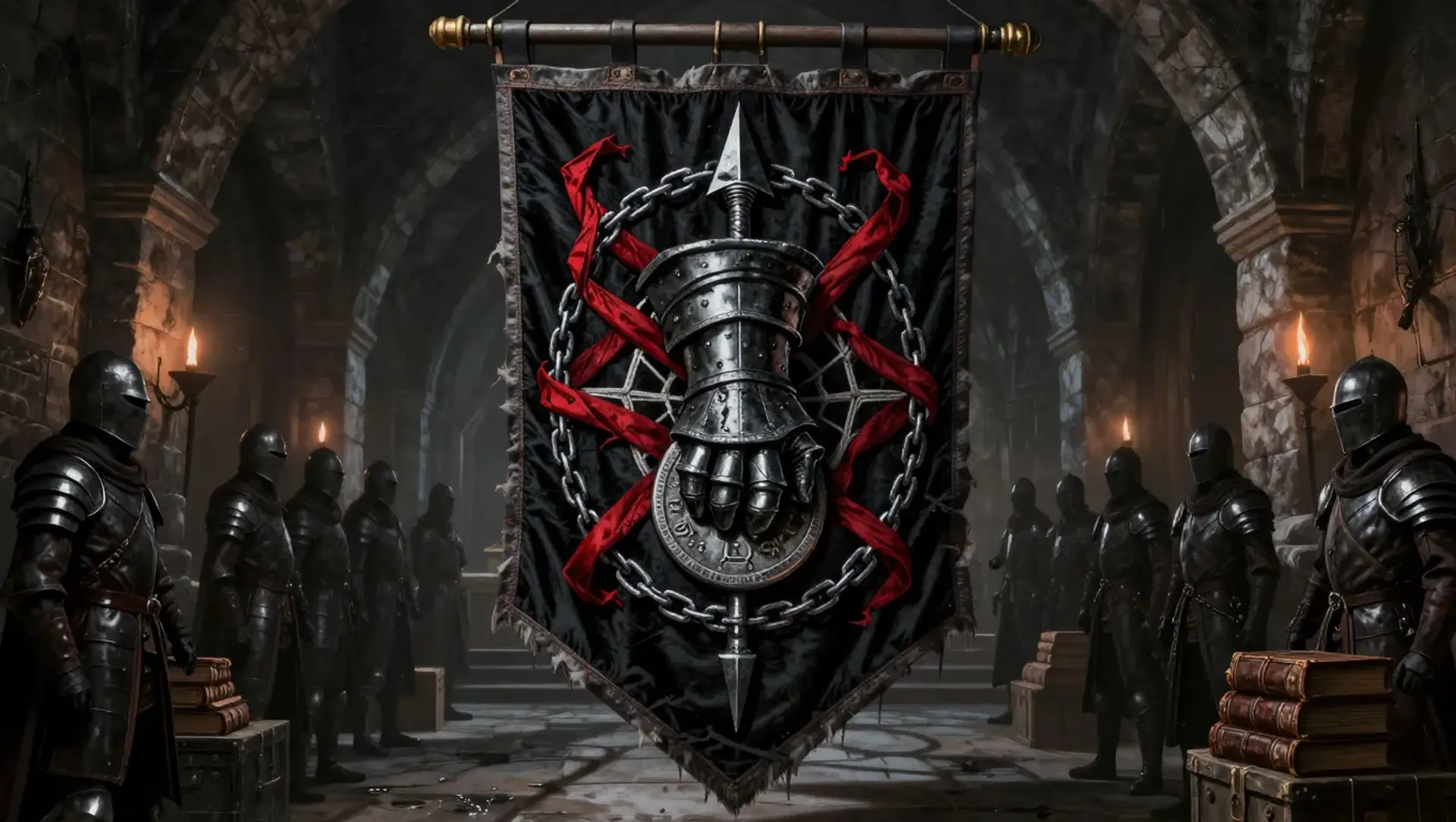
Zhentarim - AI-generated fantasy Faction

Zhentarim

The faction’s early years were defined by disciplined survival. Its founders built a reputation for showing up where others fled, and that reputation bought them contracts, influence, and access to roads that were otherwise impossible to traverse. The first great expansion came when they realized that a mercenary banner could hide a trade network, and a trade network could hide an intelligence service. Their greatest triumph was the consolidation of several dangerous border routes into a single protected corridor, which made them indispensable to merchants and terrifying to raiders. Their first major setback came during the Ashen Purge, when a coalition of city magistrates exposed part of their ledger network and executed dozens of public agents. The organization did not collapse. Instead, it learned to fragment, to operate through proxy firms, and to let local commanders improvise as long as the profits kept flowing. The watershed moment that defined the modern Zhentarim was the Night of Broken Seals, when a respected internal reformer tried to turn the faction into a lawful security company. The attempt ended in betrayal, a fire that destroyed three archives, and a quiet purge that convinced the surviving leadership that reform was only useful when it could be weaponized. Since then, the Zhentarim has lived in two skins: respectable contractor by daylight, predatory shadow network by night.

Zhentarim

mercenary company and criminal syndicate · Lawful evil in public structure, pragmatically neutral in day-to-day operations, with competing internal camps ranging from disciplined opportunists to outright criminals and ideological hardliners.

Zhentarim

Order has a price, and the strong decide who pays.

Typemercenary company and criminal…
Sizelarge and distributed, with a…
Influencevery high in trade corridors,…
Wealthvery wealthy, though much of t…
AlignmentLawful evil in public structur…
AgeFounded over a century ago as…

Chronology

The faction’s early years were defined by disciplined survival. Its founders built a reputation for showing up where others fled, and that reputation bought them contracts, influence, and access to roads that were otherwise impossible to traverse. The first great expansion came when they realized that a mercenary banner could hide a trade network, and a trade network could hide an intelligence service. Their greatest triumph was the consolidation of several dangerous border routes into a single protected corridor, which made them indispensable to merchants and terrifying to raiders. Their first major setback came during the Ashen Purge, when a coalition of city magistrates exposed part of their ledger network and executed dozens of public agents. The organization did not collapse. Instead, it learned to fragment, to operate through proxy firms, and to let local commanders improvise as long as the profits kept flowing. The watershed moment that defined the modern Zhentarim was the Night of Broken Seals, when a respected internal reformer tried to turn the faction into a lawful security company. The attempt ended in betrayal, a fire that destroyed three archives, and a quiet purge that convinced the surviving leadership that reform was only useful when it could be weaponized. Since then, the Zhentarim has lived in two skins: respectable contractor by daylight, predatory shadow network by night.

Founder’s Story

The Zhentarim began when a coalition of caravan guards, sell-swords, and covert fixers survived a brutal winter campaign in which half their employers abandoned them to bandits and famine. Their first leader, a disciplined veteran known only as the Black Banner, learned that the real profit was not in defending trade alone but in controlling the fear that shaped it. The founding pact promised members coin, protection, and promotion by merit, but also absolute obedience in the field. That bargain attracted veterans, fugitives, and ambitious strivers who wanted structure without conscience. Over time, the company discovered that the same logistics that moved grain and steel could also move contraband, spies, and assassins. The line between guard contract and criminal enterprise blurred almost immediately.

The Mechanism of Intent

Public Goals
  • Stabilize trade routes
  • Provide professional security for settlements and caravans
  • Suppress banditry and irregular violence
  • Offer skilled aid where local rulers are too weak or too corrupt to help
  • Maintain order through reliable contracts
  • Secret Goals
  • Restore or reconstruct a lost master ledger that would centralize every debt, safehouse, and informant into one perfect control system.
  • Place one obedient proxy in each major city so formal law becomes dependent on the faction’s approval.
  • Identify and eliminate all internal reformers before they can dilute the organization into a mere mercenary company.
  • Recover Kaelin if possible, or neutralize the information Kaelin carries if recovery fails.
  • Create a regional crisis severe enough that neighboring powers will accept the faction as the only practical guarantor of stability.
  • Current Objectives
  • Secure lucrative contracts in unstable regions before rival companies can.
  • Map and control the trade routes that connect frontier settlements.
  • Recover lost ledgers, cipher keys, and hidden vaults from earlier regimes.
  • Recruit promising operatives, especially those with military discipline or useful secrets.
  • Keep key cells independent enough to survive local crackdowns while preserving the faction’s broader brand.
  • Long-Term Vision

    To become the indispensable architecture beneath commerce, war, and politics, so that every ruler, guild, and rebel eventually depends on the faction for information, transport, protection, or survival.

    Structurecovert mercenary syndicate
    SuccessionSuccession is never clean. The Night Ledger designates an heir in secret, but major Iron Factors, captains, and ledger-keepers often contest the choice by withholding funds, exposing scandals, or engineering crises that prove their preferred successor is necessary. In practice, the next leader is whoever can secure loyalty, cash flow, and silence fast enough to survive the first month.

    Leadership

    Mara Vell Night Ledger

    Controlled, strategic, suspicious of sentiment, and almost never wastes a move.

    Mara Vell current high coordinator for regional operations

    Cold, patient, impeccably organized, and never raises her voice unless someone has already lost.

    Dorn Keth Black Captain overseeing enforcement and extraction

    Direct, severe, charismatic in the way a knife is charismatic.

    Ilyra Quill Iron Factor controlling several trade corridors

    Smooth, witty, socially brilliant, and dangerous when underestimated.

    Serrin Vale ledger keeper and internal auditor

    Measured, anxious beneath composure, and deeply observant.

    Visual sheet

    Turn Zhentarim into a sheet

    A high-res, share-ready sheet you can post or print.

    Gallery

    No images yet. Click to add.

    Relationships