
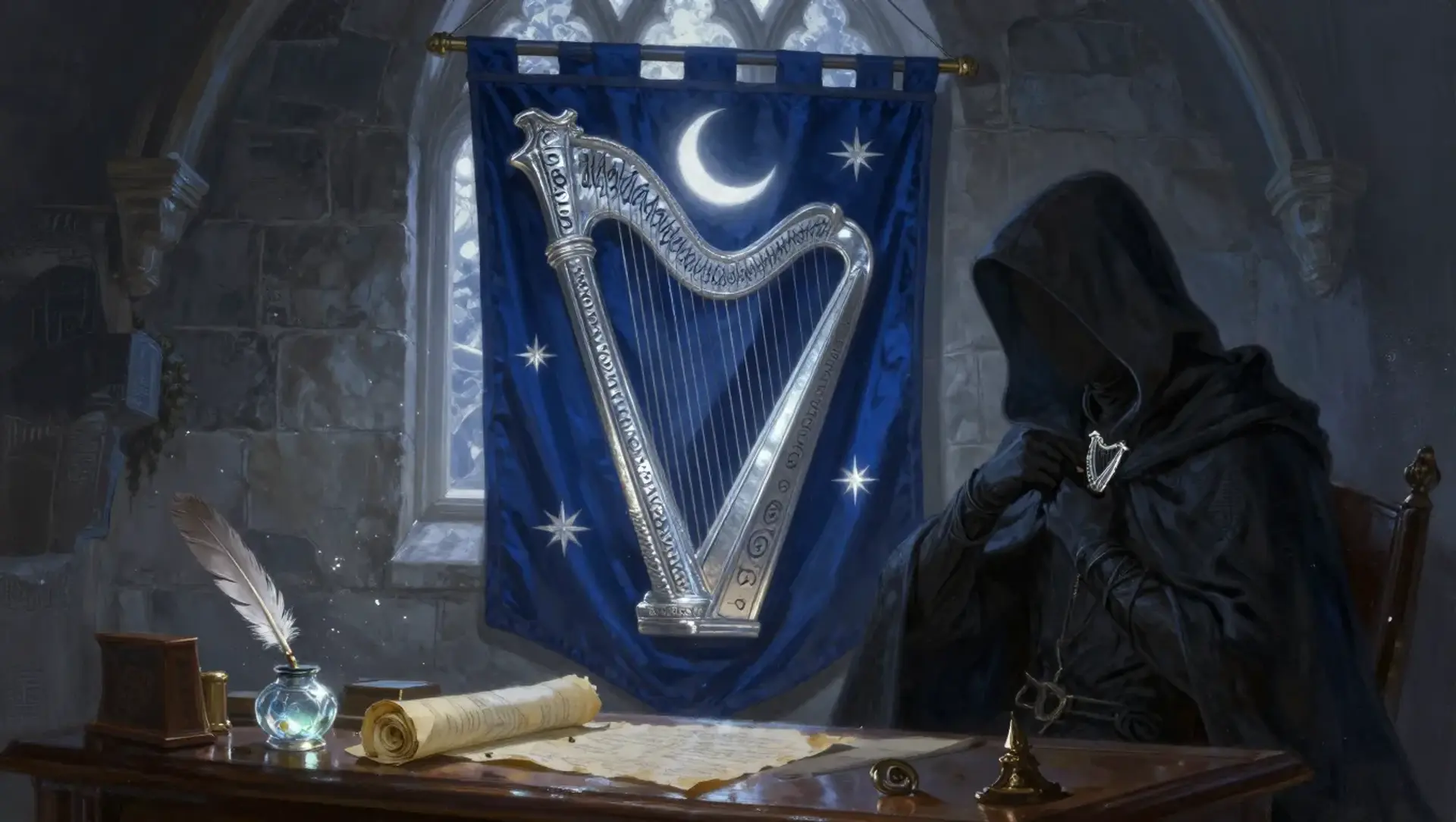
The Harpers of the Silver Moon
The Harpers survived three defining eras. The first was their founding age, when they were united by idealism and a shared fear that unchecked power would always devour the powerless. The second was their age of triumph, when their network reached across the region and their agents became legendary for unmasking tyrants, preserving lost lore, and quietly breaking wars before they started. The third was their age of fracture, when internal ideology split them between those who believed they should act as hidden guardians and those who wanted them to become a more overt moral power. The watershed moment came during a disastrous schism, when rival Harper voices each claimed to know what balance required, and the organization's enemies exploited the confusion. Since then the Harpers have never fully trusted centralized authority, which is why they prefer flexible cells, layered secrecy, and agents like Selvara who can move between local needs and larger causes.
Secret society, intelligence network, moral balancing order · Typically good-aligned, but fiercely independent and sometimes morally inconsistent when balance demands ugly choices.
The Harpers of the Silver Moon
“We remember. We warn. We intervene when we must.”
Turn The Harpers of the Silver Moon into a sheet
A high-res, share-ready sheet you can post or print.