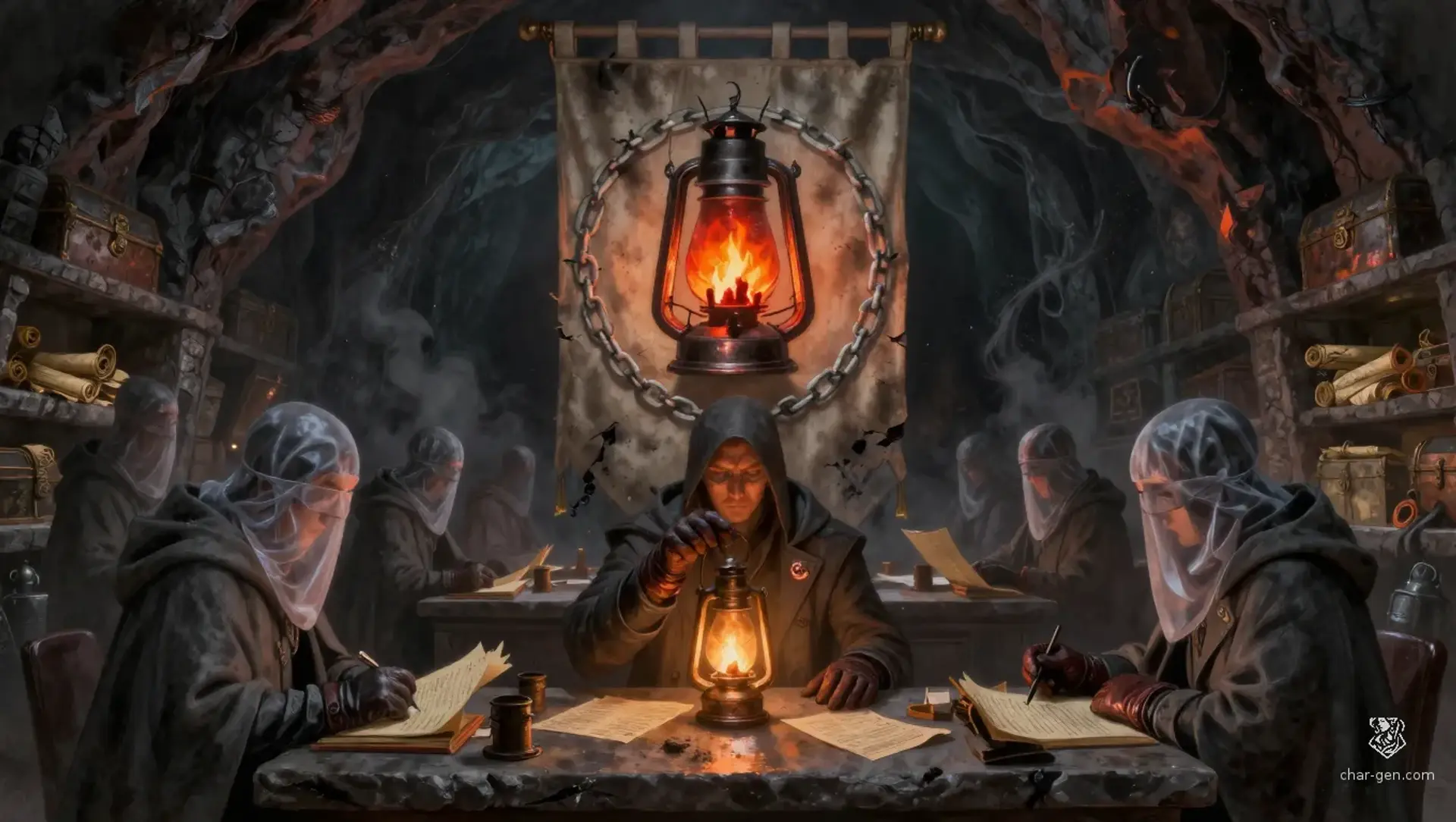
The Lantern Compact - AI-generated fantasy Faction

The Lantern Compact

In its first decade, the faction existed as a rescue web built from debt, favors, and forged seals. They were small enough to hide inside legitimate commerce. In the second decade, they secured their first protected port and proved that fiendkin communities could survive by controlling trade rather than merely hiding from it. That era made them wealthy, but it also attracted criminals, opportunists, and idealists in equal measure. Their next major phase came during the Salt War, when both sides hired them to move supplies while privately blaming them for shortages. The faction learned to survive by serving enemies just enough that no one side could afford to erase them. They developed a culture of balanced obligation, where every favor creates a future claim. This made them effective, but also paranoid. The defining watershed was the Red Audit 41 years ago. A coalition of judges, temple scribes, and rival merchants tried to destroy the faction by exposing its hidden contracts. Instead, the audit revealed that half the coalition had been laundering seizure orders through false charities. The public scandal saved the faction, but it forced them into a new shape. They broke their archives into three branches, each with partial knowledge and mutual blackmail, so no single purge could erase the whole truth. Since then, they have grown more disciplined, more cautious, and more internally divided. Today they present themselves as protectors of fiendkin commerce, keepers of lawful trade, and defenders of the dispossessed. In practice they are a shadow state of couriers, contract-tamperers, smugglers, and political fixers who believe survival justifies morally gray methods. Many members genuinely see themselves as guardians. Others see the faction as a machine that can be steered for greater power. The tension between those views keeps them alive and dangerous.

The Lantern Compact

Secretive trade-cult and political protection network · Lawful Evil on the surface, internally fractured into pragmatists, zealots, and reformers

The Lantern Compact

No one burns a witness twice.

TypeSecretive trade-cult and polit…
SizeMedium to large, with hundreds…
InfluenceRegional power with local reac…
WealthComfortably wealthy in liquid…
AlignmentLawful Evil on the surface, in…
Age127 years

Chronology

In its first decade, the faction existed as a rescue web built from debt, favors, and forged seals. They were small enough to hide inside legitimate commerce. In the second decade, they secured their first protected port and proved that fiendkin communities could survive by controlling trade rather than merely hiding from it. That era made them wealthy, but it also attracted criminals, opportunists, and idealists in equal measure. Their next major phase came during the Salt War, when both sides hired them to move supplies while privately blaming them for shortages. The faction learned to survive by serving enemies just enough that no one side could afford to erase them. They developed a culture of balanced obligation, where every favor creates a future claim. This made them effective, but also paranoid. The defining watershed was the Red Audit 41 years ago. A coalition of judges, temple scribes, and rival merchants tried to destroy the faction by exposing its hidden contracts. Instead, the audit revealed that half the coalition had been laundering seizure orders through false charities. The public scandal saved the faction, but it forced them into a new shape. They broke their archives into three branches, each with partial knowledge and mutual blackmail, so no single purge could erase the whole truth. Since then, they have grown more disciplined, more cautious, and more internally divided. Today they present themselves as protectors of fiendkin commerce, keepers of lawful trade, and defenders of the dispossessed. In practice they are a shadow state of couriers, contract-tamperers, smugglers, and political fixers who believe survival justifies morally gray methods. Many members genuinely see themselves as guardians. Others see the faction as a machine that can be steered for greater power. The tension between those views keeps them alive and dangerous.

Founder’s Story

The faction began 127 years ago in the aftermath of the Cinder Reprieve, when a fiendkin settlement called Varr Ash had been burned by a coalition that claimed to be ending a demonic uprising. In truth, the uprising had already collapsed, but fear made the victors cruel and memory convenient. A scrivener named Malrec Voss, born of fiendkin blood but raised among ledger-keepers, found the survivors by following the ash trails of confiscated wagons. He discovered that the settlement had not fallen because it was evil, but because its people were isolated, heavily indebted, and legally defenseless. Malrec gathered the few who could read contracts, track supplies, or speak in court without trembling. They began by rewriting warrants, escorting children out through burial routes, and bribing notaries to delay seizures. Their first success was not a battle, but a verdict: they overturned a mass forfeiture order by exposing forged seals and forcing a magistrate to resign in disgrace. That triumph made them famous among fiendkin communities and dangerous to every city that profited from their dispossession. The faction took its name from the Night Lantern Compact, a vow sworn over a lantern filled with grave oil and a blade made from a broken chain. The lantern symbolized witness, the chain symbolized obligation, and the broken link symbolized the right to escape a cruel contract. In the early years they were a loose rescue network. Over time, rescue work turned into transport, transport turned into trade, and trade turned into leverage. They learned that a protected road is more valuable than a hidden tunnel, and a respected broker is more useful than a hundred thieves. Their watershed moment came 41 years ago during the Red Audit, when a hostile tribunal uncovered part of their ledgers and publicly accused them of trafficking souls. The accusation was partly true, partly exaggerated, and politically timed. Rather than collapse, the faction split its records into three living archives, each held by a rival branch that could only function if the others survived. That crisis saved them. It also created the faction they are now: resilient, secretive, divided, and impossible to fully destroy without destroying the system that holds them together.

The Mechanism of Intent

Public Goals
  • Keep fiendkin communities safe from persecution
  • Guarantee fair trade on border routes
  • Provide arbitration for impossible debts
  • Protect witnesses and defectors
  • Preserve lawful commerce in unstable regions
  • Secret Goals
  • Use the master registry to compel recognition of fiendkin sovereignty
  • Discover and neutralize the infernal debt bound to the founder's line
  • Replace corrupt local courts with faction-backed arbitration houses
  • Control the most valuable border routes before rival powers can seize them
  • If necessary, sacrifice one branch of the faction to preserve the other two
  • Current Objectives
  • Stabilize internal succession before their fractured councils split the faction in two.
  • Recover three sealed relic ledgers from a ruined tribunal vault.
  • Expand protected routes between fiendkin enclaves and neutral cities.
  • Erase records of a bloodline oath that could invalidate the founder's legacy.
  • Keep the faction publicly respectable long enough to complete a larger long-term plan.
  • Long-Term Vision

    To turn the faction from a covert survival network into a lawful, self-sustaining confederation of protected fiendkin communities that can negotiate with every state from a position of undeniable leverage. Some leaders imagine a safe homeland. Others imagine a silent empire built from contracts, routes, and archives.

    StructureSemi-secret confederation
    SuccessionSuccession is not inherited automatically. The Lantern-Marshal is chosen by a combined vote of the Three Tithes, the Ash Factors, and the keepers of the archive branches. If no candidate receives enough support, the faction enters a Shard Council, where each branch acts independently until a compromise is reached or a crisis forces unity. This makes leadership stable in peacetime and explosive in succession disputes.

    Leadership

    High Lantern-Marshal Maerith Vox Lantern-Marshal and First Witness

    Composed, incisive, and more compassionate than she allows others to see

    Veyra Sootquill Cinder Notary who leads the Ledger-Saints

    Patient, principled, and dangerously observant

    Marshal Dren Valc Ash Factor overseeing border routes

    Charismatic, severe, and stubbornly practical

    Irih Thane of the Third Seal Keeper of one of the three archive branches

    Elegant, anxious, and manipulative

    Sarn the Pale Bell Field commander of the Hollow Ears

    Fierce, eloquent, and quietly mournful

    Visual sheet

    Turn The Lantern Compact into a sheet

    A high-res, share-ready sheet you can post or print.

    Gallery

    No images yet. Click to add.

    Relationships