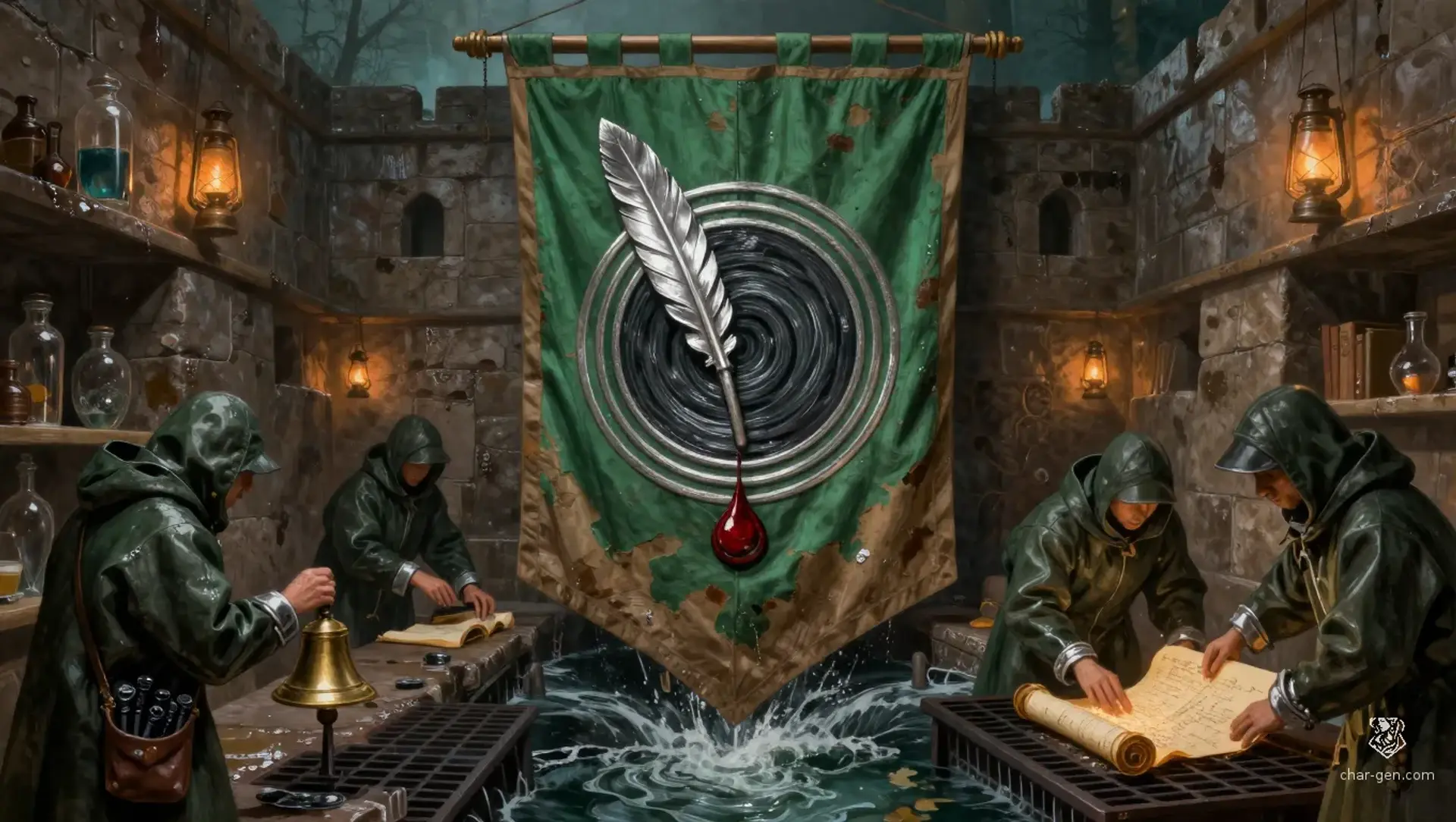
The Reedlight Confluence - AI-generated fantasy Faction

The Reedlight Confluence

After its founding in the Year of Eight Drownings, the faction spread by solving practical problems no one else could solve: when to plant, which ford would fail, where the dead had drifted, and how to prevent the next collapse. Their first century was defined by service and humility. Readers traveled lightly, accepted bread instead of coin, and copied records for any village willing to share news of river conditions. The second century changed everything. Merchant houses began paying them for route forecasts. Lords began requiring their seals on flood charters. The faction responded by creating regional houses and a sealed curriculum, which improved reliability but also concentrated power. The Watershed Verdict became their defining triumph, proving their value to rulers across the basin. But success brought corruption. Some Readers learned they could move markets with a whispered warning, ruin rivals with a delayed notice, or force families into debt by controlling burial and inheritance records. The Saltwinter Collapse was their great setback and the moment they became who they are now. During a brutal freeze, two rival chapters issued contradictory forecasts, leading to a chain of stranded barges, famine riots, and three town burnings. The Confluence Council survived only by centralizing authority, burning many local records, and blaming a scapegoat chapter that may not have been entirely guilty. Since then, the faction has lived with a contradiction: it exists to preserve memory and avert disaster, yet it repeatedly sacrifices truth, openness, and local autonomy to keep itself effective. That tension shapes every crisis they face today.

The Reedlight Confluence

scholarly river-keeper network, civic intelligence cartel, and ritual archive society · Lawful neutral with pragmatic, protective, and occasionally ruthless tendencies

The Reedlight Confluence

Remember the river, and the river will remember you.

Typescholarly river-keeper network…
Sizeapproximately 1,800 sworn memb…
Influencehigh in river provinces, moder…
Wealthcomfortable but not ostentatio…
AlignmentLawful neutral with pragmatic,…
AgeFounded 187 years ago, though…

Chronology

After its founding in the Year of Eight Drownings, the faction spread by solving practical problems no one else could solve: when to plant, which ford would fail, where the dead had drifted, and how to prevent the next collapse. Their first century was defined by service and humility. Readers traveled lightly, accepted bread instead of coin, and copied records for any village willing to share news of river conditions. The second century changed everything. Merchant houses began paying them for route forecasts. Lords began requiring their seals on flood charters. The faction responded by creating regional houses and a sealed curriculum, which improved reliability but also concentrated power. The Watershed Verdict became their defining triumph, proving their value to rulers across the basin. But success brought corruption. Some Readers learned they could move markets with a whispered warning, ruin rivals with a delayed notice, or force families into debt by controlling burial and inheritance records. The Saltwinter Collapse was their great setback and the moment they became who they are now. During a brutal freeze, two rival chapters issued contradictory forecasts, leading to a chain of stranded barges, famine riots, and three town burnings. The Confluence Council survived only by centralizing authority, burning many local records, and blaming a scapegoat chapter that may not have been entirely guilty. Since then, the faction has lived with a contradiction: it exists to preserve memory and avert disaster, yet it repeatedly sacrifices truth, openness, and local autonomy to keep itself effective. That tension shapes every crisis they face today.

Founder’s Story

The River Readers began as a handful of boat scribes, flood pilots, and funerary record-keepers who survived the Year of Eight Drownings. In that season, three levees failed in nine days, and the towns of the lower basin lost their grain stores, their maps, and nearly all reliable records of debt, burial, and inheritance. A woman named Ilyra the Reed-Sighted, once a humble tally keeper, gathered survivors at the broken ford of Tern Crossing and taught them to read the river as both a natural force and a record of human behavior. She noticed that floods followed not only weather, but greed, deforestation, bribed gatekeepers, and neglected ditches. The first Readers became known for predicting disaster, but also for settling disputes over lost property and identifying the dead when graves were washed open. Their original charter was simple: preserve memory, warn the living, and keep the river from being owned by the powerful. Over time, they became indispensable. Kings consulted them before campaigning, merchants before loading barges, and villages before planting. Their status grew after the Watershed Verdict, when a Reader-led inquiry proved that a provincial duke had deliberately weakened a levee to flood rebel granaries and then blamed bandits. The duke was ruined, the Readers were legitimized, and the faction gained both prestige and enemies. Their power deepened during the Saltwinter Collapse, when they alone maintained records of which canals still ran, which bridges were safe, and which families had the right to reclaim rebuilt land. That crisis made them more centralized, more secretive, and less idealistic. Today they are respected as guardians of river knowledge, feared as arbiters of memory, and distrusted by anyone who has ever been corrected by one of their ledgers.

The Mechanism of Intent

Public Goals
  • Protect river communities from flood, famine, and legal chaos.
  • Preserve accurate records of births, deaths, ownership, and travel.
  • Ensure river knowledge is available to those responsible enough to use it.
  • Keep trade routes open and conflicts from escalating into basin-wide disaster.
  • Secret Goals
  • Replace every independent river authority with Reader-certified oversight.
  • Find a way to preserve the benefits of the Drowned Recall without the ethical cost, or erase all evidence that the rite ever existed.
  • Control the succession of at least three river nations by holding their legitimate genealogies.
  • Use the next great flood to expose and remove the faction’s internal extremists in one decisive purge.
  • Current Objectives
  • Stabilize the delta after a series of unnatural floods and collapsing levees.
  • Recover the lost Black Ledger of Tides before a rival faction sells it or weaponizes it.
  • Keep the River Reader routes open so grain, messages, and medicine can move through the region.
  • Prevent a schism between the traditionalists and the reformers before it becomes a civil split.
  • Identify who is sabotaging floodgates and making the next disaster look inevitable.
  • Long-Term Vision

    To become the basin’s recognized guardians of memory, movement, and mediation, with enough moral legitimacy that no ruler dares ignore them and enough practical power that no flood can isolate their people again.

    Structurecivic mystery order and river intelligence network
    SuccessionWhen the High Reader dies, the Seven Current Masters each produce a sealed testimony about the candidate they believe can protect the basin. The candidate with the broadest support is confirmed at the Confluence Moot, unless the vote is deadlocked, in which case the oldest surviving flood record is consulted and the most senior Weir Captains are forced to witness a public oath. In practice, succession is shaped as much by blackmail and crisis timing as by ritual.

    Leadership

    Sabine Vell High Reader of the Confluence

    Measured, politically gifted, compassionate in private, and willing to make cold decisions in public

    High Reader Sabine Vell High Reader of the Confluence

    Calm, exacting, kind in small ways, and terrifying when cornered

    Master Halvek Drenn Current Master of Archives

    Proud, sharp-tongued, and unwaveringly formal

    Ink Navigator Lessa Marr Leader of the Lower Docks Chapter

    Idealistic, stubborn, and openly empathetic

    Weir Captain Orin Kest Commander of Flood Response and River Security

    Charismatic, severe, and morally inflexible

    Apprentice Tiva Renn Heir-apparent to several disputed records

    Brilliant, anxious, curious, and dangerously observant

    Visual sheet

    Turn The Reedlight Confluence into a sheet

    A high-res, share-ready sheet you can post or print.

    Gallery

    No images yet. Click to add.

    Relationships