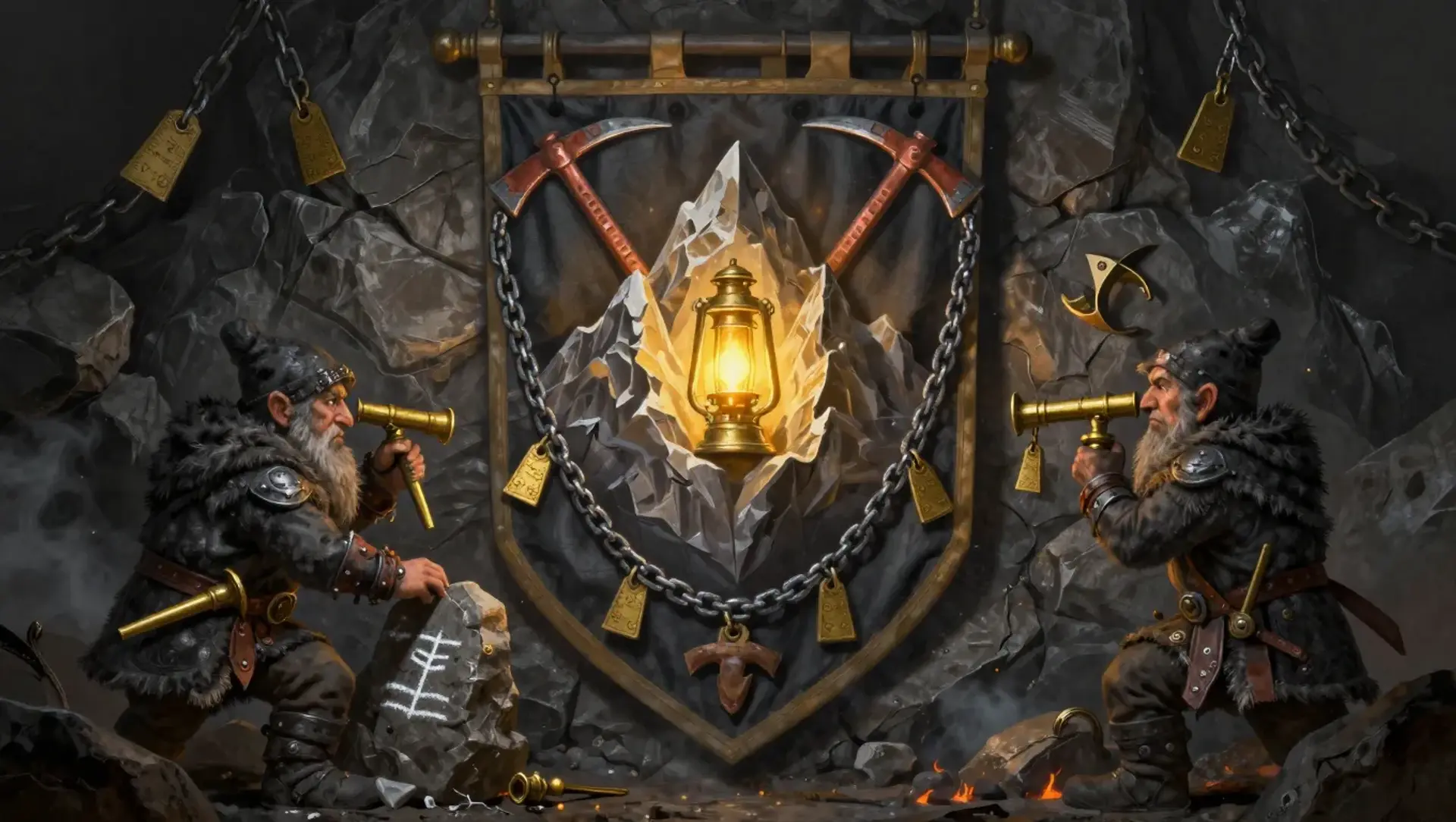
The Dwarves of Sundabar - AI-generated fantasy Faction

The Dwarves of Sundabar

After the Stone Accord, the dwarves transformed from a loose survival pact into Sundabar’s indispensable subterranean engine. Their first century was defined by expansion, careful mapping, and relentless reinforcement of unstable galleries. They became famous for two things: finding wealth where others saw broken rock, and refusing to cut corners where lives were at stake. Their greatest triumph came during the Year of Black Dust, when a poisoned dust bloom and a string of tunnel collapses threatened to cut the city off from water and food shipments. The dwarves sealed three doomed shafts, rerouted water through older cistern works, and kept Sundabar alive through the winter. In return, they gained broad civic authority and a near monopoly on underground surveys. Their watershed moment, however, was the Night of Shattered Gates. A coordinated strike by smugglers, saboteurs, and opportunistic raiders opened old access ways inside the lower city. The dwarves fought door by door, but they also discovered that one of their own archival wards had been tampered with months earlier. The uprising was crushed, yet the faction never healed completely. Since then, the Dwarves of Sundabar have become more secretive, more bureaucratic, and more divided over whether openness invites disaster or opportunity. Today they stand at a crossroads. They remain expert miners, surveyors, and builders, but they are also a political power balancing tradition, profit, and the fear that another hidden collapse, literal or social, could destroy them from within.

The Dwarves of Sundabar

Mining, surveying, and forge-holding clan confederation · Pragmatic lawful neutral with strong traditionalist and survivalist leanings. Publicly honorable, privately factional and often ruthless when the tunnels are at stake.

The Dwarves of Sundabar

Measure twice, trust once.

TypeMining, surveying, and forge-h…
SizeMedium to large, with roughly…
InfluenceHigh within Sundabar, moderate…
WealthProsperous but heavily investe…
AlignmentPragmatic lawful neutral with…
AgeAncient, but renewed repeatedl…

Chronology

After the Stone Accord, the dwarves transformed from a loose survival pact into Sundabar’s indispensable subterranean engine. Their first century was defined by expansion, careful mapping, and relentless reinforcement of unstable galleries. They became famous for two things: finding wealth where others saw broken rock, and refusing to cut corners where lives were at stake. Their greatest triumph came during the Year of Black Dust, when a poisoned dust bloom and a string of tunnel collapses threatened to cut the city off from water and food shipments. The dwarves sealed three doomed shafts, rerouted water through older cistern works, and kept Sundabar alive through the winter. In return, they gained broad civic authority and a near monopoly on underground surveys. Their watershed moment, however, was the Night of Shattered Gates. A coordinated strike by smugglers, saboteurs, and opportunistic raiders opened old access ways inside the lower city. The dwarves fought door by door, but they also discovered that one of their own archival wards had been tampered with months earlier. The uprising was crushed, yet the faction never healed completely. Since then, the Dwarves of Sundabar have become more secretive, more bureaucratic, and more divided over whether openness invites disaster or opportunity. Today they stand at a crossroads. They remain expert miners, surveyors, and builders, but they are also a political power balancing tradition, profit, and the fear that another hidden collapse, literal or social, could destroy them from within.

Founder’s Story

The Dwarves of Sundabar began as three tunnel clans who survived the first deep collapse beneath the city when an ancient support gallery gave way during the Hammerwinter thaw. Rather than abandon the lower works, the clan matriarchs and foremen led a brutal, month-long salvage effort through flooded shafts, rescuing ore stores, family records, and trapped artisans. Their leader at the time, Thane Brokli Emberhand, ordered the surviving clans to merge their survey ledgers, share labor, and swear mutual protection over the underworks. That oath became the Stone Accord, the foundation of the modern faction. The accord was not only about survival. It was also a deliberate move to prevent any one clan from controlling Sundabar’s mineral wealth and forcing the rest into dependency. From the beginning, the faction was both cooperative and suspicious, united by necessity more than affection.

The Mechanism of Intent

Public Goals
  • Map nearby lands for mineral wealth with fairness and precision.
  • Offer reliable trade terms to partners who respect dwarven labor and law.
  • Keep Sundabar safe from tunnel hazards, smugglers, and reckless development.
  • Provide expertise that benefits the region rather than exploiting it blindly.
  • Secret Goals
  • Locate and secure the lost archive chamber before any outsider can uncover its contents.
  • Shift future mining rights toward the clans that supported the current leadership.
  • Identify whether the Thornwatch lands contain a vein that could give Sundabar leverage over regional trade.
  • Prevent the full truth of the Night of Shattered Gates from becoming public unless it can be controlled.
  • Current Objectives
  • Send or delay a survey team in response to the Thornwatch Council’s request.
  • Secure access to any newly discovered mineral deposits before rival interests do.
  • Negotiate trade terms that protect dwarven prices, labor standards, and route security.
  • Identify whether the surrounding lands are stable enough for long-term extraction or settlement.
  • Long-Term Vision

    To make Sundabar the indispensable center of regional mineral knowledge, safe extraction, and trade arbitration, while ensuring no single clan, merchant house, or outside power can ever use resource control to dominate the city again.

    StructureClan confederation and civic industrial faction
    SuccessionThe High Delver is chosen by a convocation of Stone Speakers and clan elders after a trial of stewardship, not combat. In practice, the best candidate must prove they can settle disputes, preserve stores, and survive public scrutiny. If the office falls suddenly, the oldest Stone Speaker serves as interim authority until a convocation is called.

    Leadership

    Orla Stoneward High Delver

    Steady, politically adept, stubborn when cornered, and more compassionate than most of her rivals realize.

    Delma Granitevein Survey Captain and acting face of the Thornwatch response team

    Patient, dryly humorous, and difficult to intimidate. She listens more than she speaks, then cuts to the heart of a problem with uncomfortable precision.

    Harn Coalshield Forge Warden and conservative power broker

    Severe, proud, and superbly organized. He believes discipline is compassion and regards compromise as a slow form of collapse.

    Vessa Underbough Young Ledger Marshal and reformist leader

    Curious, ambitious, and charming in a way that makes older dwarves uneasy. She has a talent for making radical ideas sound practical.

    Bromm Ashlock Keeper of the Sealed Records

    Quiet, suspicious, and relentless. He never forgets a detail and treats every unanswered question as a wound.

    Visual sheet

    Turn The Dwarves of Sundabar into a sheet

    A high-res, share-ready sheet you can post or print.

    Gallery

    No images yet. Click to add.

    Relationships