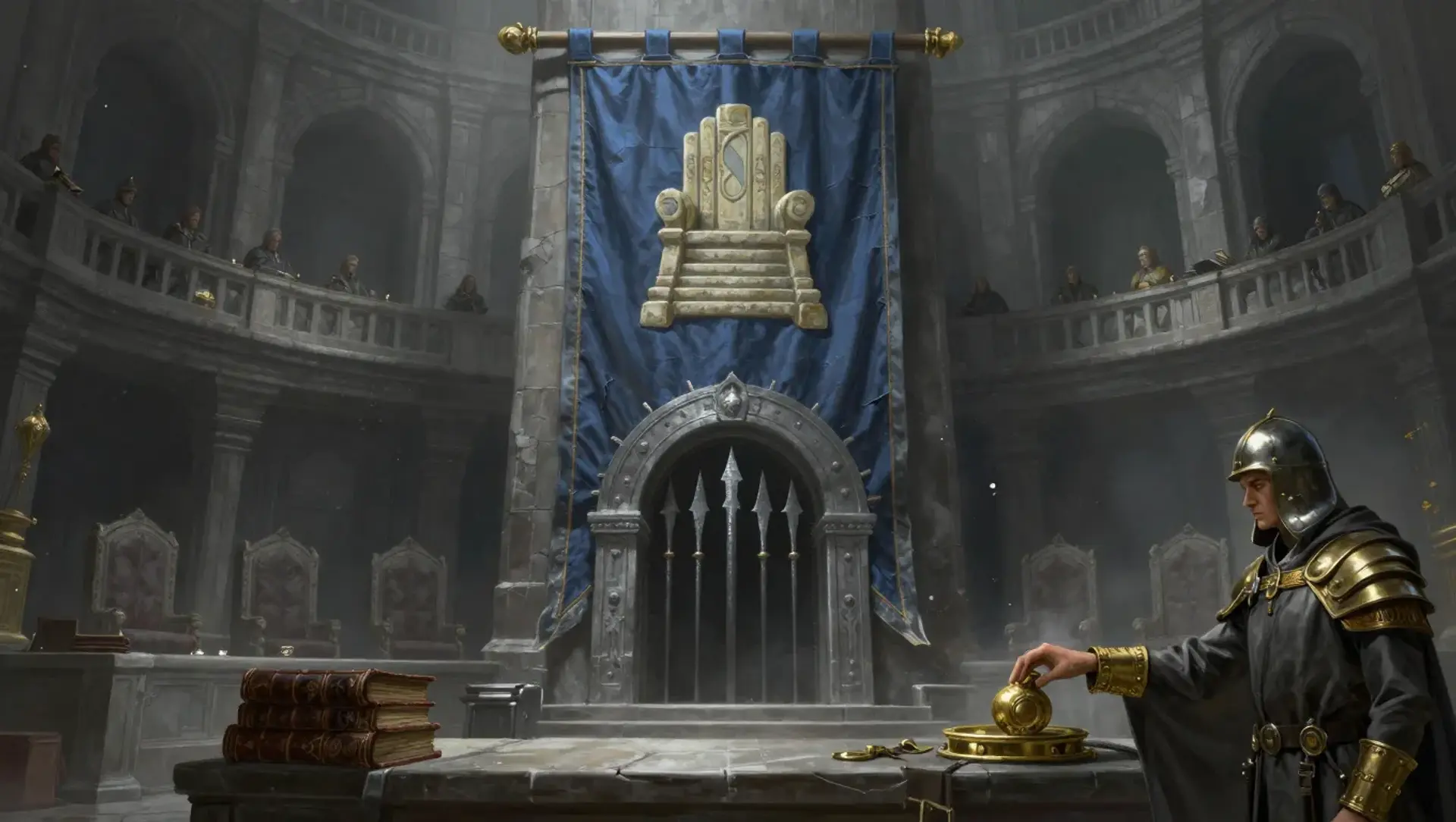
High Seats of Everlund - AI-generated fantasy Faction

High Seats of Everlund

For its first century, Everlund was ruled by merchant-princes and a ceremonial magistrate. That structure cracked during the Flood Winter, when the river changed course, the granaries failed, and thousands of displaced people arrived at once. Seven elders, chosen to coordinate relief, earned the trust of the city by keeping order without abandoning the hungry. Their authority was supposed to end when the crisis did. Instead, they discovered that the old rulers had hidden debts, a falsified census, and a secret labor levy that had driven the poorest wards into revolt. The elders exposed the corruption, reorganized the city, and promised that no single family would ever again monopolize control. Their promise created the High Seats. In the following decades, the council became a compromise machine. It balanced guilds, temples, trade houses, and ward captains against one another, preserving peace by making everyone slightly dissatisfied. That approach worked until the Ash Year, when a failed border war flooded the region with veterans, deserters, and families with nowhere to go. Everlund opened its gates widely and nearly collapsed under crime, hunger, and disease. The council survived, but the lesson lingered: openness was dangerous, and records were power. The present regime was forged after the forged-seal scandal, when a refugee convoy carried false travel markers and evidence that someone inside the city had been helping people disappear from the ledgers. Public outrage gave the hardliners their opening. The council introduced strict movement tracking, nightly gate counts, and compulsory residency tokens. To supporters, this is sensible administration. To critics, it is the first step toward a city that remembers everything and forgives nothing.

High Seats of Everlund

Ruling council · Neutral, drifting toward authoritarian pragmatism under pressure.

High Seats of Everlund

Order is mercy when chaos is hungry.

TypeRuling council
SizeSmall ruling core, broad admin…
InfluenceRegional
WealthModerate to rich in assets, bu…
AlignmentNeutral, drifting toward autho…
AgeFounded 183 years ago, with it…

Chronology

For its first century, Everlund was ruled by merchant-princes and a ceremonial magistrate. That structure cracked during the Flood Winter, when the river changed course, the granaries failed, and thousands of displaced people arrived at once. Seven elders, chosen to coordinate relief, earned the trust of the city by keeping order without abandoning the hungry. Their authority was supposed to end when the crisis did. Instead, they discovered that the old rulers had hidden debts, a falsified census, and a secret labor levy that had driven the poorest wards into revolt. The elders exposed the corruption, reorganized the city, and promised that no single family would ever again monopolize control. Their promise created the High Seats. In the following decades, the council became a compromise machine. It balanced guilds, temples, trade houses, and ward captains against one another, preserving peace by making everyone slightly dissatisfied. That approach worked until the Ash Year, when a failed border war flooded the region with veterans, deserters, and families with nowhere to go. Everlund opened its gates widely and nearly collapsed under crime, hunger, and disease. The council survived, but the lesson lingered: openness was dangerous, and records were power. The present regime was forged after the forged-seal scandal, when a refugee convoy carried false travel markers and evidence that someone inside the city had been helping people disappear from the ledgers. Public outrage gave the hardliners their opening. The council introduced strict movement tracking, nightly gate counts, and compulsory residency tokens. To supporters, this is sensible administration. To critics, it is the first step toward a city that remembers everything and forgives nothing.

Founder’s Story

The High Seats began as seven temporary elders chosen during the Flood Winter, when the old magistrate fell ill and the outer wards were drowning in panicked arrivals. The city survived because these elders turned the Hall of the Elders into a wartime command center, rationed grain, and opened the causeways only under strict escort. Their success made them indispensable. When the magistrate died, the people demanded the elders stay until the crisis passed. They never truly left. Over the decades, the temporary council became permanent, its seats inherited by appointment, bargain, and civic favor rather than election. The current era began when a refugee caravan was discovered carrying forged travel marks and a hidden cache of stolen civic seals. The scandal became the watershed moment that justified the new gate registry and changed the council from a cautious governing body into an anxious, watchful one.

The Mechanism of Intent

Public Goals
  • Protect Everlund from infiltration, smuggling, and unrest
  • Ensure fair distribution of resources during the refugee crisis
  • Preserve the city’s independence from outside powers
  • Maintain accurate records for the safety of all residents
  • Secret Goals
  • Turn the temporary gate registry into a permanent civic identification system
  • Identify and quietly neutralize the internal faction responsible for the forged-seal scandal, even if it requires framing a convenient scapegoat
  • Recover or destroy the original founding seals before a rival can use them to challenge the council’s legitimacy
  • Map every refugee network in the region so Everlund can control, absorb, or exile them at will
  • Current Objectives
  • Stabilize the city after months of refugee arrivals and border pressure
  • Complete a citywide registry of residents, laborers, and travelers
  • Prevent sabotage, smuggling, and infiltration through the gates
  • Preserve public confidence in the High Seats before unrest spreads
  • Identify who is exploiting the migration crisis for political gain
  • Long-Term Vision

    A city that can absorb disruption without losing its identity, with enough records, walls, and civic memory to survive any future collapse. Whether that becomes a generous civic order or a surveillance state depends on who wins the next succession struggle.

    StructureCivic ruling body
    SuccessionWhen a High Seat falls vacant, the remaining members appoint a provisional successor from among Lower Seats or major civic offices. The appointment must be publicly justified and then survive a three-stage review by the archive, the wardens, and the temple witnesses. In practice, succession is decided by coalition building, blackmail, and who can convince the city that change will be safer than continuity.

    Leadership

    Maera Voss First Seat of Everlund

    Cool-headed, observant, compassionate in private, and willing to make morally ugly choices in public.

    Elder Maera Voss First Seat and public voice of the High Seats

    Measured, shrewd, and tired in a way that makes her more dangerous, not less.

    Seat Orien Pell Architect of the gate ledger reforms

    Precise, idealistic, and deeply stubborn.

    Seat Daro Hest Security hawk and emergency powers advocate

    Blunt, suspicious, and charismatic in a grim way.

    Archivist Talan Mere Keeper of records and unofficial kingmaker

    Soft-spoken, exacting, and frighteningly patient.

    Seat Seris Vale Champion of refugees and civil aid

    Compassionate, politically nimble, and quietly exhausted by compromise.

    Visual sheet

    Turn High Seats of Everlund into a sheet

    A high-res, share-ready sheet you can post or print.

    Gallery

    No images yet. Click to add.

    Relationships