
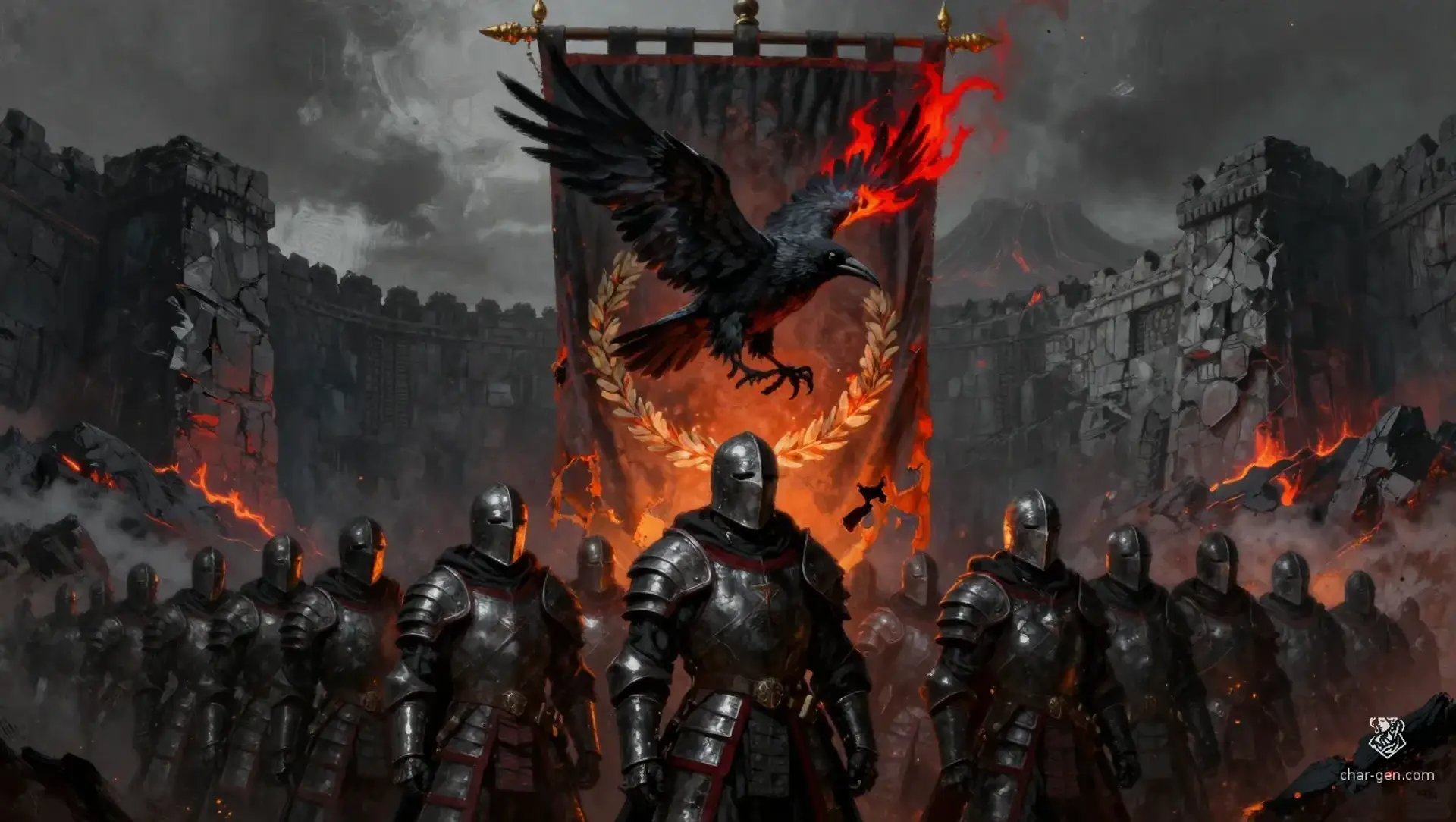
Altriyn
After its founding, Altriyn spent its first century acting as a fast, ruthless household army for hire, but its moral code quickly made it unusual. Lords who treated villagers as expendable found their contracts broken, their supply lines burned, or their own courts confronted by armed testimony. This created both admiration and fear. During the Second and Third Civil Wars, Altriyn learned that winning battles was not enough. If they left power structures intact, another tyrant would replace the last. So they began installing provisional tribunals, food councils, and road patrols wherever they intervened. The Fourth Civil War nearly destroyed them. A faction of officers wanted to become a sovereign nation, while another wanted to sell their swords to the highest bidder and abandon reform entirely. The schism ended in the Night of Broken Standards, when loyalists and separatists fought inside their own fortress for three days. The loyalists won, but Altriyn emerged smaller, harsher, and more self-aware. The Fifth through Tenth Civil Wars each added a lesson: how to prevent corruption in supply chains, how to rotate commanders before they built personal cults, how to keep mercy from becoming weakness, and how to distinguish genuine petitions from weaponized lies. The Eleventh Civil War was the defining one. A beloved Cinder Marshal was exposed as protecting a noble ally who had trafficked entire villages under the cover of wartime conscription. The scandal shattered public trust, but the tribunal that followed was unprecedented. The marshal was stripped, the ally executed, and the command structure rewritten so that no leader could ever again conceal cruelty behind loyalty. Since then, Altriyn has become a continental force known for discipline, civic relief, and uncompromising defense of the abused.
Private army and protectorate order · Lawful Good
Altriyn
“Stand between the cruel and the unguarded.”
Turn Altriyn into a sheet
A high-res, share-ready sheet you can post or print.