
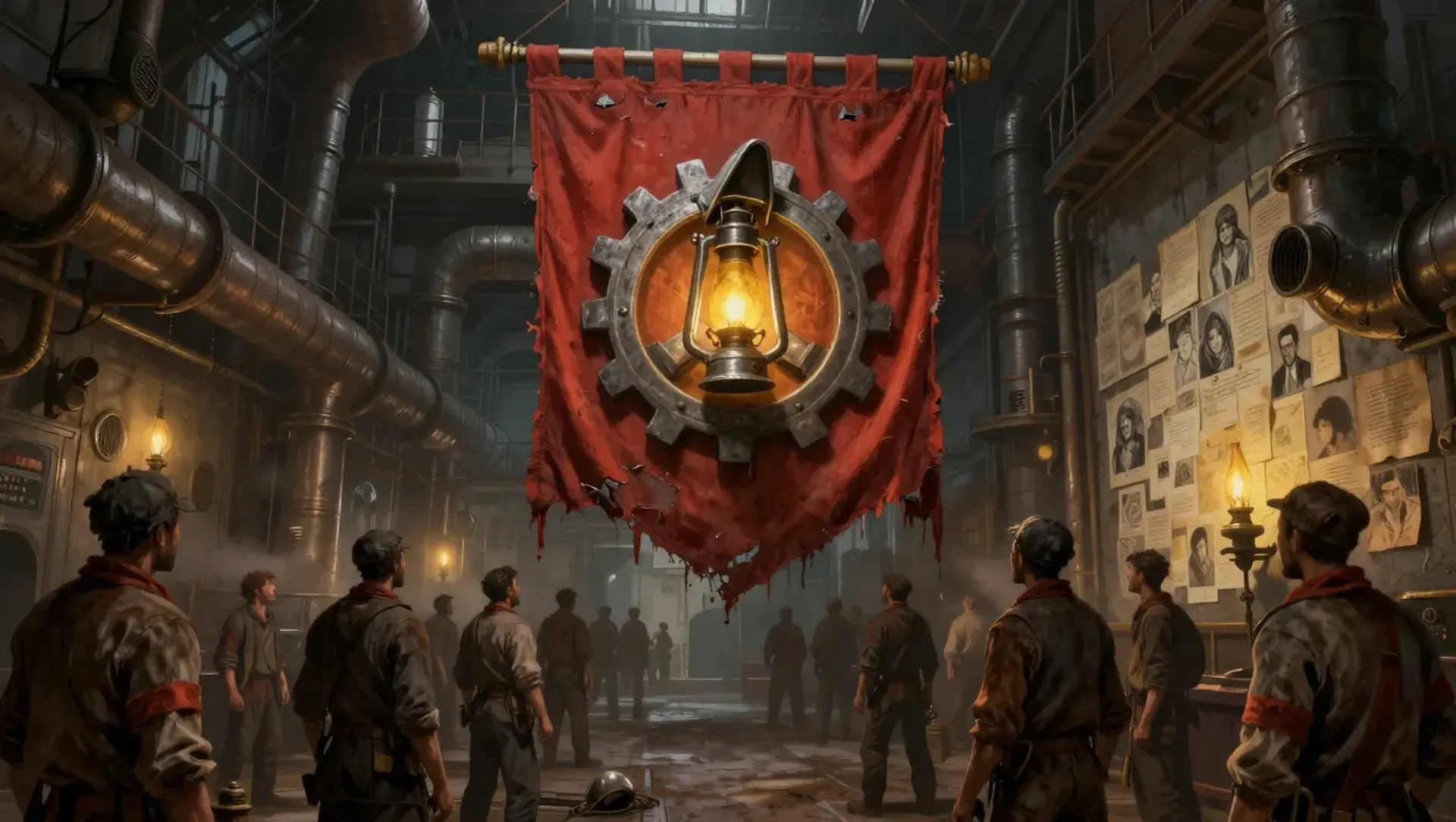
The Deckside Rights League
In its first decade, the Deckside Rights League won only small concessions. It forced the repair of unsafe lifts, published the first honest injury registry, and created the Lantern Aid kitchens that kept families alive during wage freezes. That success made it popular, but also made it dangerous, because the League showed that organized people could make the ship move without permission. Its second decade was shaped by internal fracture. Moderates argued that the League should aim for enforceable civic rights within the existing structure. Militants insisted that the upper castes would never yield unless publicly cornered. This split produced the Grey Rung Compromise, an uneasy rule that every campaign must have both a lawful petition and a pressure action attached to it. That compromise kept the movement together, but it also normalized brinkmanship. Five years ago, the Sealed Deck Riot nearly destroyed them. A rumor spread that missing children were being hidden in the sealed districts. When a patrol tried to disperse a crowd, someone threw a signal flare into a food conduit. The resulting panic caused shortages and a crackdown that imprisoned dozens of organizers. The League survived because ordinary workers refused to abandon it, but since then the command caste has treated every meeting as a possible insurrection. Today, the League is respected, feared, and watched. It has become the most disciplined popular force on the ship, capable of organizing charity, strikes, testimony drives, and mass refusal. It was forged by lies, but what keeps it alive is a stubborn belief that the truth can still be made to matter.
Labor and civic movement · Lawful-leaning civic insurgency with radical pressure points
The Deckside Rights League
“We keep the ship alive, so the ship must keep the truth.”
Turn The Deckside Rights League into a sheet
A high-res, share-ready sheet you can post or print.