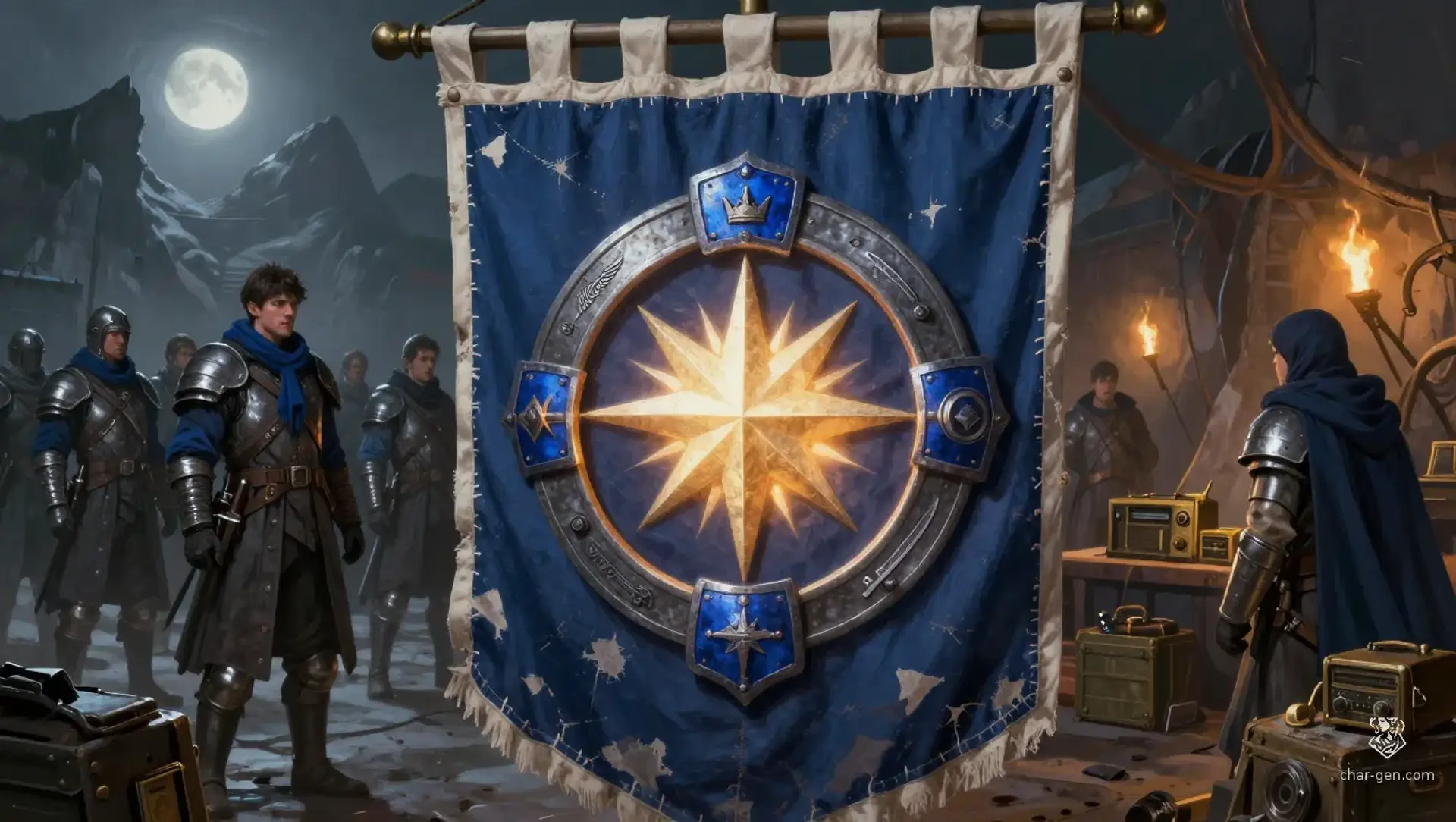
Coalition of Nations - AI-generated fantasy Faction

Coalition of Nations

After the first Ashkin offensives shattered regional alliances, the Coalition of Nations was born as a survival pact among republics, crown realms, mountain cantons, and liberated city-states. Its early years were defined by scarcity, with every bullet counted and every radio frequency shared between rivals. The coalition earned legitimacy by winning the Winter Relay Campaign, a six-month retreat in which it evacuated an entire province while delaying an Ashkin armored column with decoy supply trains and improvised artillery. That victory made the C.O.N. more than a refuge. It became a symbol. The second era began with expansion, when neutral governments asked to join the defensive pact after seeing what happened to isolated states. This growth caused internal strain, because some members wanted a pure military alliance while others wanted a broader political union. The third era began with the Split of White Harbor, when a member nation tried to secretly negotiate its own peace with the empire and was exposed by coalition intelligence. The resulting purge nearly broke the alliance, and the coalition learned that its greatest danger was not only Ashkin invasion but internal betrayal. Today the C.O.N. survives through careful compromise, old-fashioned logistics, and a doctrine that values repairable tools, local autonomy, and layered defense over flashy victory. Its reputation rests on the belief that if the free world still stands somewhere, the Coalition of Nations helped hold the line.

Coalition of Nations

International defense coalition and resistance alliance · Neutral Good

Coalition of Nations

Stand together. Hold the line. Let no world fall alone.

TypeInternational defense coalitio…
SizeHuge
InfluenceGlobal
WealthModerate, stretched thin by wa…
AlignmentNeutral Good
AgeFounded 87 years ago, forged d…

Chronology

After the first Ashkin offensives shattered regional alliances, the Coalition of Nations was born as a survival pact among republics, crown realms, mountain cantons, and liberated city-states. Its early years were defined by scarcity, with every bullet counted and every radio frequency shared between rivals. The coalition earned legitimacy by winning the Winter Relay Campaign, a six-month retreat in which it evacuated an entire province while delaying an Ashkin armored column with decoy supply trains and improvised artillery. That victory made the C.O.N. more than a refuge. It became a symbol. The second era began with expansion, when neutral governments asked to join the defensive pact after seeing what happened to isolated states. This growth caused internal strain, because some members wanted a pure military alliance while others wanted a broader political union. The third era began with the Split of White Harbor, when a member nation tried to secretly negotiate its own peace with the empire and was exposed by coalition intelligence. The resulting purge nearly broke the alliance, and the coalition learned that its greatest danger was not only Ashkin invasion but internal betrayal. Today the C.O.N. survives through careful compromise, old-fashioned logistics, and a doctrine that values repairable tools, local autonomy, and layered defense over flashy victory. Its reputation rests on the belief that if the free world still stands somewhere, the Coalition of Nations helped hold the line.

Founder’s Story

The Coalition of Nations began after the Fall of Varos Pass, when three nations were defeated in the same month and their refugees poured into a neutral border city called Halcyon Gate. The Ashkin Empire had already broken two treaties and installed puppet governors in neighboring states, and every nation that resisted alone was crushed in sequence. In the chaos, an old admiral, a mountain warlord, and a displaced diplomat shared the same bomb shelter during a night siege. They realized the Ashkin war machine was strongest when its enemies were isolated and slow. From that shelter came the first compact: pooled grain, pooled scouts, pooled artillery, pooled pilots, and pooled lies told to the empire until the coalition could move people and weapons faster than Ashkin intelligence could track them. The original signatories expected a temporary alliance, but the winter blockade at Halcyon Gate changed everything. Civilians survived because the coalition's improvised convoys ran antique trucks by moonlight, repaired radios with scavenged parts, and used obsolete rifles no one thought worth stealing. The Watershed Moment came during the Black Lantern Offensive, when the Ashkin tried to decapitate the newborn coalition by assassinating all three founders in one night. The attempt failed because Ashley Circle, then only a nameless cell of defectors and spies, exposed the strike and replaced the founders with decoys. After that night, the coalition stopped being a polite treaty and became a living machine of mutual defense, secrecy, and sacrifice.

The Mechanism of Intent

Public Goals
  • Protect the free world from the Ashkin Empire
  • Defend member nations and their civilian populations
  • Preserve sovereignty while coordinating mutual defense
  • Keep old weapons and broken systems working until peace returns
  • Support liberation movements that resist imperial expansion
  • Secret Goals
  • Expose and collapse the Ashkin Empire's internal supply network
  • Prevent any one member state from dominating the postwar world order
  • Recover enough lost technology to make future wars less reliant on mass conscription
  • Identify every embedded Ashkin collaborator inside coalition institutions
  • Keep the coalition from becoming a permanent authoritarian superstate
  • Current Objectives
  • Defend free nations from Ashkin expansion
  • Keep the Arusha continent outside imperial control
  • Preserve the coalition long enough for member states to trust one another after the war
  • Strengthen joint defense with limited resources and aging arsenals
  • Find a way to neutralize Ashkin influence networks without becoming a mirror of the empire
  • Long-Term Vision

    To create a stable international defense network strong enough to deter empire, flexible enough to respect local sovereignty, and humble enough to disappear once the free world can defend itself without the coalition's constant emergency authority.

    StructureDefensive coalition, intelligence network, and wartime alliance
    SuccessionThe High Marshal is chosen by the Grand Assembly of Flags after a formal hearing, battlefield review, and vote of confidence from the theater seats. In practice, succession goes to the person who can keep the member nations from fracturing during the transition. If no consensus is possible, the coalition appoints an interim marshal for one campaign season and tests the rival candidates through joint command.

    Leadership

    Marshal Ilyra Venn High Marshal of the Coalition of Nations

    Calm under pressure, fiercely protective of civilians, intolerant of cruelty, and willing to make unpopular compromises if they save lives.

    Marshal Ilyra Venn High Marshal

    Disciplined, patient, and relentlessly fair, with a habit of listening longer than others expect.

    Sable Rook Director of Deep Operations

    Sharp-tongued, suspicious, and quietly compassionate toward defectors and informants.

    Commander Seraphine Vale Wing Commander, Royal Elysium Air Force

    Charismatic, daring, and proud, with a tendency to turn every crisis into a test of courage.

    Captain Daro Kest Mountain Warfare Commander, Bluecoats Rebellion

    Blunt, practical, and stubborn, with a dry sense of humor and a deep suspicion of courts and councils.

    Chancellor Mirelle Tann Civilian Diplomatic Chancellor

    Elegant, calculating, and persuasive, often smiling while forcing people to reveal their true positions.

    Visual sheet

    Turn Coalition of Nations into a sheet

    A high-res, share-ready sheet you can post or print.

    Gallery

    No images yet. Click to add.

    Relationships