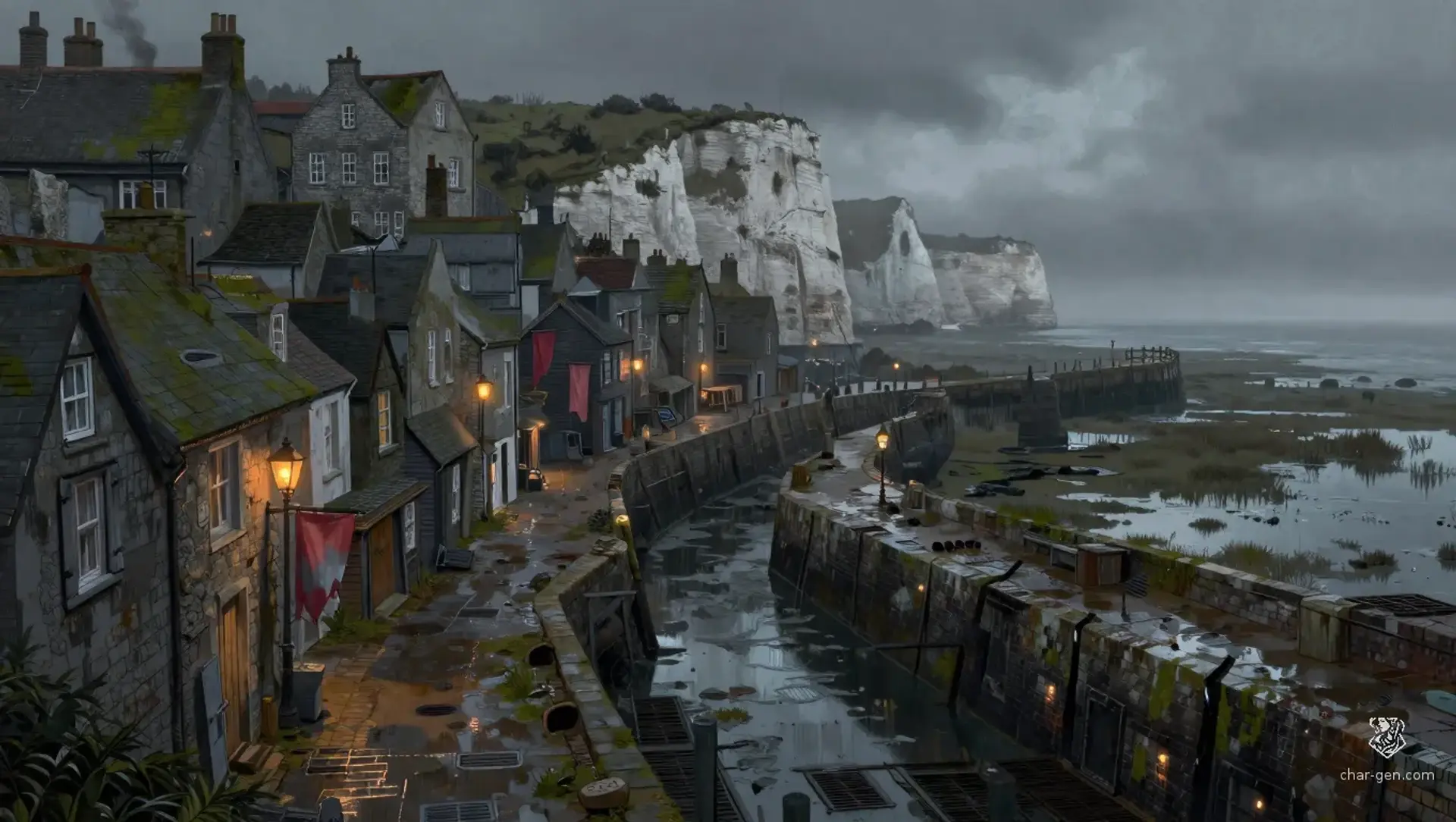
Harrowgate - AI-generated fantasy Settlement

Harrowgate

A coastal city that once thrived on trade and fish curing, now limps along after a devastating plague hollowed out whole wards. The harbor still moves money, but the older neighborhoods have gone to ruin, and the sewers are crowded with undead that slip through cracked stone and forgotten burial tunnels. Guilds keep the city fed, while the old river of death under the streets keeps reminding everyone that the plague never really ended.

City

Harrowgate

A salt-stained harbor city where the dead are still on the books and the sewers are starting to collect their debts.

TypeCity
PopulationAbout 18,000 in the active city, with another 4,000 living in the outer wards, dock camps, and plague-adjacent tenements. The population is smaller than it was before the fever, but the streets still feel crowded because so many families share space now.
WealthUneven. Merchant houses and guild masters still have coin, but ordinary families live in narrow margins and pay in silver piece and barter.
GovernmentMerchant council under emergency plague statutes
ReadinessUneven. The harbor is guarded well, but the lower wards are underpatrolled because too many watchmen refuse sewer duty. The city can answer a dock riot or a smugglers' raid, but not a coordinated breach from beneath. In an emergency, the bells can rouse militias, yet half the men who answer will come with old masks and little discipline.
A coastal city that once thrived on trade and fish curing, now limps along after a devastating plague hollowed out whole wards. The harbor still moves money, but the older neighborhoods have gone to ruin, and the sewers are crowded with undead that slip through cracked stone and forgotten burial tunnels. Guilds keep the city fed, while the old river of death under the streets keeps reminding everyone that the plague never really ended.

Salt wind, shuttered windows, and the smell of tar over old sickness. The city looks half-awake, like it never fully recovered from the plague and has simply learned to keep moving. Carts rattle past boarded chapels, guild banners hang from repaired facades, and everyone speaks in lowered voices when the bells ring after dusk. The streets near the harbor are busy, but the back lanes still feel watched.

Gallery

No images yet. Click to add.

Connections

Geography

RegionA sheltered bay at the mouth of a slow river, with marshland to the south and chalk cliffs to the north.
ClimateMild coastal weather with cold fogs off the sea, hard rain in spring, and damp winters that make rot and mildew constant enemies.
TerrainHarbor piers, low stone wards, old drainage canals, and deep brick sewers cut through the oldest quarter.
Travel Links
Sea lanes to the western portsA toll road inland to the grain estatesA ferry crossing upriver to the mill villagesOld service tunnels beneath the plague wards

Culture

The city prizes endurance over virtue. People admire those who keep accounts, repair roofs, and show up for the shift even when grieving. Mercy is respected, but only if it is paid for or organized. There is deep suspicion of strangers who talk about cleansing the city, because too many officials once used that word to excuse cruelty during the plague.

Races
HumansDwarvesHalflingsHalf-elvesA few tiefling families
Religions
A healing sea-chapel dedicated to mercy and safe passageA funerary cult that keeps plague names and burial ledgersSmall household shrines to ancestors and local saints
Arts & Entertainment

Before the plague, the city loved dockside songs, masque plays, and public recitals by guild poets. Now entertainment is smaller and rougher: dice in taverns, candlelit recitations for the bereaved, and street singers who trade mourning verses for hot soup. People still dress well on holy days, but they favor practical dark wool and scarlet cords to show they have survived sickness.

History

Government

LeaderCouncil Chair Elsbeth Vale, who is careful with numbers and terrible with people. She can balance a city ledger down to the copper piece, but she hesitates when faced with bloodshed or hard public blame. She relies too much on assistants and delays decisions until factions force her hand. That indecision keeps the peace in daylight and lets the sewer rot spread at night.
Merchant council under emergency plague statutes
Key Laws
No one may enter sealed plague streets without a guild writ or chapel tokenBurials must be recorded before bodies are burned or sunkSewer work is taxed but required by law from each guild in rotationForeign healers must register all remedies with the chapel clerks
Problems
The city is one bad week away from a breach into the harbor quarter.

Undead are crawling up through the sewers into the lower wards, but the council cannot agree on whether to seal the districts, burn them out, or reopen them for trade. Every delay means more deaths and more rumors.

The records themselves have become a weapon, and everyone knows it.

The plague ledgers have started showing citizens as both dead and active, which means some families are being taxed twice while others are claiming houses that were never formally released.

Short-term cash is being traded for long-term disaster.

The council is quietly selling access rights to the sealed wards, hoping to raise money for repairs. That keeps the city functioning, but it also feeds the factions that want the plague streets opened before the dead are properly contained.

Economy

Industries
FishingShip fittingSalting and curingLedger work and customs collectionGrave services and plague recovery trade
Scarcity

Fresh grain, clean cloth, and trained labor are all short. Anything that helps against disease, rot, or sewer infestations sells fast.

Wealth LevelUneven. Merchant houses and guild masters still have coin, but ordinary families live in narrow margins and pay in silver piece and barter.
Exports
Salted fishTarRopeHarbor repairsFuneral paper and burial cloth
Imports
GrainLamp oilMedicineTimberIron fittings

Defenses

ReadinessUneven. The harbor is guarded well, but the lower wards are underpatrolled because too many watchmen refuse sewer duty. The city can answer a dock riot or a smugglers' raid, but not a coordinated breach from beneath. In an emergency, the bells can rouse militias, yet half the men who answer will come with old masks and little discipline.
Fortifications
A seawall with patched cannon mountsThree harbor watchtowersLocked ward-gates around the oldest plague districtIron sewer grates bolted from the street side
The Harbor Guard(About 180 sworn guards, with 60 more temporary dock spears when the bells ring)

A small civic guard reinforced by hired dock militia and a handful of plague veterans who know the sealed streets. They are brave in daylight and superstitious after dark.

Law & Order

crime Level
Moderate in the harbor, high in the lower wards, and almost open in the abandoned plague district after dark.
enforcement
The Harbor Guard patrols the streets, but sewer law is enforced by whoever can prove they know the tunnels and carry the right tokens. Bribes are common, and chapel writs can override almost anything.
typical Punishment
Fines in gold piece or labor on the seawall. Sewer offenders are often conscripted into night-cleaning teams, and grave robbers may be branded and exiled instead of hanged.

Calendar of Events

Visual sheet

Turn Harrowgate into a sheet

A high-res, share-ready sheet you can post or print.