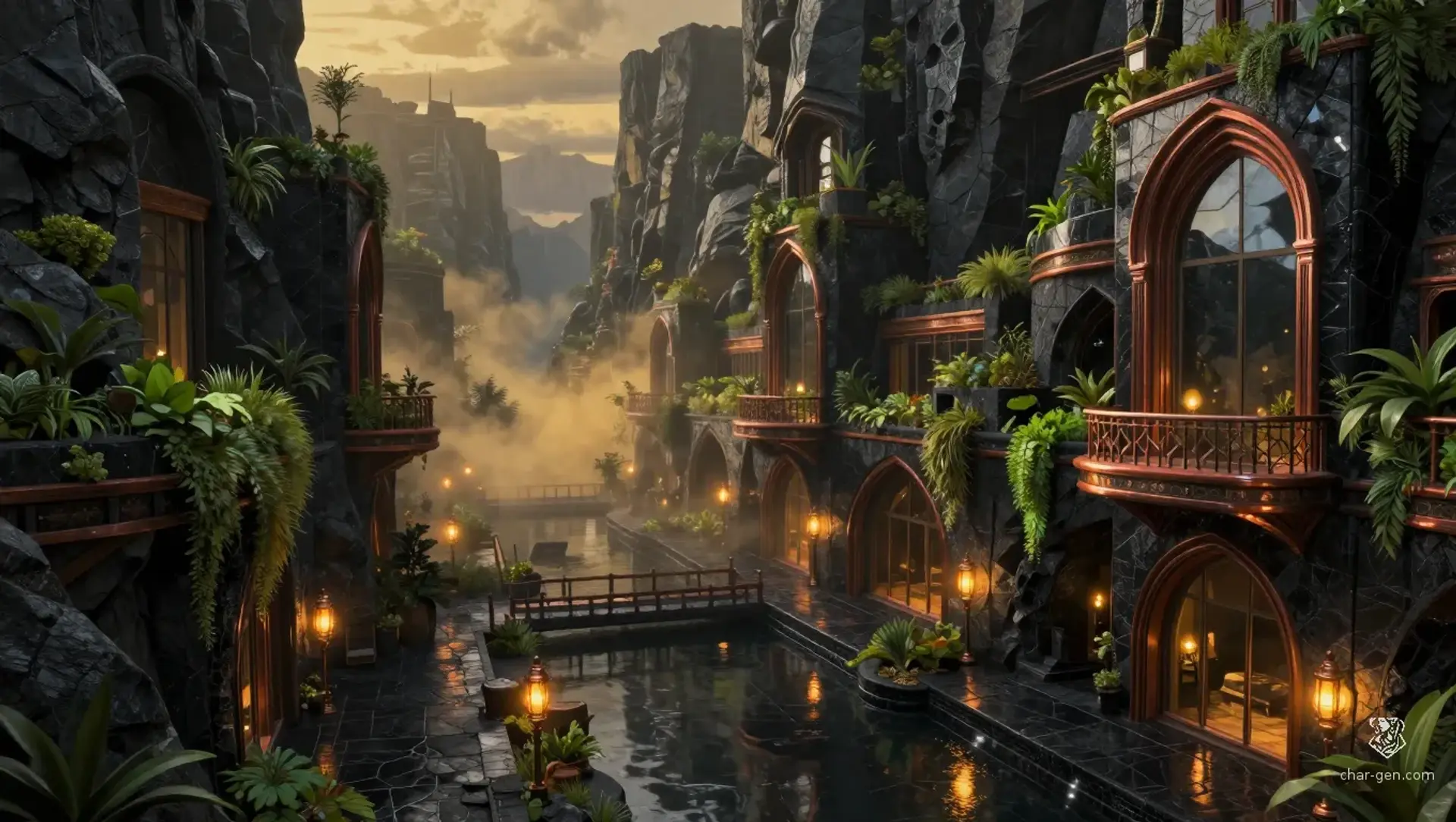
Blackglass Hollow - AI-generated fantasy Settlement

Blackglass Hollow

Blackglass Hollow is a town of polished black stone, red-bronze balconies, and mirrored passageways built around a legal archive that every faction depends on and resents. The place exists because outsiders need neutral ground to bargain with fiendkin courts without crossing into true infernal territory. Its wealth comes from transcripts, intermediaries, and carefully hosted meetings. The town is safe so long as the record is trusted. If the record fails, so does everything else.

Town

Blackglass Hollow

A treaty town where the record matters more than the promise, and everyone knows someone is quietly editing both.

TypeTown
PopulationAbout 2,400 permanent residents, with another 300 to 500 transient envoys, clerks, retainers, and petitioners in a busy season.
WealthComfortable and uneven. The town looks rich because its public spaces are immaculate, but most households live by service, patronage, or side payments.
GovernmentA treaty oligarchy ruled by the Archive Court, where legal standing matters more than bloodline in public and bloodline matters more than legal standing in private.
ReadinessModerate, but selective. The town can delay a siege and frustrate spies, yet it is built for denial and control rather than open war. Guards react quickly to riots, infiltration, and arson, but they depend on written authority. If the archive is compromised, the defense network becomes uncertain and arguments over command can slow every response.
Blackglass Hollow is a town of polished black stone, red-bronze balconies, and mirrored passageways built around a legal archive that every faction depends on and resents. The place exists because outsiders need neutral ground to bargain with fiendkin courts without crossing into true infernal territory. Its wealth comes from transcripts, intermediaries, and carefully hosted meetings. The town is safe so long as the record is trusted. If the record fails, so does everything else.

Quiet corridors, warm metal lamps, and careful voices. The town feels civilized at first glance, but every conversation seems to have an unseen witness. Doors are thick, windows are mirrored, and strangers are welcomed politely while being measured for leverage. People here know how to host a devil, hide a grievance, and smile through both. Nothing is shouted unless somebody has already lost control.

Gallery

No images yet. Click to add.

Connections

Geography

RegionA planar crossroads where mortal roads, embassy tracks, and dream routes overlap just enough to make diplomacy profitable and dangerous.
ClimateMild and unnervingly warm, with dry evenings and sudden pockets of fragrant mist rising from the gardens. The light is often filtered by high walls and mirrored lanes, giving the town a twilight feel even at midday.
TerrainBlack volcanic stone, terraced courts, hanging gardens, narrow water channels, and vaulted indoor streets meant to shelter conversation from prying ears.
Travel Links
A toll road to the mortal river port at GrayfordA dream-gate opened only under legal sealAn embassy causeway leading to the Ember CourtA hidden caravan stair through the basalt hills

Culture

Privacy is treated as a form of mercy and a form of control. People are taught that a promise is only respectable if it can survive scrutiny, yet most would rather be known through records than through gossip. Courtesy is strong, but so is suspicion. Outsiders are not feared for being strange. They are feared for speaking too plainly, too loudly, or too soon.

Races
FiendkinHumansTieflingsHobgoblinsAasimar
Religions
The Lantern Court, a civic cult of oaths and witnessPale Saint devotion among oathkeepersHouse shrines to ancestral namesSmall infernal patron cults kept discreetly
Arts & Entertainment

Music is chamber-sized, meant for private rooms and veiled listeners. Poetry circles prefer arguments over applause, and masked debates are more popular than theater. The town prizes craft that rewards attention, like metalwork, glass etching, and puzzle-box games that reveal different meanings depending on who opens them. Public spectacle is considered vulgar unless it serves a legal or diplomatic purpose.

History

Government

LeaderArchivist-Lord Serevan Veyr, who is brilliant at reading people and terrible at trusting them.
A treaty oligarchy ruled by the Archive Court, where legal standing matters more than bloodline in public and bloodline matters more than legal standing in private.
Key Laws
No bargain may be concluded in a public hall without a registered witnessNo blade may be drawn in the archive districtAll foreign guests must lodge under a named patronDuplicated contracts must be deposited within one day
Problems
Unsigned additions to the record are changing who owes whom.

The archive has begun receiving pages that were never filed by any clerk, yet they match old contracts exactly. Someone is using the town's own records to rewrite standing agreements, and the leader hesitates too long because he wants proof before action. That caution is sensible, but it is letting the problem grow while rivals prepare their own version of events.

The ruler cannot choose between fairness and family.

A dispute over patronage between House Veyr and the clerks has spilled into the streets as slow sabotage, missing keys, delayed witnesses, and vanished seals. Serevan's flaw is indecision under family pressure. He knows the house is overreaching, but he keeps trying to reconcile people who no longer want reconciliation.

Economy

Industries
Archiving and notarizing contractsDiplomatic hostingGlass and metal craftSpecialty horticulture
Scarcity

Good paper, honest ink, and anything not already claimed by a promise are all in short supply.

Wealth LevelComfortable and uneven. The town looks rich because its public spaces are immaculate, but most households live by service, patronage, or side payments.
Exports
Certified transcripts and treaty copiesMirrorwork and engraved bronze fittingsGardens of rare night herbsEscort services for emissaries and legal travelers
Imports
Food grainLamp oilFine paper and inksStonecutting toolsLuxuries for visiting courts

Defenses

ReadinessModerate, but selective. The town can delay a siege and frustrate spies, yet it is built for denial and control rather than open war. Guards react quickly to riots, infiltration, and arson, but they depend on written authority. If the archive is compromised, the defense network becomes uncertain and arguments over command can slow every response.
Fortifications
Polished black walls that reflect torchlight poorlyRoofed causeways that can be sealed with iron screensHidden watch niches behind hanging gardensA bell system that alerts the archive before the gates
The Quiet Guard(about 90 sworn guards)

The Quiet Guard serves more as an enforcement arm than an army. They escort envoys, suppress disturbances, and seize anyone who breaks treaty law in public. Their officers are trained in restraint, not battlefield glory, and many owe personal favors to the archive clerks. They are feared because they are patient, documented, and hard to bribe openly.

Law & Order

crime Level
Low in the streets, high in the ledgers. Open violence is rare, but forgery, blackmail, and witness tampering are constant threats.
enforcement
The Quiet Guard enforces written rulings, while the archive clerks supply the evidence that makes rulings possible.
typical Punishment
Fines, enforced service, seizure of seals or property, and public binding to an amended contract. Repeat offenders may be barred from patronage, which is often worse than prison.

Calendar of Events

Visual sheet

Turn Blackglass Hollow into a sheet

A high-res, share-ready sheet you can post or print.