
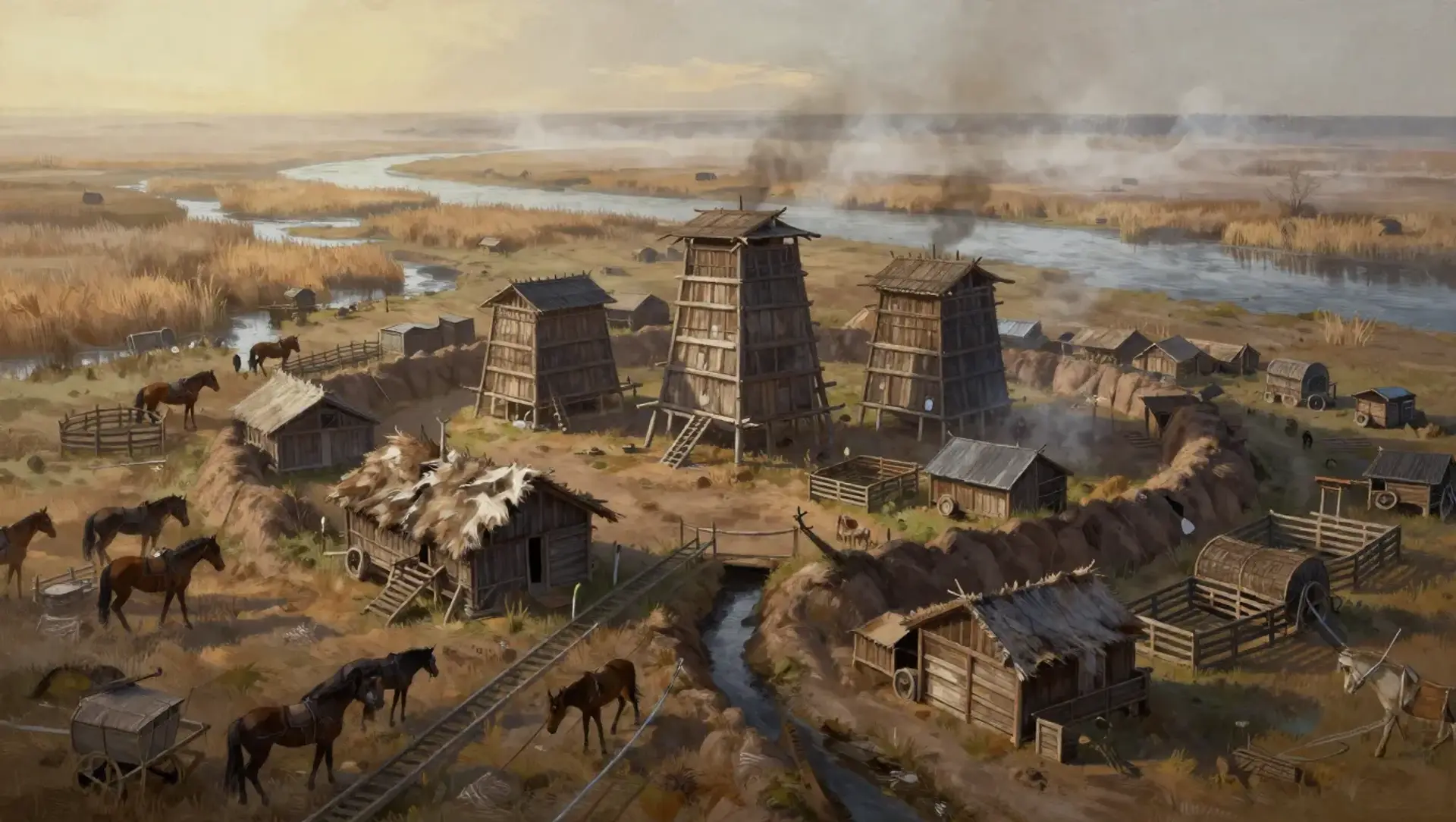
Hearthford
This town exists because the river ford, grazing flats, and caravan road meet in one place where herds can be watered, traded, and sheltered before the weather turns. The settlement began as a seasonal camp, then stayed because the storehouses and smiths made winter survivable. What makes it distinct is that authority follows the communal grain and horse stores, not any crown seal. Whoever controls those keys can steer the town without ever sitting a throne.
Hearthford
A ford town where grain keys matter more than spears, and every clan knows who can starve whom.
“A hard-working river town built from wagon frames and timber ribs, where winter stores matter more than titles and every house can be unbolted in a day. Smoke hangs low over felt roofs, and strangers are welcomed politely, then quietly measured against the grain stores and horse pens. People speak softly in public, but each clan circle watches the communal storehouses as if they were the real throne.”
Gallery
Connections
Geography
Culture
The town values movement, kin duty, and the right to survive hard weather without begging. A person earns respect by feeding travelers, mending what breaks, and keeping promises when the roads turn ugly. Permanence is treated as useful, not noble. The people believe land should be shared by use, and anyone who hoards grain or pasture is acting like a thief with polished manners.
Songs are practical, naming good grazing, safe crossings, and the mistakes of dead chiefs. Storytellers perform beside the fire rings, while knife-games and wrestling settle pride better than speeches. Crafts favor mobility: feltwork, saddle repair, hide-sewing, wheelwrighting, and bright painted talismans tied to horse manes. People trust a generous host, but they trust a careful listener even more.
History
Government
The communal storehouses are short by one season of feed, and the missing grain has to come from somewhere before the herds are cut down or the town starts selling itself to outsiders.
Marshal Ilyan Voss keeps pressing for a permanent garrison at the ford, saying the town cannot protect itself without outside steel. Half the council suspects he wants the stores more than the roads.
Mara Dren is careful and honest, but she hesitates whenever a decision would embarrass her cousin Sava Reed or anger the caravan masters. Her delays are becoming a liability, and everyone knows it.
Economy
Good timber and clean iron are scarce. In lean years, feed grain becomes more valuable than coin, and rumors of hidden stores can start a feud faster than a knife.
Defenses
A mounted levy called the Hearth Riders, drawn from each clan circle and drilled to scatter, regroup, and escort caravans.
Law & Order
- crime Level
- Moderate, with theft and fraud more common than murder. Raiding is rare inside the berms, but cheating the grain count can ruin families.
- enforcement
- The fire steward and Hearth Riders settle most disputes, then hand serious offenders to the council after public shaming and restitution.
- typical Punishment
- Restitution, labor in the storehouses, loss of pasture rights, or exile from the caravan ring for repeat offenders.
Calendar of Events
Turn Hearthford into a sheet
A high-res, share-ready sheet you can post or print.