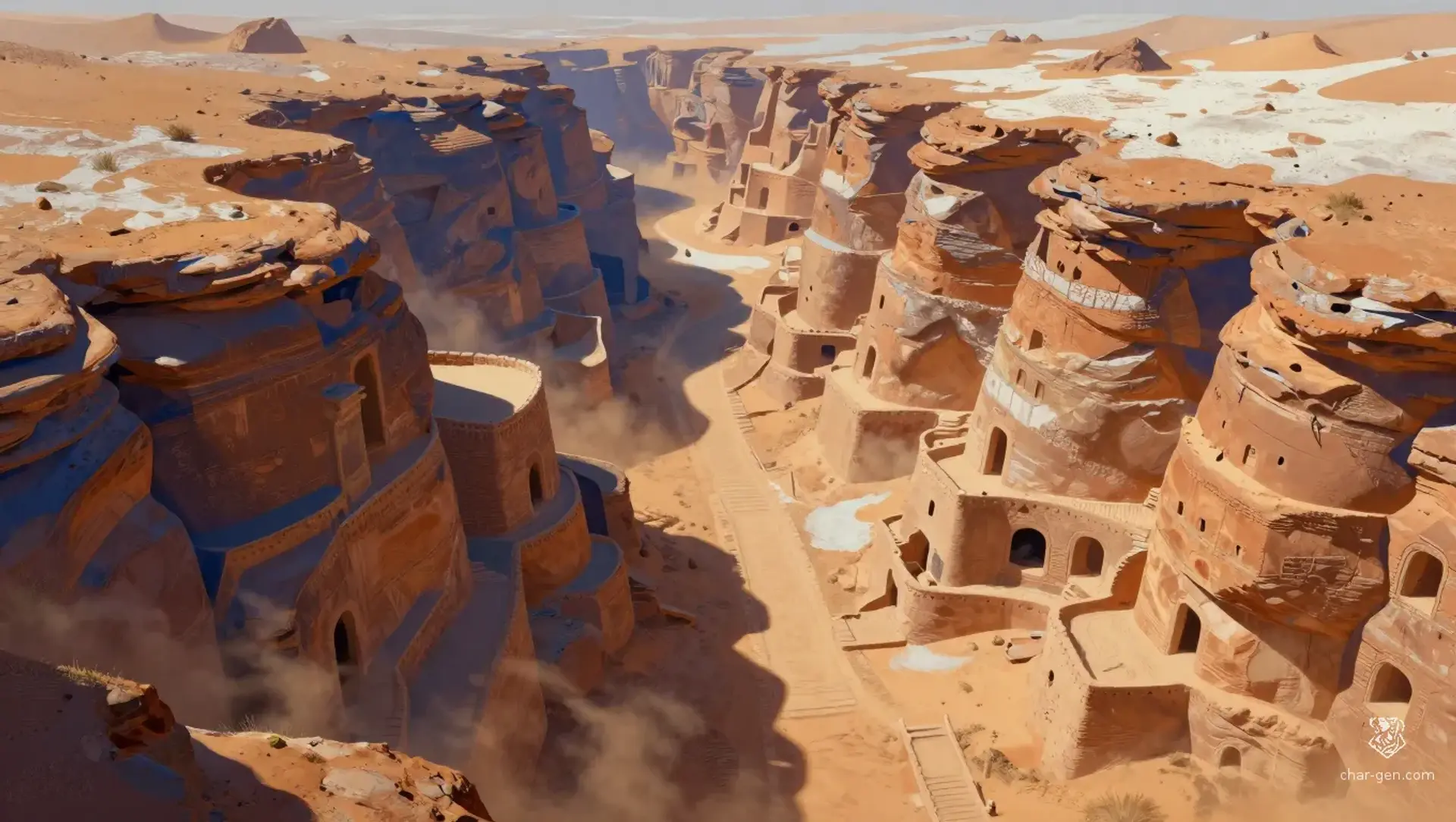
Siltwatch - AI-generated fantasy Settlement

Siltwatch

This town survives because a chain of subterranean sand-pockets traps cool seepage beneath the canyon, feeding wells that never fully dry. The Sinking Citadels were built over those chambers long ago, their curved towers descending into the rock so wind and heat could be kept out. The place is valuable, but fragile. Whoever controls the water ledger can make law, and everyone here knows it.

Town

Siltwatch

A canyon town where the water ledger matters more than the law, and everyone knows it.

TypeTown
PopulationAbout 2,400 permanent residents, swelling to nearly 3,500 when caravans and seasonal workers are in town
WealthModest, with a few very rich water-holders and many careful households
GovernmentWater-ledger oligarchy with a ceremonial headman
ReadinessAlert but strained. The town can mobilize quickly inside its own canyon, yet its militia is short on trained bowyers and longer-range scouts. Everyone trusts the walls more than the leadership.
This town survives because a chain of subterranean sand-pockets traps cool seepage beneath the canyon, feeding wells that never fully dry. The Sinking Citadels were built over those chambers long ago, their curved towers descending into the rock so wind and heat could be kept out. The place is valuable, but fragile. Whoever controls the water ledger can make law, and everyone here knows it.

Dry wind, shaded stone, and constant bargaining over water make the town feel half-buried even at noon. People speak softly indoors and watch doors, cistern lids, and strangers with equal care. The Sinking Citadels loom above the alleys like broken teeth, but the real power sits below them in the sand-pockets where the wells breathe and the old ledgers are kept.

Gallery

No images yet. Click to add.

Connections

Geography

RegionA canyon basin on the edge of alkali flats and dune fields, where underground seepage gathers in hidden pockets.
ClimateHot, dry, and blasted by seasonal windstorms that fill every crack with fine sand.
TerrainSteep canyon walls, buried stairways, salt crust flats, and hollow chambers under the dunes.
Travel Links
A carved stair road to the north flatsA buried mule path to the eastern caravan wellsA guarded canyon descent to the old salt minesA wind-marked route to the nearest dune shrine

Culture

People here respect restraint, useful honesty, and anyone who can keep a promise under pressure. Waste is treated as a moral failure, not just a practical one. Public shame matters, but so does quiet mercy, because everyone knows the town survives by small favors hidden inside hard rules. A person who shares water in private may be forgiven almost anything else.

Races
HumansDwarvesHalflingsGnomesDesert elves
Religions
The Dust MotherSaint of the Deep WellSun-Hearth ritesAncestral oaths
Arts & Entertainment

Music is made with reed pipes, bone drums, and hand bells hung in doorframes to catch the wind. Stories are told in courtyards after dusk, usually about lost cisterns, buried towers, and people who survived by lying well. Carved gourds, dyed cloth, and wall murals in ochre and soot are prized because they store memory without wasting precious metal or ink.

History

Government

LeaderMarek Voss, Headman by custom, though the Ledger House holds the real leverage
Water-ledger oligarchy with a ceremonial headman
Key Laws
No household may draw from a sealed cistern without a stamped tokenOutside caravans must register their water skins at the canyon gateAnyone caught damaging a well mouth owes labor or exileWeapons may be carried, but not drawn inside the cistern quarter
Problems
The headman is losing authority because he refuses to choose which water reserve will be opened to the poor and which faction gets blamed for the shortage.

Marek is a capable speaker but a weak judge. He delays hard choices until the Ledger House has already split into camps, and then pretends the split was his idea. The result is a town that obeys him in public and ignores him in private.

The town may be sitting on a larger hidden reserve, but uncovering it would tear the government apart.

The lower cistern has begun to leak brackish water into a tunnel that should be dry. That means either a new seep has opened or someone has breached the old reserve. Both possibilities terrify the people who count the water.

Economy

Industries
Well keepingCaravan serviceSalt extractionStone cuttingTunnel salvage
Scarcity

Fresh water, good timber, and replacement rope are always in short supply.

Wealth LevelModest, with a few very rich water-holders and many careful households
Exports
Salt blocksDate syrupSaltstoneCamel tackDried fish from caravan wells
Imports
TimberLamp oilIron toolsTextilesGrain

Defenses

ReadinessAlert but strained. The town can mobilize quickly inside its own canyon, yet its militia is short on trained bowyers and longer-range scouts. Everyone trusts the walls more than the leadership.
Fortifications
Curved adobe ramparts reinforced with saltstoneNarrow canyon stairways with drop-gatesHidden sally tunnels from the lower sand-pocketsWatch niches carved into the inverted tower walls
The Salt Guard(About 80 sworn hands, with another 40 part-time auxiliaries)

A compact militia of canyon guards, well-runners, and tower sentries who can fight well in narrow spaces but are poorly suited to open desert. Their real strength is knowing the hidden steps, false doors, and choke points around the citadels.

Law & Order

crime Level
Moderate. Theft is common, violence is rare in public, and water crimes are treated as almost treasonous.
enforcement
The Salt Guard patrols the market and canyon gates, while the Seal Wardens handle hidden violations and sealed-room disputes.
typical Punishment
Labor in the cistern works, public fine in water tokens, or exile to the flats for repeat offenders

Calendar of Events

Visual sheet

Turn Siltwatch into a sheet

A high-res, share-ready sheet you can post or print.