
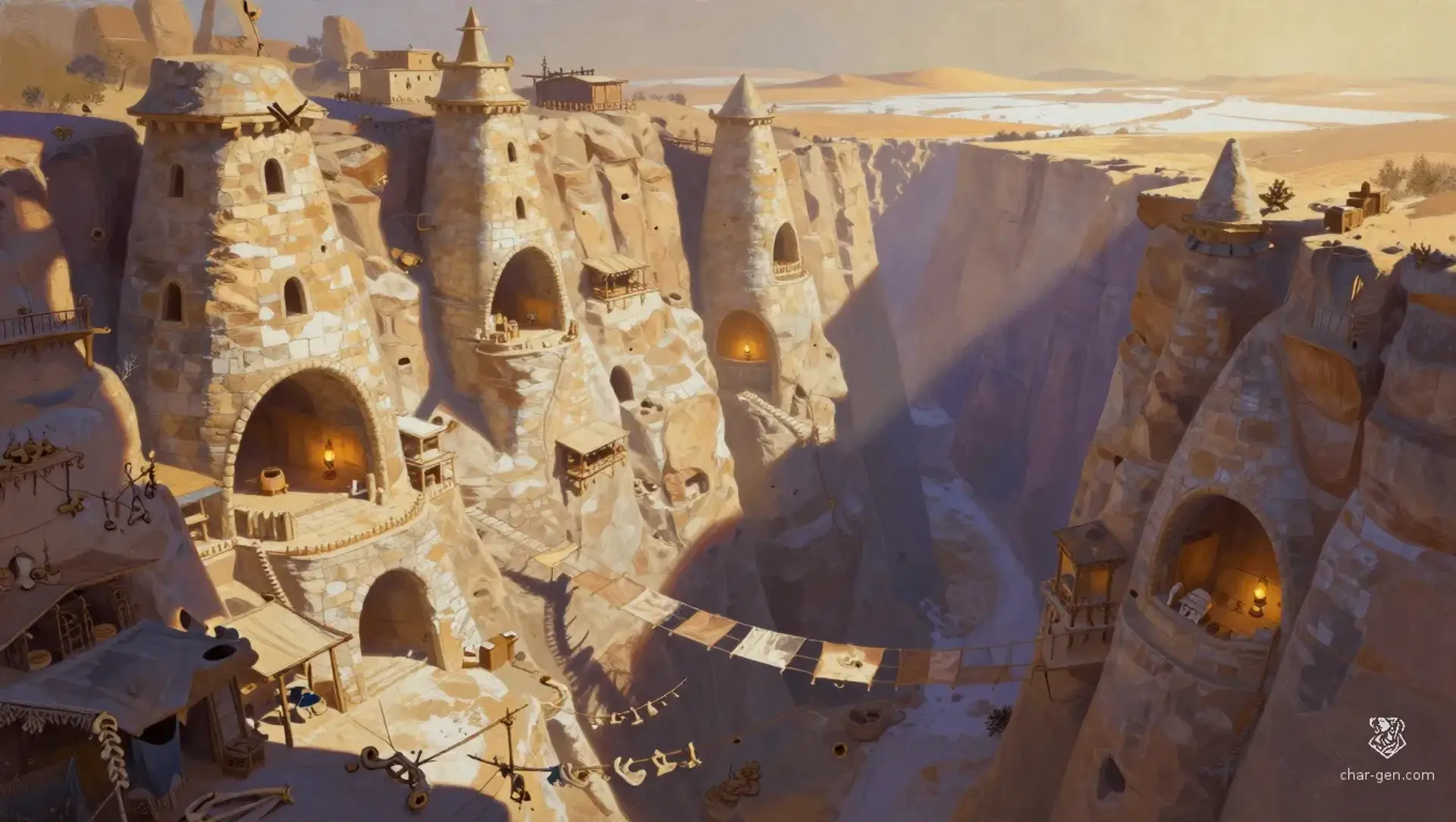
Old Sump
Old Sump is a desert town built in the lee of a canyon where underground sand-pockets keep shallow wells from collapsing. Its heart is a row of inverted citadels sunk into the cliff face, each one a curved, downward-reaching tower that once served as a water vault and now houses magistrates, ledgers, and storerooms. The town exists because the canyon catches rare runoff and because no caravan can cross the flats without its cisterns.
Old Sump
A canyon town where water ledgers matter more than birth, and every dry season exposes another lie.
“Dry wind drives grit through the lower courts, and every conversation in Old Sump ends with someone asking who controls the wells this week. The town feels half-buried already, with pale stone walls, curved cistern mouths, and lantern light sinking into canyon shadow. People are cautious but not cold. They trade favors the way other places trade coin, because a bad rain season or a blocked tunnel can turn a neighbor into a creditor overnight.”
Gallery
Connections
Geography
Culture
Survival is a civic virtue, but so is reciprocity. In Old Sump, a person who shares water in a hard week earns more honor than one who boasts of bravery. People distrust easy promises and polished officials. They admire those who keep records, remember obligations, and admit when the wells are low. Mercy is respected, but only if it does not threaten the next ration day.
Songs are short and practical, made to be remembered in wind and work. Storytellers recite family debts, caravan routes, and old canyon rescues rather than epic kings. People prize carved water-jugs, dyed veil cloth, and ring dances performed in narrow courtyards where the echo matters. The best entertainment is a public dispute that ends with a fair compromise, because everyone enjoys seeing the Water Court made to sweat.
History
Government
The spring flow under the lowest citadel has dropped for three weeks, and the ration schedules are already being cut. Hessa keeps pretending this is seasonal, but the tunnel men know the sand pocket has shifted. If the cistern level falls again, the town will face riots, smuggling, and possibly a forced opening of sacred reserve water.
Ledger sheets from five years ago were rewritten, then sealed into the public archive as if nothing changed. Someone is using those altered debts to seize property from ordinary households. The Water Court is split between those who want to bury the evidence and those who want a controlled confession, because either path could destroy the council.
Economy
Fresh water, timber, and clean grain are always short. Every household keeps emergency jars sealed and marked, and every guild has arguments about who gets first draw after a storm. The town can survive scarcity, but only because scarcity itself is organized into law.
Defenses
A compact force of canyon guards, mule scouts, and a few bolt-armed reserve soldiers. They know the hidden ledges, the service drains, and the routes through the sand pockets better than any invader could. Their discipline is good on paper and uneven in practice, because several sergeants owe favors to the same judges who issue the water warrants.
Law & Order
- crime Level
- Moderate, but selective. Petty theft is common and tolerated if it does not touch water stores. Crimes against the ration system are treated as threats to the whole town and punished harshly.
- enforcement
- The Sump Watch patrols the roads and cistern gates, while the Water Court uses clerks, warrants, and debt seizure to enforce obedience. In practice, those with records and friends get warnings first.
- typical Punishment
- Fines in water credit, public labor on the cistern walls, or ration suspension. Smuggling through sacred channels can earn tunnel exile or branded debt service.
Calendar of Events
Turn Old Sump into a sheet
A high-res, share-ready sheet you can post or print.