
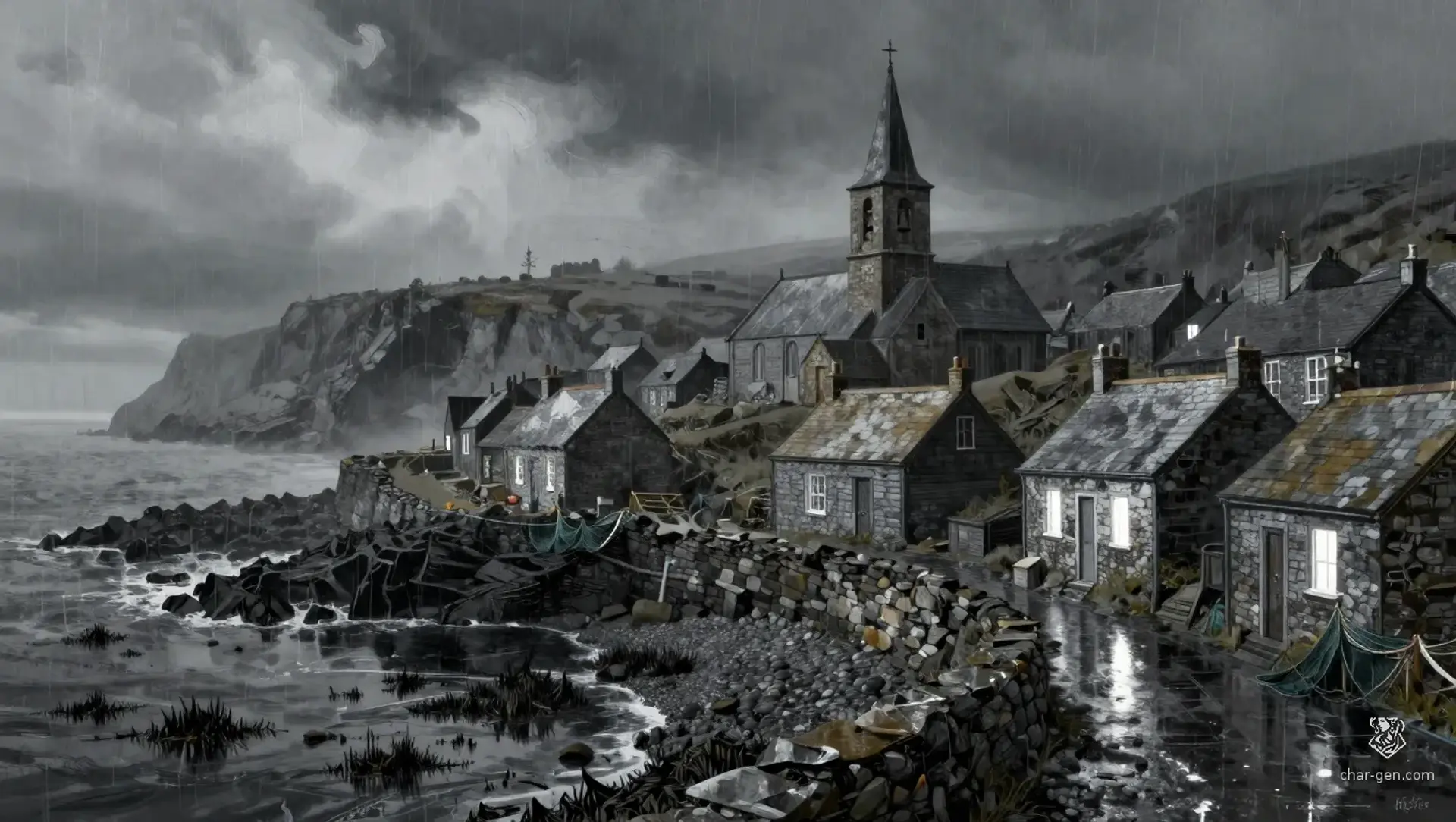
Whitecove
Whitecove is a coastal village built around a small church and a narrow harbor that still works because the tide pools shelter a deep channel. The village is stripped of color, from its washed stone houses to the faded clothes on the line, and no one agrees whether this is blessing or punishment. The church claims the sea was held back here by a holy vow. The older folk whisper the vow was paid for, not granted.
Whitecove
A gray fishing village where the church keeps the tide back, and everyone suspects the price was paid in color.
“Harsh salt air, wet stone, and ash-gray timber make Whitecove feel drained of life before noon. Nothing here is brightly painted, and even cloth fades toward soot and bone. The church bell rings to keep the sea back, or so the people say, and every household lives by its shadow. Folks speak softly, watch the tide, and measure strangers by how long they stare at the chapel door.”
Gallery
Connections
Geography
Culture
Whitecove survives by restraint, suspicion, and mutual obligation. Nobody wastes food, nobody speaks loudly in the chapel lane, and every favor is expected to be repaid. The village believes safety comes from keeping faith with the church, even while quietly resenting it. Breaking oaths is feared more than theft, because everyone has seen how quickly a broken promise seems to bring bad weather or bad luck.
Song, cloth, and painted objects are almost absent. The village favors carved bone, ropework, and chalk drawings that vanish in rain. Entertainment is storytelling, dice, and reciting parish names from memory. People prize a clear voice and a steady hand more than wit. The few scraps of color, usually an apple or a ribbon, are treated like relics and passed around in private.
History
Government
The bell that summons the Watch is splitting from age, and Father Ivo refuses to replace it because the villagers believe the bell is the seal on their protection. If it fails, people fear the sea will come in, but if it is repaired wrong, the secret beneath the church may wake.
Three harbor families are refusing church dues after losing boats in calm weather, which is not supposed to happen. The Harbormaster wants the priest to ease the burden, but the priest thinks mercy will look like weakness and upset the vow.
Someone has been reopening old graves after dark and replacing the earth with pale shell dust. The church blames smugglers, the smugglers blame the church, and the frightened villagers are starting to talk about walking dead at the tide line.
Economy
Fresh grain and good iron are always short. The village also lacks color dyes, which is not just a fashion matter here. Color is tied to status and memory, and its absence makes trade marks, family tokens, and mourning cloth harder to keep straight.
Defenses
A small watch of fishers and port hands who serve when called, with the church bell as their muster signal.
Law & Order
- crime Level
- Moderate but quiet. Theft is common enough, violence is rare, and the real fear is being accused of breaking the vow. People will hide a crime if they think confession will bring disaster on the whole village.
- enforcement
- The Bell Watch and parish clerk enforce order together. Neither is strong enough to dominate the village alone, which is why both rely on gossip, shame, and the threat of denial at burial.
- typical Punishment
- Fines, public labor on the seawall, confiscation of goods, or being barred from church burial rites until restitution is made.
Calendar of Events
Turn Whitecove into a sheet
A high-res, share-ready sheet you can post or print.