
The Silver Basin
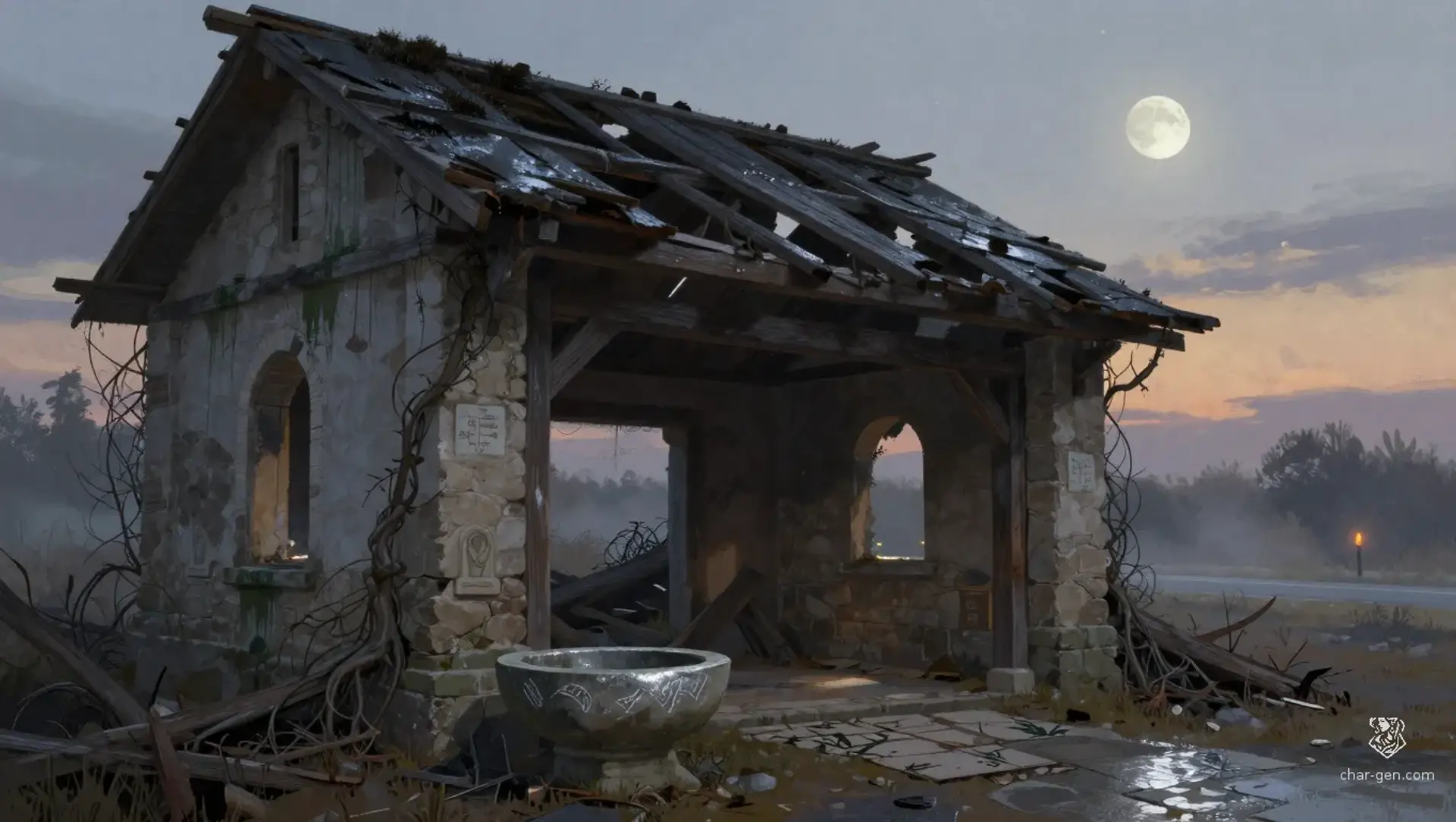
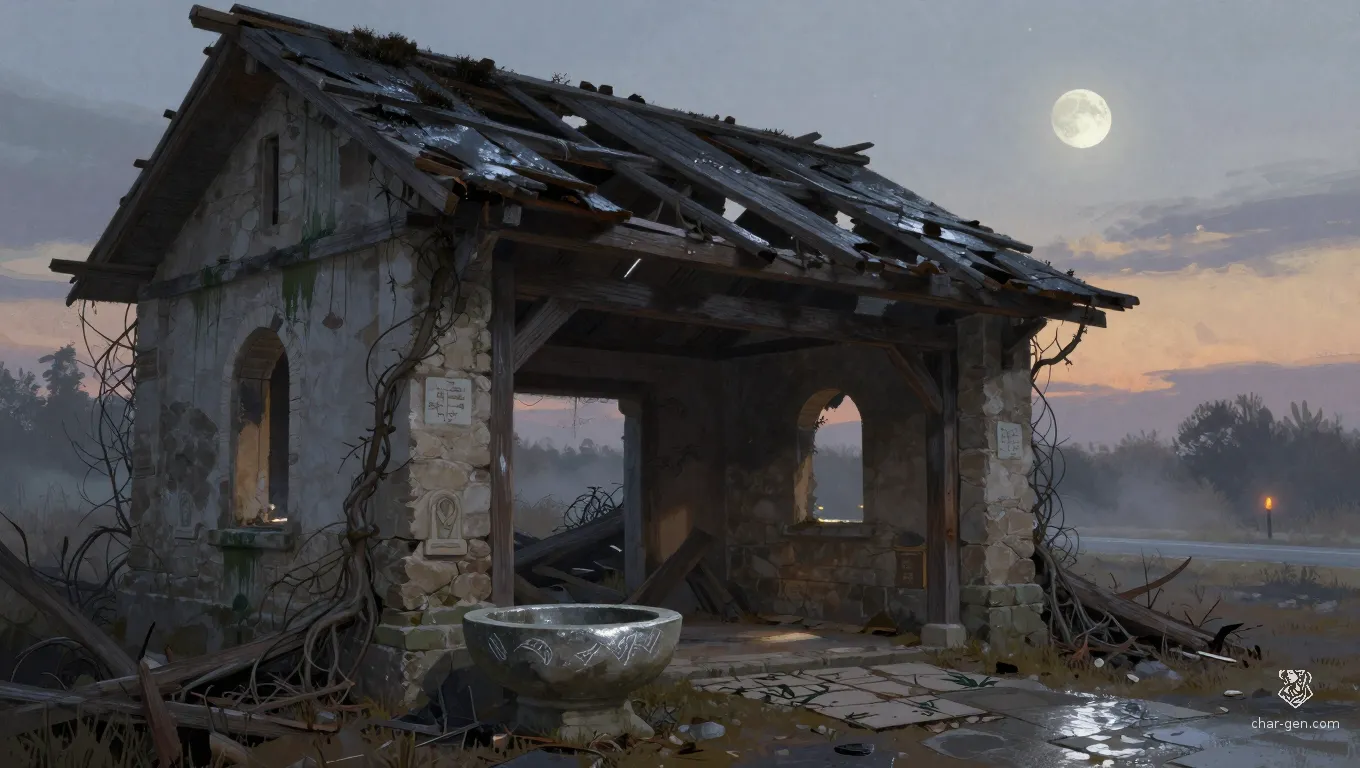
The Silver Basin is a medium-sized roadside shrine built around a shallow stone basin that once held consecrated water. Half of the roof has collapsed, the eastern wall is split by roots, and rain has stained the interior with dark green streaks. The entry hall remains mostly intact, offering limited shelter, while the sanctuary beyond is choked with fallen beams, rubble, and thorny vines. A narrow stairway beneath the altar leads to a crypt that has not been opened in decades.
The Silver Basin
The shrine is quiet even when the surrounding woods are noisy. Wind moves through gaps in the roof, carrying the smell of wet stone and old ash. Small objects left as offerings sometimes shift when no one is watching. At sunset, the cracked bell occasionally gives a single distant note from beneath the rubble.
The Silver Basin is a medium-sized roadside shrine built around a shallow stone basin that once held consecrated water. Half of the roof has collapsed, the eastern wall is split by roots, and rain has stained the interior with dark green streaks. The entry hall remains mostly intact, offering limited shelter, while the sanctuary beyond is choked with fallen beams, rubble, and thorny vines. A narrow stairway beneath the altar leads to a crypt that has not been opened in decades.
The shrine is officially owned by a loose fellowship of road wardens, healers, and caravan families. They are practical, generous to travelers, and slow to trust strangers. Most members would rather see the shrine repaired than argue over legal ownership.
History
Divine Services
The shrine once served travelers, farmers, and soldiers who prayed to Mara Venn, a local goddess of safe roads, honest labor, and returning home. Before the ruin, dawn services were brief and practical. Worshipers washed their hands in the sacred basin, tied a strip of cloth to the roadside post, and left a small offering of bread, salt, or a tool in need of repair. The surviving faithful still gather here on the first day of each month, though few remain willing to sleep within the broken walls.
Sacred Relic
The shrine's most important relic is the Homeward Bell, a hand-sized bronze bell cracked along one side. It was once rung for travelers departing the village and for families awaiting their return. Though damaged, it still produces a clear tone when rung by someone who genuinely intends to protect another person. The bell is kept beneath the collapsed altar, wrapped in faded blue cloth.
The Dead Beneath the Shrine
The central sanctuary is haunted by the shrine's former keeper, Sister Elian Rusk. She appears as a tired woman in a rain-darkened robe and asks visitors whether they have come to take shelter, seek forgiveness, or cause harm. She is not immediately hostile, but she becomes violent if anyone defaces the altar, steals offerings, or lies about their intentions. Her spirit can be laid to rest only if the Homeward Bell is rung at sunset while a living person speaks the names of the dead buried beneath the shrine.
Shrine Blessings
A visitor may restore a small blessing by placing food, clean water, or a repaired tool in the offering niche and spending ten minutes in quiet prayer. Until the next dawn, that visitor has advantage on one saving throw against exhaustion, fear, or being lost while traveling. The blessing ends early if the recipient knowingly abandons a companion in danger.
Denizens
The shrine is officially owned by a loose fellowship of road wardens, healers, and caravan families. They are practical, generous to travelers, and slow to trust strangers. Most members would rather see the shrine repaired than argue over legal ownership.
A former caravan guard who now lives in the intact entry hall and clears weeds from the doorway. He is suspicious of adventurers but deeply protective of the shrine. Orin knows the surrounding roads well and can guide the party through the nearby marshes, though he refuses to enter the crypt.
The ghost of the last priest, appearing as a weary middle-aged woman with a lantern that gives off no light. Elian wants the shrine protected, but grief and guilt have made her judgment inconsistent. She may aid respectful visitors with a warning or blessing before attacking those who treat the shrine as a treasure vault.
A young devotee from the nearest village who visits secretly to leave offerings and clean the basin. Tessa is brave, compassionate, and entirely out of her depth. She has seen footprints leading from the crypt and believes someone is using the ruin as a meeting place.
Rumors & Plot Hooks
- 1.A traveler who sleeps beneath the shrine's roof will dream of the road they are meant to take next.
- 2.The old priest hid a purse of silver beneath the basin before she vanished.
- 3.Bandits use the crypt to store stolen goods and meet with a corrupt village official.
- 4.The shrine's water cures any poison if it is drunk before sunrise.
- 5.A ghost rings the bell whenever someone nearby is about to die.
- 6.The cracked mosaic is a map, and the missing winter tiles mark a buried entrance somewhere in the hills.
Classified Entry
The shrine's landslide did not merely damage the crypt. It sealed away a small chamber containing the first basin, where Mara Venn's companions placed her ashes. The chamber is now occupied by a hungry shadow demon that entered through a fissure from the Underdark. It has been feeding on the fear and regret of those who visit the shrine, subtly influencing the ghost of Sister Elian. The demon cannot cross the threshold of the sanctuary while the Homeward Bell is ringing, but it can manipulate loose rubble, extinguish flames, and whisper in the voices of absent loved ones. If freed from the crypt, it will begin haunting travelers along the road.
Turn The Silver Basin into a sheet
A high-res, share-ready sheet you can post or print.