
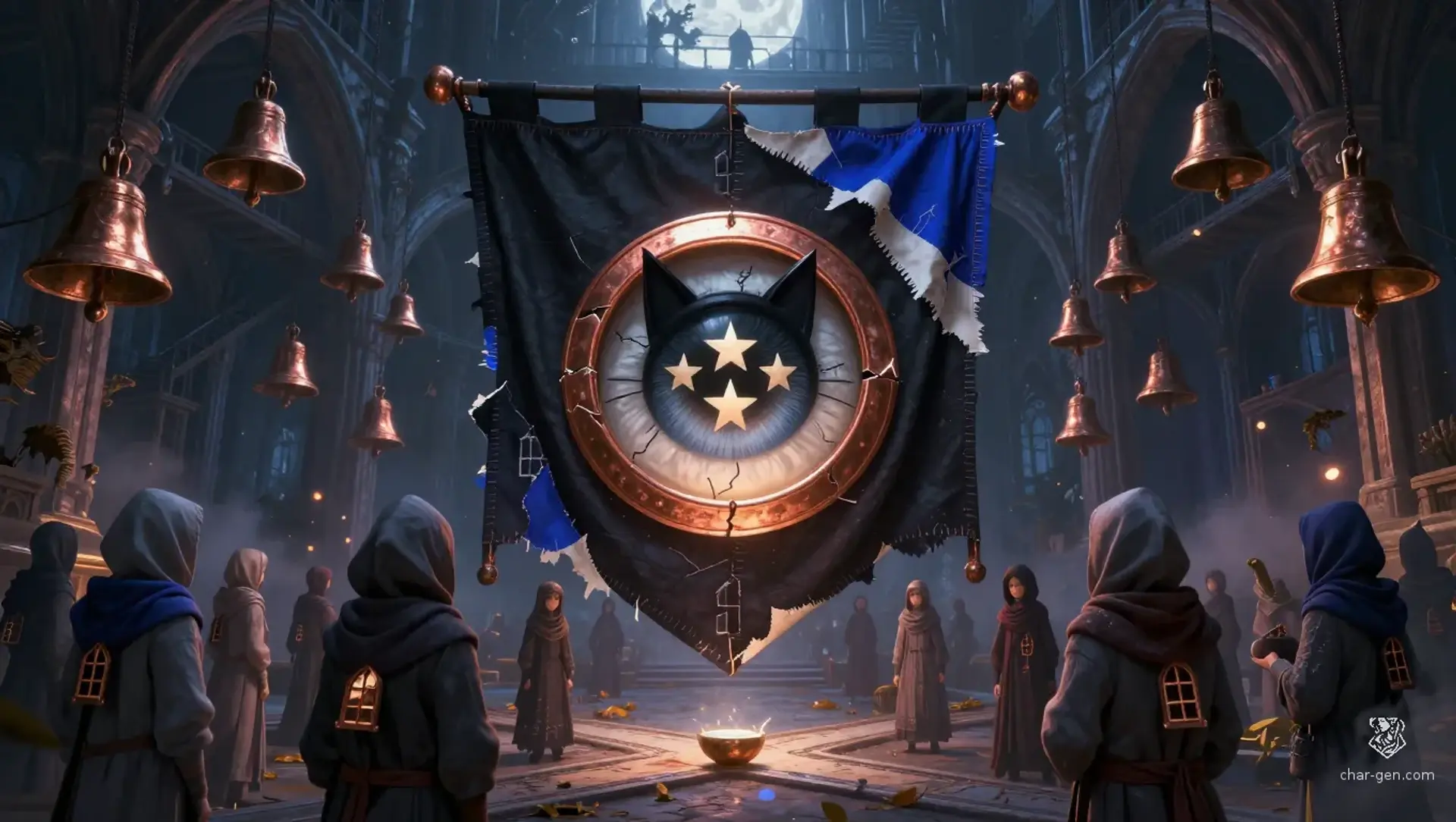
The House of the Unlatched Window
The House of the Unlatched Window grew from an emergency shelter network into a cultural institution. During its first thirty years, it established safe houses in twelve cities and created a coded system of bells, chalk marks, and altered street songs. Its first great triumph came when the faction exposed the Dominion's plan to deport every Mew family from the river provinces. The evidence sparked protests, merchant strikes, and a mutiny among the soldiers assigned to the deportation fleet. Its first major setback came two generations later, when a compromised courier delivered the locations of nine sanctuaries to the Ashen Kennels. Four sanctuaries were destroyed, and more than three hundred Mews disappeared. The massacre produced the faction's harshest security laws and created the enduring divide between those who value openness and those who believe trust must be earned through surveillance. The watershed moment was the Bellfire Revolt. During a public festival, the Dominion attempted to arrest every prominent Mew speaker in Nine Chimneys. The House rang all 417 sanctuary bells at once, signaling a citywide uprising. Mew workers blocked bridges, dockhands cut supply lines, and sympathetic citizens opened their homes. After three days, the Dominion withdrew, but the Purring Vault was damaged by fire. Beneath the burned foundation, the Mews discovered an ancient sealed chamber containing carvings that predated the city itself. Since then, the faction has balanced two missions: protecting living Mews and uncovering what their ancestors once sealed away.
Mew mutual-aid confederation, covert resistance network, information guild, and ancestral preservation movement · Pragmatic, communal, and protective, with factions ranging from compassionate mutualists to ruthless isolationists
The House of the Unlatched Window
“Leave a window unlatched.”
Turn The House of the Unlatched Window into a sheet
A high-res, share-ready sheet you can post or print.