Small or Medium, chosen when you select this species
Common
Aberrant
Aberrant·Small or Medium, chosen when you select this species
Hushhorn
Cervivox campestris
Speed
30 ft.
Lifespan
Hushhorns mature at about 16 years and commonly live 70 to 90 years. Exceptional horizon-keepers may reach a century, though their bodies become increasingly sensitive to sound and bright light.
Habitat
Open plains, steppe, prairie, savanna, and dry grassland. Hushhorns favor regions where sightlines are long and the night wind carries sound for miles.
aberrant
plains-dweller
herd culture
subtle fantasy
mundane power
sensory adaptation
caravan
oral tradition
SizeSmall or Medium, chosen when you select this species
Speed30 ft.
LifespanHushhorns mature at about 16 years and commonly live 70 to 90 years. Exceptional horizon-keepers may reach a century, though their bodies become increasingly sensitive to sound and bright light.
Creature TypeAberrant
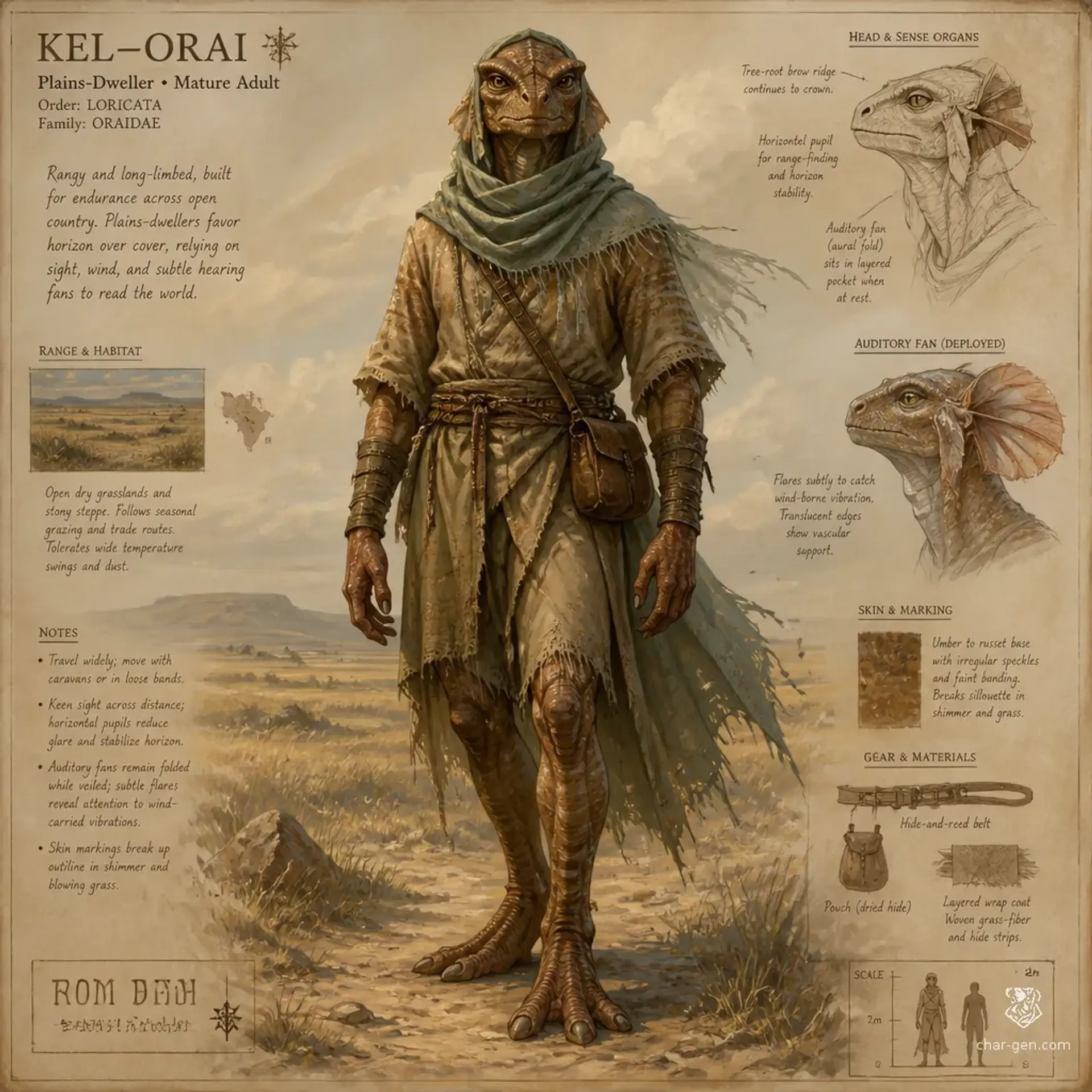
Hushhorns are the quiet watchers of the open land, strange enough to unsettle strangers but practical enough to mend a fence, break a horse, or cross a hundred miles before supper. Their folded auditory fans and brow ridges mark them as aberrant, yet their lives are grounded in weather, livestock, kinship, and the discipline of paying attention. A Hushhorn adventurer may be a caravan outrider, a runaway heir, a grassland healer, or simply someone who heard a warning in the wind and could not ignore it.
Physical Description
Hushhorns are rangy, long-limbed humanoids with broad feet, strong hands, and an uncanny stillness when they stand in open country. Their skin ranges from umber and russet to pale clay, often marked by irregular bands or speckles that resemble windblown grass. Instead of conventional ears, they possess small, flexible auditory fans along the sides of the head and neck. These fans fold flat beneath hair, scarves, or leather guards, but flare when the Hushhorn is listening. A shallow ridge extends from the brow toward the crown, varying from smooth and rounded to branching like the roots of a tree. Their eyes are usually dark, amber, or gray, with horizontal pupils that narrow sharply in bright light. Though unmistakably unusual, Hushhorns are otherwise built like hardy plainsfolk, with no claws, fangs, wings, or supernatural anatomy.
Society & Culture
Hushhorn society is organized around traveling households, grazing circles, and temporary alliances called crossings. A crossing may include several families, hired specialists, adopted outsiders, and animals considered part of the community. Leadership is usually seasonal and task-based. One person may guide a migration, another may oversee disputes, and another may be trusted with dangerous knowledge. Hushhorn children are taught to identify footsteps, wind changes, animal distress calls, and the emotional shifts of a crowd. Hospitality is formal but generous. A guest receives water, shade, and a chance to speak before being asked about their destination. Silence is not considered awkward. It is a social gift, especially during grief or decision-making.
Religion & Alignment
Hushhorn spirituality centers on the Open Witness, an impersonal presence understood as the total memory of wind, soil, animal movement, and human passage. Some Hushhorns personify it as an old traveler, while others regard it as a pattern rather than a deity. Religious practice involves dawn listening, communal route recitations, and offerings of water to exhausted animals. Hushhorns tend toward neutral alignments, valuing survival, reciprocity, and honest conduct over rigid law or reckless freedom, though individuals may embrace any philosophy.
Homelands & Architecture
Hushhorn homelands are seasonal rather than fixed. Their settlements follow grazing cycles and are built from collapsible reed frames, hide screens, woven grass, and low stone windbreaks. Permanent communities usually surround a listening court, a circular space planted with rustling grasses and hung with tuned bone, shell, and bronze chimes. Architecture emphasizes sound, airflow, and clear approaches. Doors are rarely placed in straight lines, and private rooms are separated by layered curtains rather than heavy walls.
Relationships With Other Peoples
Hushhorns are generally welcomed by rural communities that value their patience with animals and their skill at reading weather. City dwellers may find their listening habits unnerving, especially when a Hushhorn turns toward a sound no one else noticed. Hushhorns often form practical alliances with traveling peoples, rangers, farmers, and caravan guards. They are cautious around institutions that demand permanent settlement or unquestioning obedience. Among themselves, they distinguish between being strange and being dangerous, and they consider the latter a matter of conduct rather than appearance.
Visual sheet
Turn Hushhorn into a sheet
A high-res, share-ready sheet you can post or print.