Medium or Small, chosen when you select this species
Common
Humanoid
Humanoid·Medium or Small, chosen when you select this species
Openstep
Homo campestris vigilans
Speed
30 ft.
Lifespan
Openstep reach adulthood around age 18 and commonly live 70 to 85 years.
Habitat
Open plains, prairie, steppe, savanna, and the margins of settled farmland
humanoid
plains-dweller
mundane
subtle
traveler
scout
herder
caravan
hospitality
SizeMedium or Small, chosen when you select this species
Speed30 ft.
LifespanOpenstep reach adulthood around age 18 and commonly live 70 to 85 years.
Creature TypeHumanoid
The Openstep are people of the long horizon, born to read weather in the grass, find water beneath stubborn soil, and make a welcome wherever a fire can be built. They are not mystical nomads or untouchable wanderers. They are farmers, drovers, traders, scouts, laborers, and keepers of roads whose culture treats movement as a form of responsibility. An Openstep adventurer leaves home carrying practical skills, old obligations, and a deep conviction that every journey changes the traveler and the road alike.
Physical Description
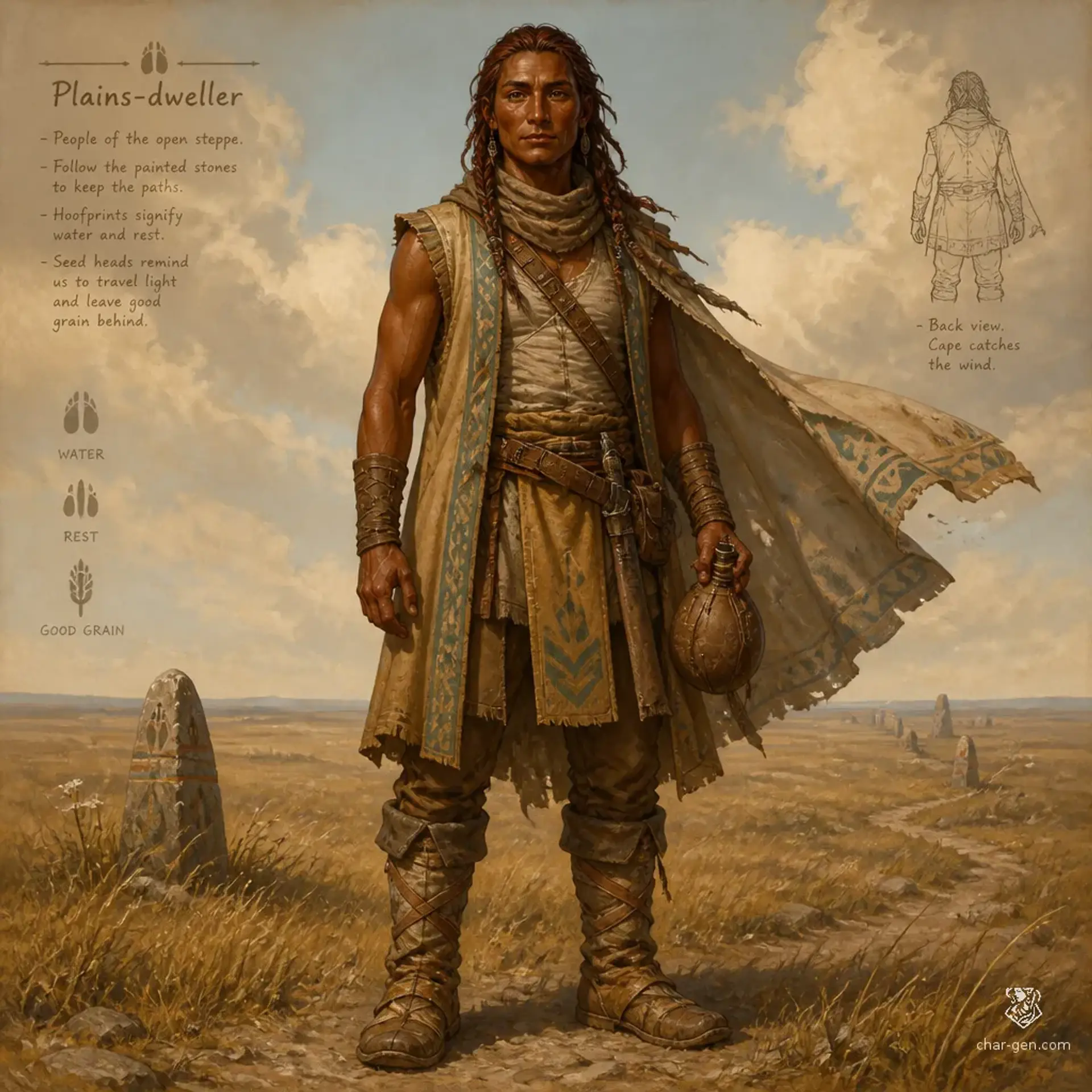
Openstep are rangy humanoids shaped by long travel beneath a large sky. Their bodies range from compact and sturdy to tall and reed-slender, with strong legs, broad feet, and an easy, economical gait. Skin tones vary from deep umber and copper to tawny brown and sun-warmed gold. Hair is commonly dark, russet, flaxen, or silver, often worn in practical braids decorated with beads, leather knots, or small metal route tokens. Their eyes tend toward amber, brown, hazel, and gray, with a steady gaze that many outsiders mistake for severity. Openstep clothing is layered and durable, combining wrapped scarves, sleeveless coats, soft boots, and weatherproof capes. Nearly every adult carries a water flask, a utility knife, and a strip of colored cloth bearing household or caravan marks.
Society & Culture
Openstep society is built from households, traveling circles, and route alliances. A household may include blood relatives, adopted kin, long-term guests, and people who have joined after surviving the same hardship. Leadership is situational. The person who knows the wells leads during drought, the best rider leads during a raid, and the most trusted negotiator speaks at a market. Children learn through observation and useful participation rather than formal lectures. Storytelling is valued, but a story earns respect when it preserves a warning, honors a debt, or teaches a skill. Hospitality is sacred but not limitless. Hosts provide food, water, and a safe place to sleep, while guests are expected to contribute labor, news, or protection. Openstep festivals coincide with migrations, first planting, harvest, and the return of seasonal rains. Their music uses hand drums, reed pipes, clappers, and voices arranged to carry across great distances.
Religion & Alignment
Openstep religious practice centers on hearths, wells, ancestors, seasonal winds, and the unnamed patience of the earth. Some honor a broad family of local spirits, while others follow distant gods whose teachings emphasize travel, harvest, vigilance, or hospitality. Their rites are usually small and practical: pouring the first sip of water onto the ground, tying a thread to a waypost, naming the dead before beginning a journey, or leaving grain where birds can find it. Openstep communities tend toward good and neutral alignments, valuing reciprocity and communal survival, but individuals may become fiercely independent, dutifully lawful, or sharply opportunistic depending on their upbringing.
Homelands & Architecture
Openstep homelands are organized around routes rather than fixed borders. Seasonal camps use low, circular shelters of hide, reed, and woven grass, designed to be dismantled without scarring the soil. Permanent settlements cluster around wells, shaded market yards, and raised granaries. Their buildings favor windbreak walls, deep overhangs, and courtyards planted with hardy herbs. Boundary markers are usually practical objects such as painted posts, stacked stones, or lines of thorn trees, yet each carries layers of historical meaning. An Openstep village may look modest to outsiders while containing generations of carefully maintained agreements.
Relationships With Other Peoples
Openstep judge neighboring peoples by how they treat travelers, animals, and shared resources. They often form strong ties with farming communities, caravan guilds, and frontier settlements, though they are wary of rulers who redraw borders without consulting those who live along them. They respect dwarven-like builders for their patience, goblin-kin communities for their adaptability, and elf-like peoples for their long memories, while frequently finding all three too attached to either stone, cleverness, or tradition. Among themselves, Openstep lineages may argue fiercely over routes and inheritance, but a threatened traveler is usually protected before old disputes are revisited.
Visual sheet
Turn Openstep into a sheet
A high-res, share-ready sheet you can post or print.