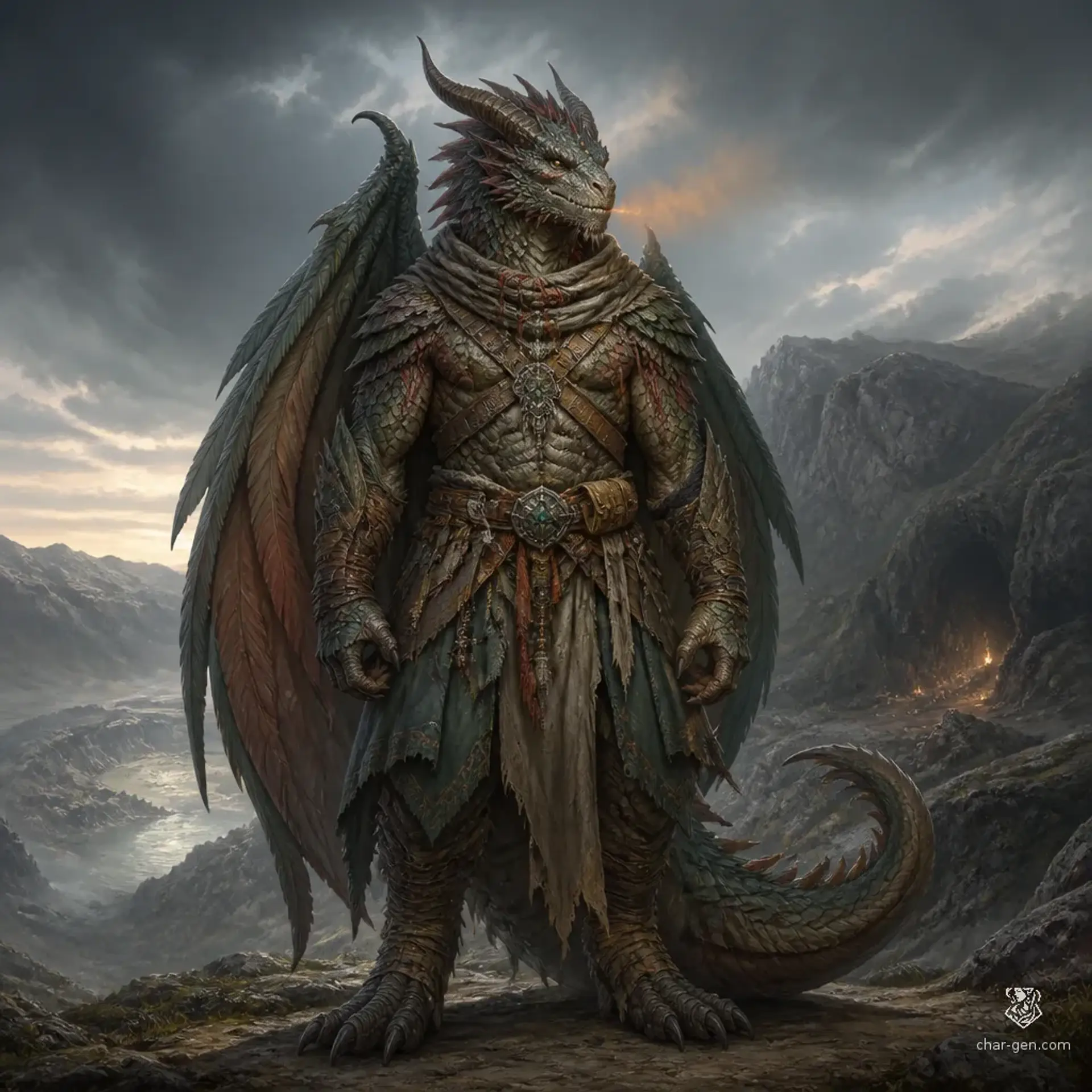
Drakhar mature physically around 18 years and commonly live 120 to 180 years. Exceptional elders may live longer, especially in regions saturated with elemental power.
Darkvision
60 ft.
Habitat
High mountain ranges, volcanic uplands, storm-lashed ridges, cavern networks, and isolated valleys where ancient dragons once ruled.
dragon-blooded
mountain-dweller
elemental
beast-folk
resilient
winged
rare ancestry
SizeMedium
Speed30 ft.
LifespanDrakhar mature physically around 18 years and commonly live 120 to 180 years. Exceptional elders may live longer, especially in regions saturated with elemental power.
Creature TypeBeast-folk
Darkvision60 ft.
Born from the union of mortal possibility and ancient dragon power, drakhar walk the world as living evidence that blood is not destiny. Some carry wings broad enough to shadow a village, while others hide a devastating inheritance beneath an ordinary face. They are mountain-bred, hard to kill, and rarely permitted the luxury of being merely themselves. Every drakhar must decide whether to become a guardian, a conqueror, a wanderer, or something their dragon ancestor never imagined.
Physical Description
Drakhar are the offspring of a Great Wyrm in humanoid guise and a member of another people, though the draconic inheritance is usually dominant. They possess dense musculature, heavy bones, and a remarkable ability to recover from punishment. Their bodies vary widely. Some bear magnificent wings, swept horns, a powerful tail, taloned hands, and overlapping scales from crown to heel. Others have only a few scales around the throat, slit-pupiled eyes, sharpened teeth, or a faint elemental shimmer beneath the skin. A rare few appear almost entirely human or elf-like until their blood awakens under stress. Scale color, horn shape, wing structure, and facial features generally reflect the lineage of the Great Wyrm, while the other parent may influence stature, hair, complexion, or the pattern of their scales. Many drakhar have voices that carry unnaturally well, and their breath often smells faintly of their inherited element.
Society & Culture
Drakhar society is organized around hearth-clans, climbing circles, and lineage houses. A hearth-clan is a household and mutual-defense group, while a climbing circle consists of peers who train, travel, and undertake dangerous rites together. Lineage houses preserve the names, deeds, and elemental traditions associated with particular dragon ancestors, but mixed heritage is respected because nearly every drakhar family has mortal blood from several sources. Young drakhar are taught to control their bodies before they are taught to display their strength. A child who manifests wings may learn aerial balance, while a child with no visible draconic features may be trained in breath discipline and taught that inheritance is not measured by appearance. Feasts, oath ceremonies, stone carving, and contests of endurance are central to communal life.
Religion & Alignment
Drakhar commonly revere the mountain, the storm, the forge, or the ancestral memory carried in blood. Some honor their Great Wyrm parent as a divine figure, while others reject dragon worship entirely after witnessing the cruelty of ancient powers. Their traditions emphasize oath keeping, hospitality under a shared roof, and the responsible use of strength. Drakhar can be found across the moral spectrum, though their cultures often praise protective courage, personal sovereignty, and disciplined ambition.
Homelands & Architecture
Drakhar homelands cling to cliffsides, crater rims, and broad shelves of highland stone. Their halls are built around central shafts that carry heat, smoke, and sound through the settlement, while bridges and terraces connect homes carved directly into the mountain. Doorways are tall and reinforced, not only to accommodate large bodies but to withstand the occasional burst of elemental force. Decorative work favors spirals, wing patterns, mineral inlays, and family histories cut into load-bearing pillars. A drakhar dwelling often includes an open ledge, chimney court, or wind balcony where residents can stretch wings, practice breath control, or watch the weather.
Relationships With Other Peoples
Other peoples often respond to drakhar with a mixture of awe, fear, suspicion, and fascination. Mountain clans may treat them as honored kin, dangerous omens, or potential heirs to ancient draconic claims. Dragons themselves vary sharply in their reactions. Some see drakhar as treasured descendants, others as diluted curiosities, and a few as rivals who possess mortal freedom without surrendering draconic power. Drakhar often form strong bonds with communities that judge them by their actions, but they can become defensive when treated as property, weapons, or living trophies.
Visual sheet
Turn Drakhar into a sheet
A high-res, share-ready sheet you can post or print.