
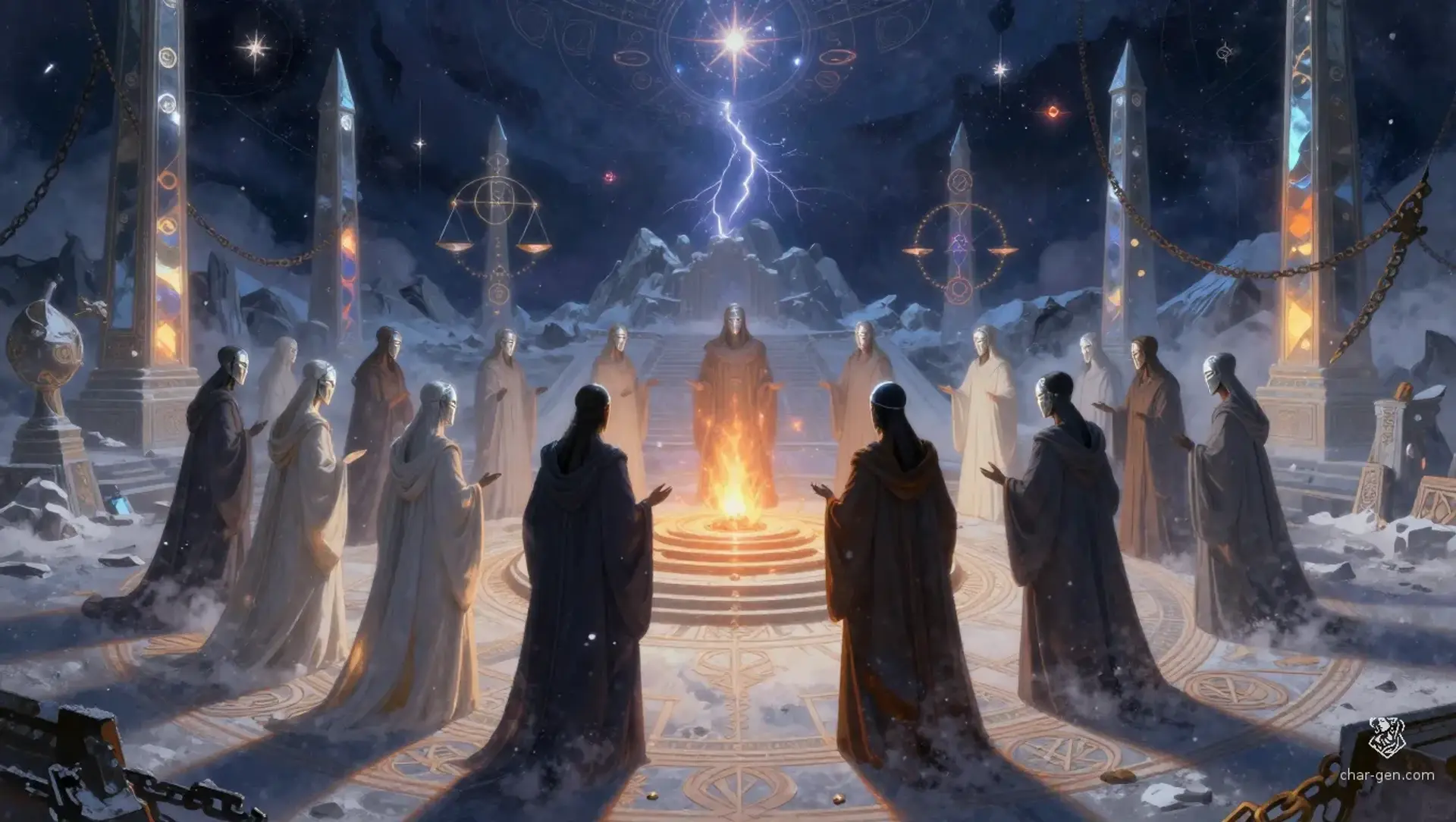
The Nine Who Walk Unseen
Origin
When the creator vanished, nine fragments of divine purpose awakened within the newborn world. They took names from the first mortal concepts they encountered: judgment, mercy, freedom, fate, order, story, dominion, struggle, and hope. Since then, the nine have shaped civilizations through miracles, omens, bargains, wars, reforms, and personal encounters. Their religion teaches that worship is not admiration but participation: every moral choice strengthens one divine design and weakens another.
Cosmology
The world was formed from the First Breath, divided into nine living principles when the nameless creator vanished. Each deity embodies one principle, but none possesses it completely. The mortal world is where those principles collide and become choice. The gods walk among mortals in disguise, testing whether their worshippers embody doctrine when no miracle or reward is promised. Divine power grows through fulfilled vows, remembered deeds, and moments when mortals choose a deity's principle over immediate gain.
Structure
The religion is organized as nine interlocking traditions rather than a single hierarchy. Each deity has temples, wandering ministers, mystery cults, and household rites, but all recognized clergy belong to the Concord of Open Doors, whose members are expected to shelter strangers and investigate divine disguises. Major temples usually honor a central deity while maintaining nine alcoves for the others. Clergy rank is based on demonstrated conduct, not ancestry or education: a priest who fails a public moral test may lose authority overnight. Pilgrims follow the Ninefold Road, visiting shrines associated with each deity and performing a different ethical service at every stop. The faith's greatest festivals are intentionally shared, ensuring that no deity's followers can entirely isolate themselves from rival principles.
Mortal Relations
The gods are active participants in mortal history. They wander cities, villages, battlefields, courts, and wildernesses in disguise, secretly judging conduct rather than public devotion. Miracles are granted through behavior aligned with a deity's principles, while punishment may arrive through lost opportunities, exposed secrets, broken fortunes, prophetic nightmares, or direct divine intervention. Clergy debate which disguised strangers might be gods, and many religions maintain hospitality laws because refusing aid to a beggar could mean insulting Solenne, Veyra, or Ilyra. Rival temples often cooperate during disasters, but political leaders, rebels, merchants, and armies regularly become instruments in the pantheon's larger designs.
Afterlife
The dead awaken at the Hall of Weighing, where Veyra records their choices and each soul is confronted by the deity whose principles most shaped its life. The worthy may serve their patron in paradise, return to mortal life by Aruun's decree, or pass beyond the pantheon into the Silent Vast. The faithless are not automatically damned, but those who betrayed their sworn principles may be claimed by the deity they defied.
Turn The Nine Who Walk Unseen into a sheet
A high-res, share-ready sheet you can post or print.