
Twestheon
Origin
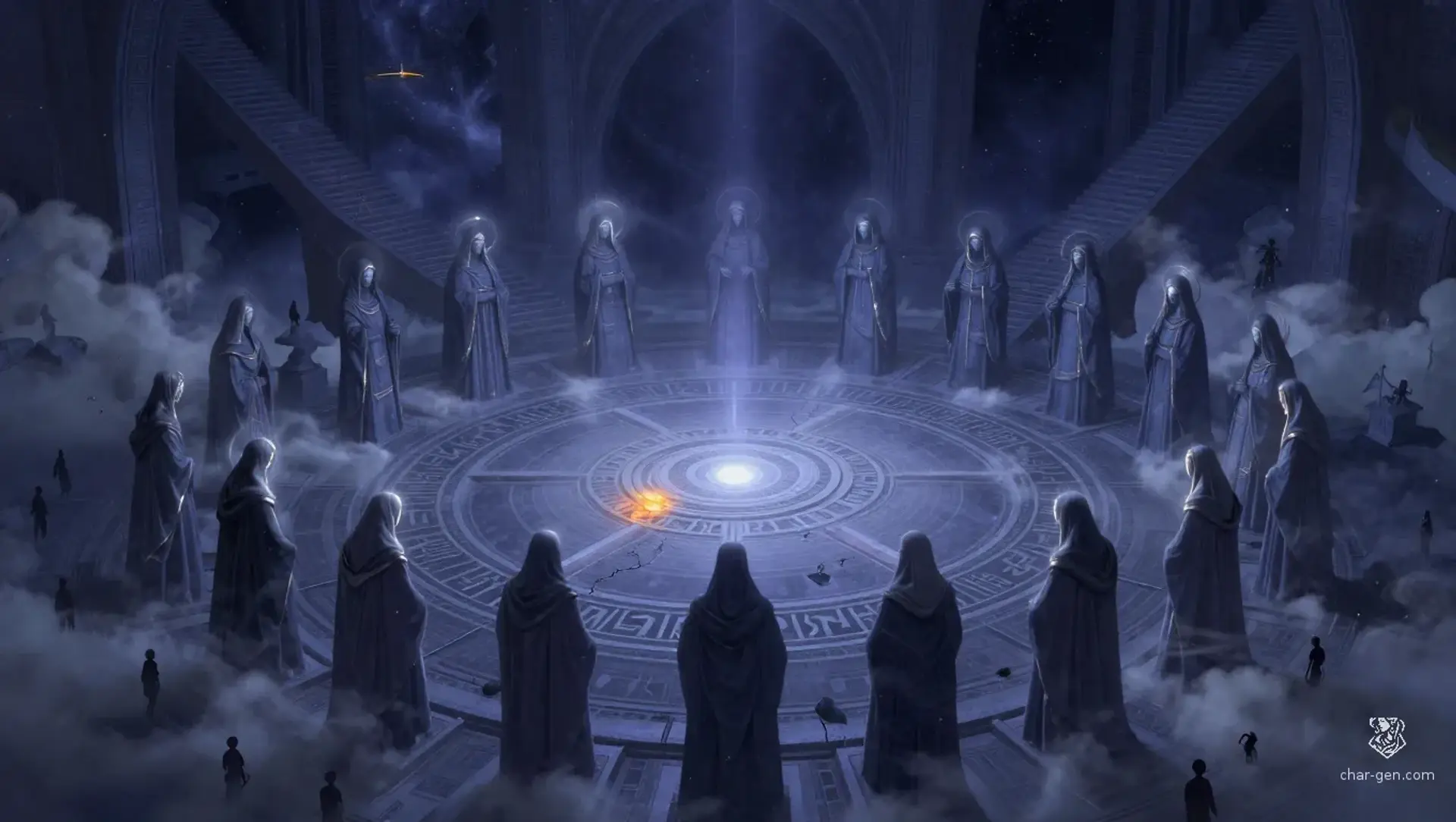
According to temple tradition, the Twestheon emerged when reality cracked under the pressure of twelve unanswered questions. Each deity claimed one fracture as a domain, but none could seal it. The gods therefore remain powerful yet incomplete, dependent on mortal belief and on one another's boundaries.
Cosmology
The world hangs between two infinities: the Unlit Beyond above and the Rootless Deep below. The Twestheon did not create existence; they discovered twelve places where reality could be bent and occupied them. Their domains are territories of influence rather than absolute ownership. When gods act beyond their proper domains, they must borrow authority from another deity, bargain with mortals, or risk losing coherence. The heavens are therefore a political map, and every miracle is an act of negotiation.
Structure
The religion is decentralized and argumentative. Each deity has temples, wandering orders, household rites, and mystery cults, but no universal priesthood controls the whole Twestheon. The Twelvefold Synod meets only during eclipses and has no power to compel divine agreement. Most communities elevate three or four gods according to local needs, creating regional theologies. Priests commonly teach that one-domain gods are sharper and more absolute within their territory, while multi-domain gods are more adaptable and politically dangerous. Alliances, rivalries, and theological compromises are treated as sacred realities rather than contradictions.
Mortal Relations
The Twestheon rarely answers prayers directly. Most divine influence arrives through coincidence, dreams, inherited customs, strange weather, altered memories, prophetic art, or impossible encounters at thresholds. Clergy interpret these signs differently, and rival temples often serve the same god in radically different ways. Mortals matter because they provide the local context that gives a domain meaning: war, law, grief, mystery, growth, and freedom all change according to the people experiencing them.
Afterlife
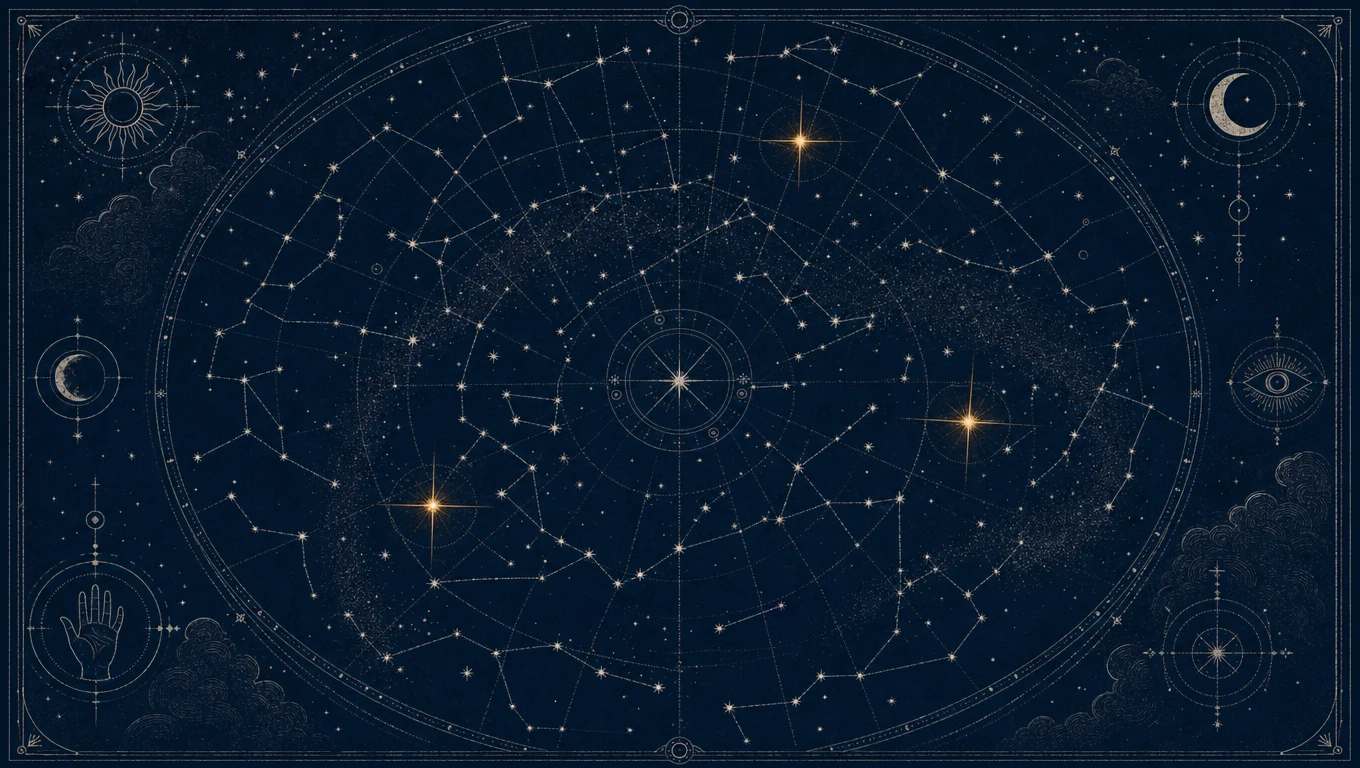
The dead drift into the Far Assembly, a silent constellation beyond the world. There, each soul is drawn toward the deity whose influence most shaped its life, though no god can claim a soul absolutely. Veyra guards the threshold, while Orun records every claim, and Sareth searches the dead for those who escaped their destined ending.
Turn Twestheon into a sheet
A high-res, share-ready sheet you can post or print.