Small or Medium, chosen when you select this species
Common
Humanoid
Humanoid·Small or Medium, chosen when you select this species
Cinderkin
*Homo favillaris*, the ash-born cityfolk
Speed
30 ft.
Lifespan
Cinderkin mature at roughly 20 years and commonly live 75 to 95 years, with a few elders reaching their second century.
Darkvision
60 ft.
Habitat
Urban
humanoid
urban
mundane
craftspeople
community-minded
city-dwellers
SizeSmall or Medium, chosen when you select this species
Speed30 ft.
LifespanCinderkin mature at roughly 20 years and commonly live 75 to 95 years, with a few elders reaching their second century.
Creature TypeHumanoid
Darkvision60 ft.
Cinderkin are the people who keep a city alive after the banners fade. They know which baker leaves out yesterday's bread, which bridge is unsafe in heavy rain, which landlord can be shamed into making repairs, and which alley belongs to no one but the night. Compact, practical, and impossible to intimidate for long, they carry the habits of crowded neighborhoods wherever they go. A Cinderkin adventurer may be a courier, locksmith, mason, investigator, cook, dockworker, or simply someone who has learned that the world is another difficult city, full of broken things waiting for capable hands.
Physical Description
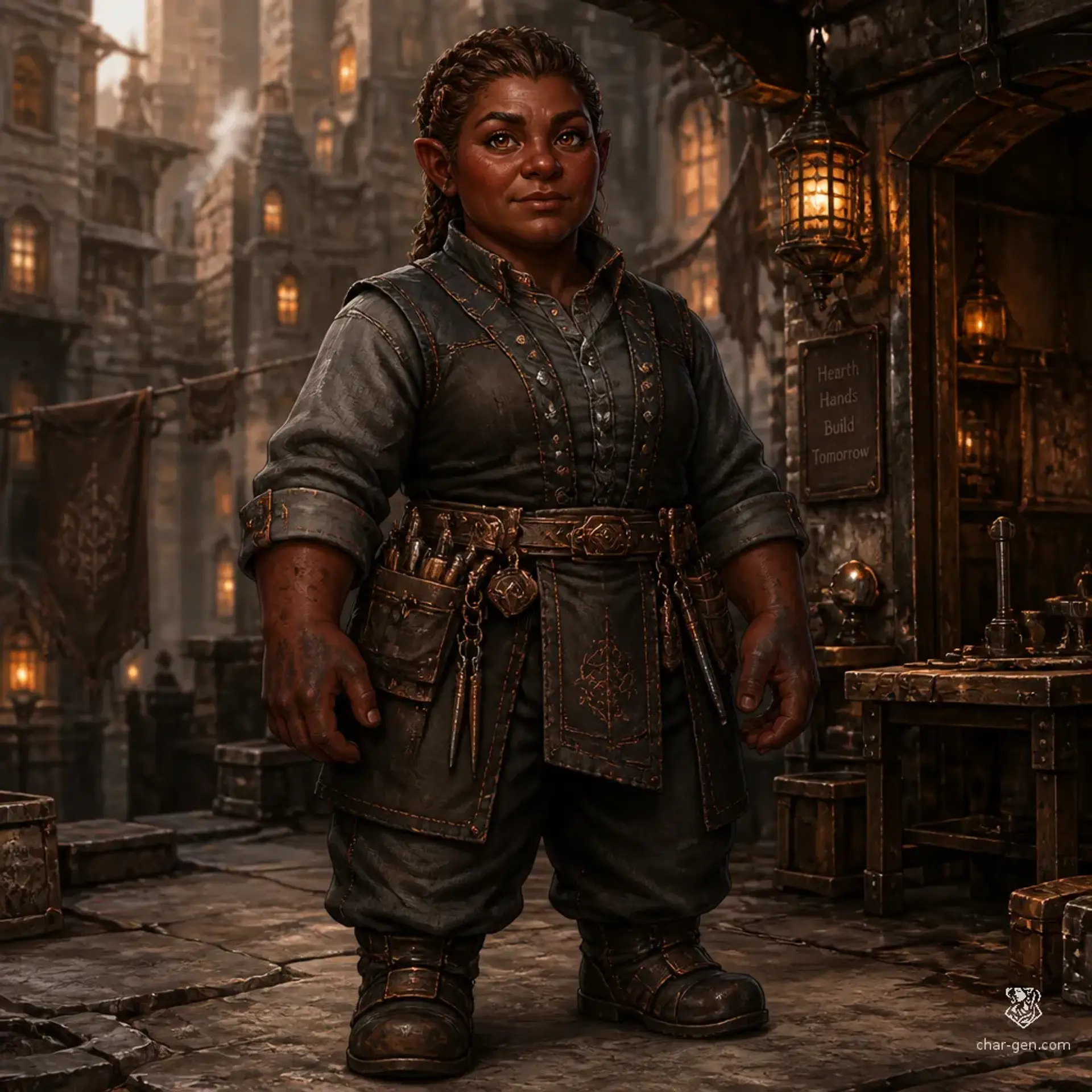
Cinderkin are compact, sturdy humanoids with broad hands, durable joints, and an instinctive awareness of their surroundings. Their skin ranges from warm umber and brick red to gray-brown, pale clay, and charcoal, often with subtle mottling like old plaster or cooled ash. Hair tends toward black, brown, copper, or silver and is commonly worn short, braided, wrapped, or pinned away from tools and flames. Their eyes are large and reflective, usually amber, hazel, gray, or deep brown. Many have faint soot-colored markings around the fingertips, elbows, or jawline that darken after prolonged work. Cinderkin possess no supernatural aura, but their senses are keenly adapted to crowded streets, smoke-filled rooms, and the constant movement of urban life.
Society & Culture
Cinderkin society is built from households, trade circles, and neighborhood councils. Family is defined broadly, including blood relatives, apprentices, boarders, former coworkers, and anyone who has shared a roof during difficult times. Children learn several basic skills before specializing, so a Cinderkin blacksmith may know enough about cooking, bookkeeping, first aid, and masonry to keep a household functioning. Social status comes from reliability, generosity, and mastery of a useful discipline. Public arguments are common, but lasting grudges are considered wasteful unless they concern betrayal, abandonment, or deliberate harm to a community.
Religion & Alignment
Cinderkin religion centers on the Hearth Ledger, a collection of household rites honoring fire, shelter, labor, memory, and mutual obligation. Most homes maintain a small niche containing a lamp, a cup, and a written list of people who may call upon the household in need. Some Cinderkin worship established gods of craft, community, roads, or knowledge, while others honor local spirits associated with wells, bridges, ovens, and crossroads. Their culture tends toward compassionate and orderly behavior, but individual Cinderkin may be rebellious, acquisitive, devout, or fiercely independent.
Homelands & Architecture
Cinderkin homelands are dense old cities where generations have built over, beside, and beneath one another. Their buildings favor thick walls, interior courtyards, roof gardens, narrow stairways, and adaptable rooms separated by folding screens or hanging curtains. Cinderkin architecture is rarely grand, but it is exceptionally repairable. Every beam has a visible purpose, every drain has an accessible grate, and every public structure includes a bench, a water barrel, or a sheltered place for someone to rest. Their neighborhoods are organized around shared ovens, cisterns, workshops, and notice boards rather than palaces or temples.
Relationships With Other Peoples
Cinderkin are accustomed to living among many peoples and measure character through conduct rather than ancestry. They often become translators, brokers, neighborhood organizers, and informal protectors of communities that official institutions overlook. Their hospitality can seem intrusive to solitary travelers, while their habit of asking practical questions may be mistaken for suspicion. Cinderkin generally respect dwarf-like builders, halfling traders, goblin-kin scavengers, and anyone else who understands the dignity of useful work. They are wary of aristocracies that treat cities as scenery and adventurers who leave destruction behind without helping with the repairs.
Visual sheet
Turn Cinderkin into a sheet
A high-res, share-ready sheet you can post or print.