Usually 80 to 110 years, though those who spend their lives near the veil sometimes seem to age more slowly until their final years, when they go swiftly and quietly.
Darkvision
60 ft.
Habitat
Charos bloodlines are found in cemetery cities, wind-battered highlands, old river towns, and any settlement built beside burial grounds, battlefields, or ancient roads of pilgrimage. They adapt easily to places where history lingers.
gothic
grave
raven
veilwalking
necromancy-adjacent
human-variant
rare ancestry
standard pc
dnd-2024
homebrew
field-guide
dark fantasy
soul ferrier
undead myth
funerary culture
SizeMedium
Speed30 ft.
LifespanUsually 80 to 110 years, though those who spend their lives near the veil sometimes seem to age more slowly until their final years, when they go swiftly and quietly.
Creature TypeHumanoid
Darkvision60 ft.
The Charos are a bloodline marked by raven feathers, grave vows, and a broken duty to the dead. Once servants of the matron of ravens and ferrymen for souls, they now walk the world with a gift that lets them step through the veil for a heartbeat at a time. Feared by some, sought by others, they live as keepers of unfinished stories, accused by the living and tested by the dead.
Physical Description
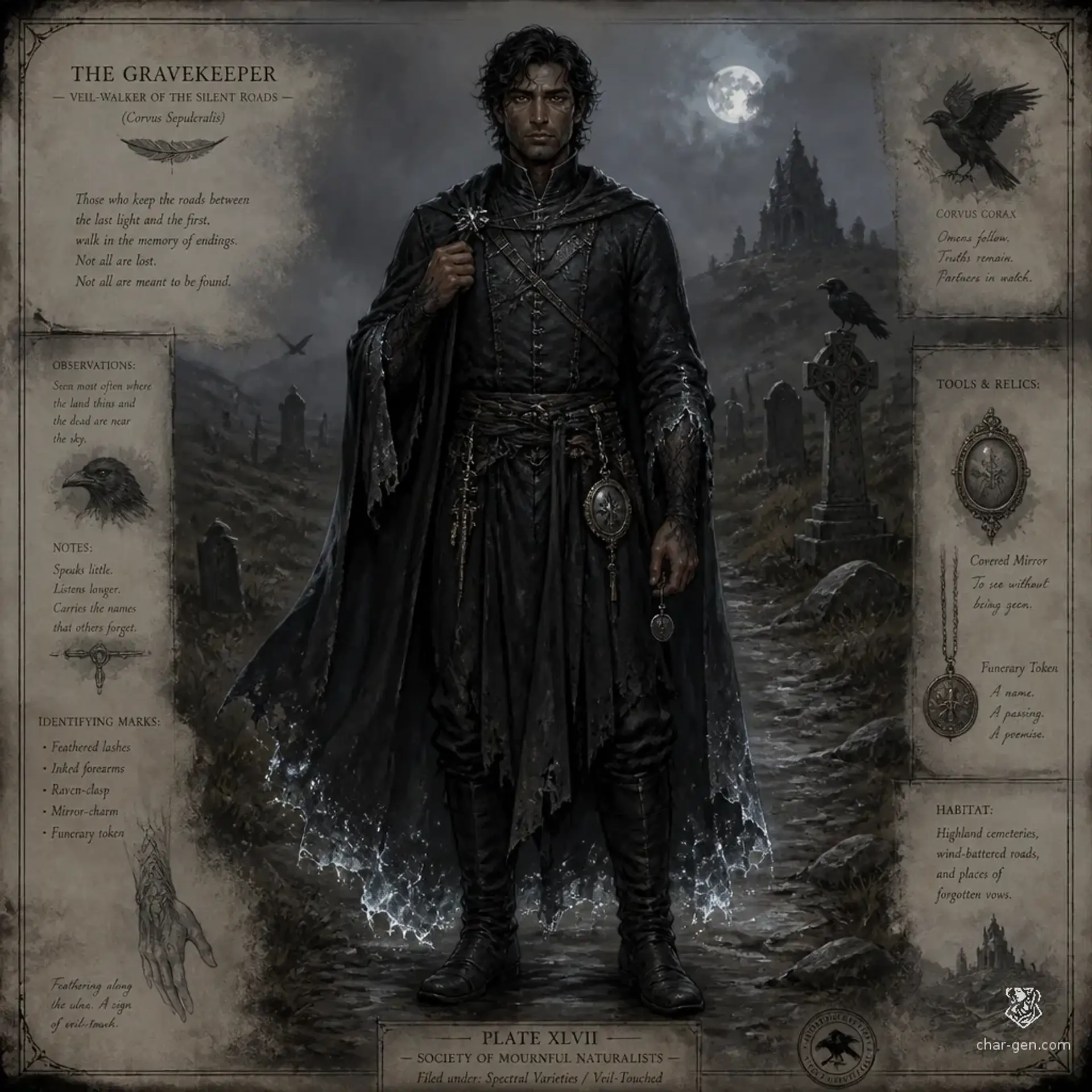
Charos blooded folk are usually lean or wiry, with pale to deep umber skin tones, dark hair, and eyes that can appear reflective in low light. Their most distinctive features are subtle rather than monstrous: a featherlike texture along the lashes or forearms, a coolness to their touch, and shadows that seem to gather at their feet when they focus. In moments of strain or grief, a faint raven silhouette may flicker in their peripheral presence or cast from behind them. Their voices often carry a quiet resonance, as if spoken through a distant chapel arch.
Society & Culture
Charos society is built around inheritance, obligation, and quiet reputation. Family lines are carefully remembered, not only for blood but for debts, burial obligations, and the spirits once escorted under their care. They value precise memory, dignified mourning, and the ability to endure fear without spectacle. Children are taught not to mock the dead, not to trespass in sealed places, and never to promise what they cannot carry across the veil. Their feasts are restrained but meaningful, often including a place set for the absent and a spoken list of names that would otherwise be lost. A Charos household that has failed its duties may spend generations trying to restore its standing.
Religion & Alignment
Most Charos families have little formal devotion left, though old customs survive as habits: covered mirrors, raven feathers at windows, candles left for the unnamed, and precise speech around the dead. Individual Charos may be any alignment, but many drift toward pragmatic compassion, stern duty, or melancholy independence. Some still honor the matron of ravens in secret, while others insist the gods forfeited their claim when they abandoned the divine gate.
Homelands & Architecture
Their ancestral homes are usually dark stone houses, chapel-fortresses, or manor crypts built around enclosed courtyards where crows roost. Doorways, stairwells, and bridges matter deeply in Charos architecture, since their culture prizes thresholds as symbolic places where duty, memory, and the afterlife meet. Many families maintain hidden passages to family vaults, rooftop aviaries, and sealed rooms for mourning rites.
Relationships With Other Peoples
Other folk often view Charos blooded people with a mix of unease and practical respect. Funeral companies, undertakers, archivists, gravekeepers, and mediums sometimes welcome them, while the superstitious blame them for hauntings, miscarriages of death, or the spread of undeath. Charos themselves tend to be measured in response, offering service before trust and silence before confession. They are especially cautious around zealots, necromancers, and anyone who speaks too casually about resurrecting the dead.
Visual sheet
Turn Charos Bloodline into a sheet
A high-res, share-ready sheet you can post or print.