Amoria noxidarum
The Fiendkin are an ancient people of passion, will, and dream, born to the Lower Planes but never truly owned by them.
At a glance
Darkvision 60 ft.
Languages Common, Infernal, one additional language of your choice
Resistances Fire
Height 5 to 6 feet tall, with some individuals shorter or taller depending on lineage and upbringing.
Weight 120 to 220 pounds, with build varying widely by culture, health, and planar exposure.
Lifespan About 500 years, though respected elders, archivists, and dreamkeepers can remain active for much longer if they avoid violent ends
At the table
You are a humanoid fiendkin with a natural elegance that makes your intent difficult to ignore. Your creature type is Humanoid, and you are considered a Fiendkin for effects tied to ancestry or culture. You have a presence that can be warm, commanding, or strangely intimate, depending on how you choose to carry yourself.
You have Darkvision with a range of 60 feet, inherited from generations who learned to live by candlelight, starless sky, and planar glow.
Your body is acclimated to the heat of the Lower Planes and to emotional intensity. You have Resistance to Fire damage.
You tend toward Charisma, with many Fiendkin also favoring Wisdom or Constitution. Your lineage does not dictate your ability scores, but it often nudges you toward social mastery, perception, and endurance.
You know Common and Infernal, and you can speak, read, and write one additional language of your choice, usually chosen from the tongue of your homeland or the culture that raised you.
Choose one Court Gift when you create the character. Court Gift reflects the school of training, family tradition, or personal awakening that shaped you. Common choices are Courtly Grace, Iron Bearing, or Veiled Dreaming. This choice gives you one specialized expression of Fiendkin talent, such as social finesse, tactical poise, or dream attunement, without locking your class or ability scores.
Your lineage is adept at reading desire, authority, and hidden feeling. Many Fiendkin gain proficiency in Insight, Persuasion, Intimidation, or Arcana, depending on how they were raised and what they value.
Fire
Fiendkin tend toward Charisma, with many also leaning toward Wisdom for reading others and Constitution for enduring planar hardship. Players assign +2 and +1 as they wish, or otherwise build the lineage to match the role they imagine, whether diplomat, duelist, dream-walker, or courtly scholar.
Your magic favors charm, emotional insight, and the shaping of bonds. You are often found in diplomacy, artistry, healing, and counsel. At the table, this heritage should feel like social radiance rather than simple temptation.
Heartborne Courtlings embody passion, affection, and the power to move others through sincerity, beauty, or carefully chosen words. Their gifts tend toward empathy, enchantment, and the ability to sense what another person is feeling before that person says it aloud.
The Fiendkin are an ancient people of passion, will, and dream, born to the Lower Planes but never truly owned by them. In one household they might serve as a diplomat, a judge, a healer, or a night scholar who walks the sleeping minds of kings. In another they might be a careful infiltrator, a beloved artist, or the one family member who can tell exactly when the truth is hiding behind a smile. However they are raised, Fiendkin carry the same legacy: the heart chooses, the will commands, and the dream remembers.
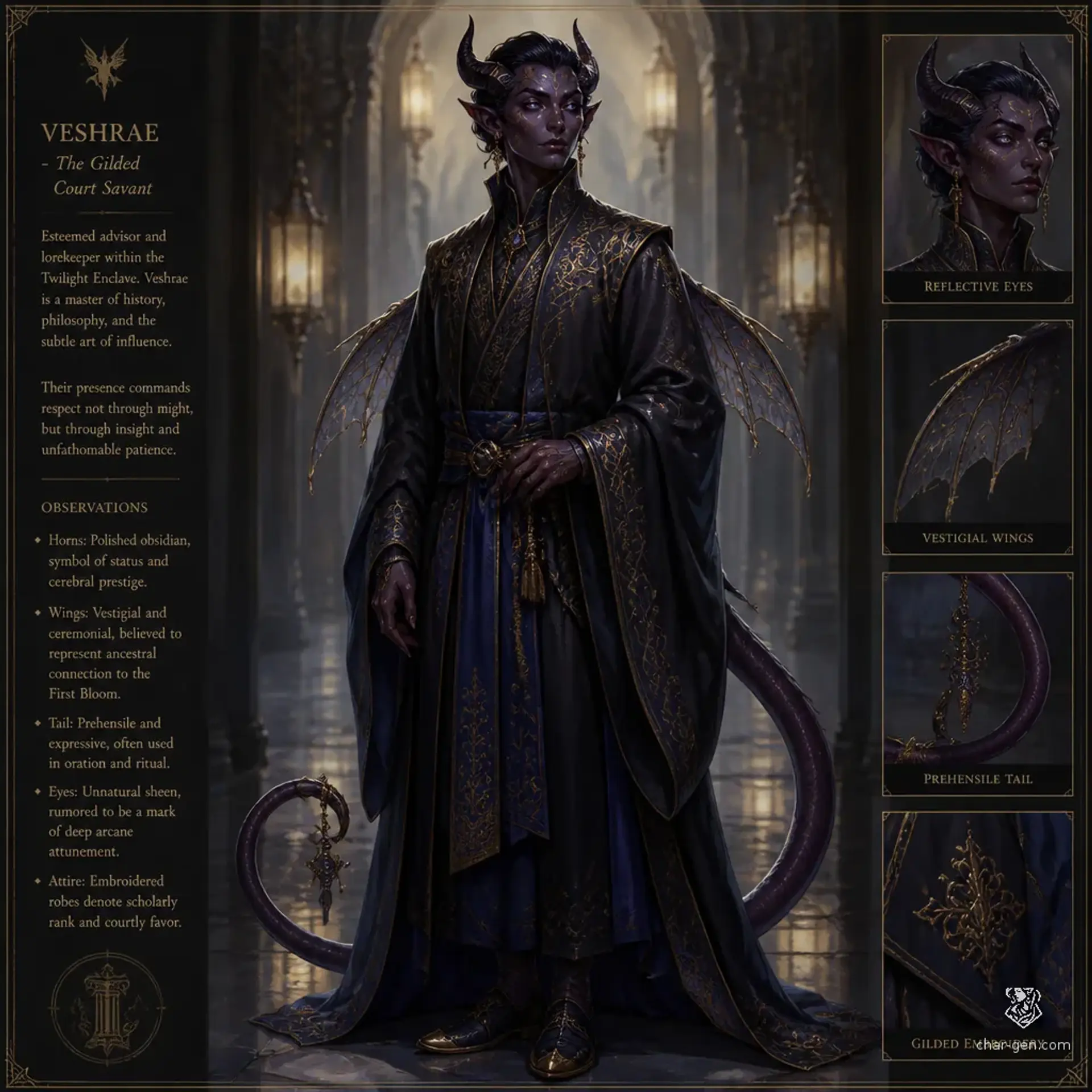
Fiendkin are graceful humanoids with small horns, slender tails, and delicate vestigial wing structures that may be feathered, membranous, or almost leaf-like depending on lineage and culture.
Their eyes often gleam with unnatural color or a reflective sheen, especially in dim light. Skin tones range from mortal-like hues to deep crimson, ash, pearl, violet, bronze, or midnight blue. Their features are usually fine-boned but not fragile, with a presence that can feel comforting, unnerving, or magnetic depending on their mood. Most wear their expressions like a second language. Some lineages show subtle traits at birth, while others reveal themselves only as the child grows into their magic.
Otherworldly, especially infernal courts, dream-realms, planar cities, embassies, archives, and crossroads where mortal and immortal concerns overlap.
Newborn Fiendkin are small, horned, and wing-budged, with magic that manifests in brief emotional surges, vivid dreams, and startling eye contact.
Young Fiendkin grow quickly, developing social instincts and a sense for mood, authority, and hidden intention long before adulthood.
The adolescent years are marked by dramatic changes in presence and power as fiendish traits sharpen and personal identity begins to settle.
Adults are fully capable of planar travel, courtly life, and magical study, and most begin defining a public role in their community.
Elders are deeply valued as archivists, counselors, judges, and keepers of memory, often serving as living ties between households and Courts.
Fiendkin society is organized around Courts, houses, schools, and guilds rather than empires.
Their communities prize eloquence, ritual hospitality, and the ability to keep confidence. Public life is highly social, but not frivolous. A well-delivered argument can carry the weight of a sword, and a carefully preserved memory may outlast a kingdom. Children are raised with strong family ties, usually in multigenerational households where elders remain active in daily life. Court records, song archives, and dream repositories preserve history alongside oral tradition. The culture is not defined by seduction alone. It is a civilization of negotiators, strategists, performers, healers, archivists, and dream scholars who believe that the most meaningful victory is choosing who you become.
Fiendkin practice a broad range of faiths, from ancestral devotion and dream reverence to formal pacts with infernal, mortal, or cosmic powers.
They are not bound to any one alignment, though their culture tends to respect discipline, consent, and chosen purpose. Many see morality as something enacted through relationships rather than inherited by blood. Priests and oracles among them often serve not as moral enforcers but as interpreters of obligation, memory, and consequence.
Fiendkin are often misunderstood, and they have learned to survive both distrust and fascination.
Many mortals mistake them for tempters, spies, or monsters, which can make first contact tense. In truth, Fiendkin often make loyal allies when treated with respect and directness. They usually dislike coercion, crude cruelty, and anyone who confuses desire with permission. With devils they may bargain, with celestials they may debate, and with other fiends they may share a complicated kinship shaped by old wars and older family ties. Among themselves, loyalty is fierce, but not automatic. Trust must be earned and maintained.
Fiendkin favor cities of polished black stone, warm red metal, mirrored corridors, hanging gardens, and vaulted chambers designed for conversation rather than siege.
Their architecture prizes privacy, acoustics, and symbolic geometry. The so-called Crimson Palaces are lavish centers of diplomacy and art. The Iron Bastions are measured, fortified cities of law and administration. The Veiled Sanctums are shifting dream-halls where memory, prophecy, and research are preserved in living script. Even their poorest districts are carefully maintained, because public beauty is considered a moral obligation.
No images yet.
A high-res, share-ready sheet you can post or print.
