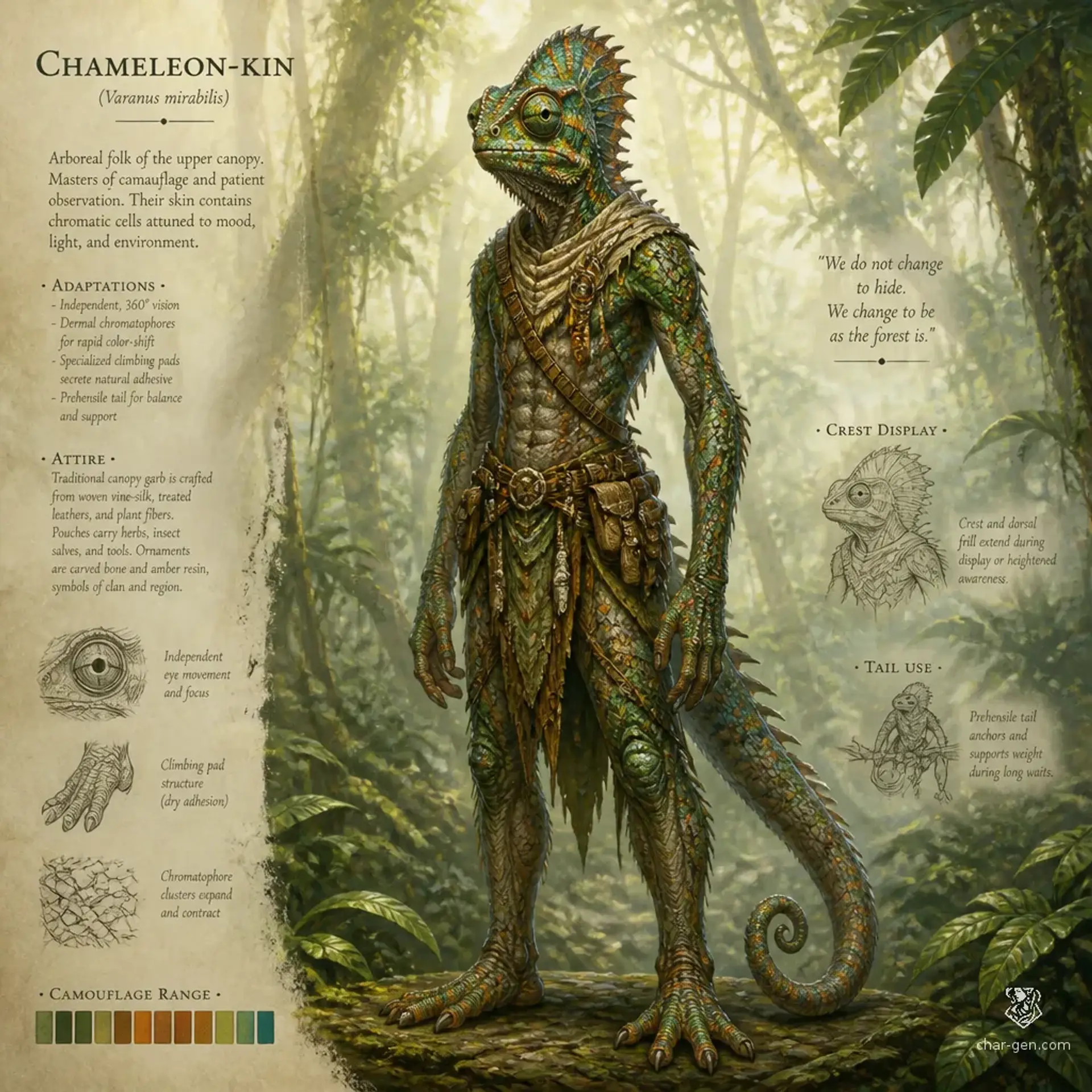
Temperate and tropical forests, especially dense canopy, mangrove edges, and mist-wet highlands
forest
humanoid
camouflage
scout
canopy
nature
standard-pc
dnd-5e-2024
homebrew
medium
poison-resistance
climber
silent-communication
shapeshifting-colors
SizeMedium
Speed30 ft., climb 20 ft.
LifespanTypically 80 to 110 years
Creature TypeHumanoid
Darkvision60 ft.
A people born to vanish, chameleon-kin are not merely hidden by the forest, they are part of its language. They are scouts, negotiators, wardens, saboteurs, and patient keepers of old trails, able to read danger in bark scars and borrow the colors of moonlit leaves. To meet one in the wild is to wonder whether you have been watched for hours, or welcomed long before you arrived.
Physical Description
Chameleon-kin are lean, long-limbed folk with supple skin that ranges from mossy green to bark brown, river blue, ember gold, or stone gray. Their coloring shifts with mood, health, and intent, though not always consciously. Fine ridges or frilled crests may run along the brow, spine, or throat, and many have eyes that move independently with startling precision. Their hands and feet are broad, with gripping pads suited to bark, rope, and slick stone. When at rest, they often appear almost leaf-like, as if the forest has decided to stand up and look back.
Society & Culture
Chameleon-kin society is organized around clans called masks, each maintaining specialized knowledge such as trailfinding, resin craft, herbal medicine, or canopy signaling. Storytelling is highly visual, with color changes used to punctuate memory, warning, and humor. Children learn to imitate leaf-shadows before they learn most formal greetings. Public conflict is discouraged, not because the people lack passion, but because the forest teaches that loud problems attract teeth. Outsiders often think they are secretive. Chameleon-kin would say they are selective, and that trust, once given, should matter.
Religion & Alignment
Their beliefs lean toward reverence for cycles, hidden places, and patient guardianship rather than strict doctrine. Many honor forest spirits, ancestral watchers, and local deities of dusk, rain, and growth. Chameleon-kin are not bound to any alignment, but their culture tends to prize carefulness, hospitality, and restraint. Even those who live as outlaws often frame themselves as protectors of balance rather than conquerors.
Homelands & Architecture
Chameleon-kin homelands are often woven high above the ground, where bridges, living ladders, and woven leaf platforms connect treehouses to hollow trunks and hidden granaries. Their architecture favors curving surfaces, layered screens, and surfaces that catch dappled light rather than stark walls. Homes are built to be forgotten by predators and remembered by kin. Doorways are frequently asymmetrical, because a straight line is considered rude in a place where survival depends on misdirection.
Relationships With Other Peoples
Chameleon-kin tend to be polite, guarded, and deeply observant with strangers. They often trade knowledge, safe passage, and herbal supplies before they trade gold. Forest-dwellers usually trust them as guides and interpreters of weather and spoor, while more urban folk sometimes mistake their quietness for deceit. Chameleon-kin generally get along well with anyone who respects boundaries and poorly with those who demand instant disclosure. They are especially wary of hunters who waste meat and rulers who treat the woods as empty land.
Visual sheet
Turn Chameleon-kin into a sheet
A high-res, share-ready sheet you can post or print.