Typically 70 to 90 years, though a well-maintained iron limb often outlasts the first body it serves. Elders of 100 years are not unheard of, especially among those with strong clan support and careful repair traditions.
Habitat
Plains
human-kin
prosthetic
plains
survivor culture
artisan tradition
wanderer
field-guide
standard PC
SizeVariable
Speed30 ft.
LifespanTypically 70 to 90 years, though a well-maintained iron limb often outlasts the first body it serves. Elders of 100 years are not unheard of, especially among those with strong clan support and careful repair traditions.
Creature TypeHumanoid
Among the open plains, where the wind remembers every footprint, there are folk who carry survival in the shape of iron. The Ironlimb Plainsborn are humans who have woven metal into the story of their bodies, not as shame but as inheritance. Their prosthetic arms are known for hard labor, clever craftsmanship, and the quiet authority of someone who has already been broken once and refused to stay that way. At the table, they fit any role that values resilience, practical ingenuity, and the dignity of surviving what should have ended you.
Physical Description
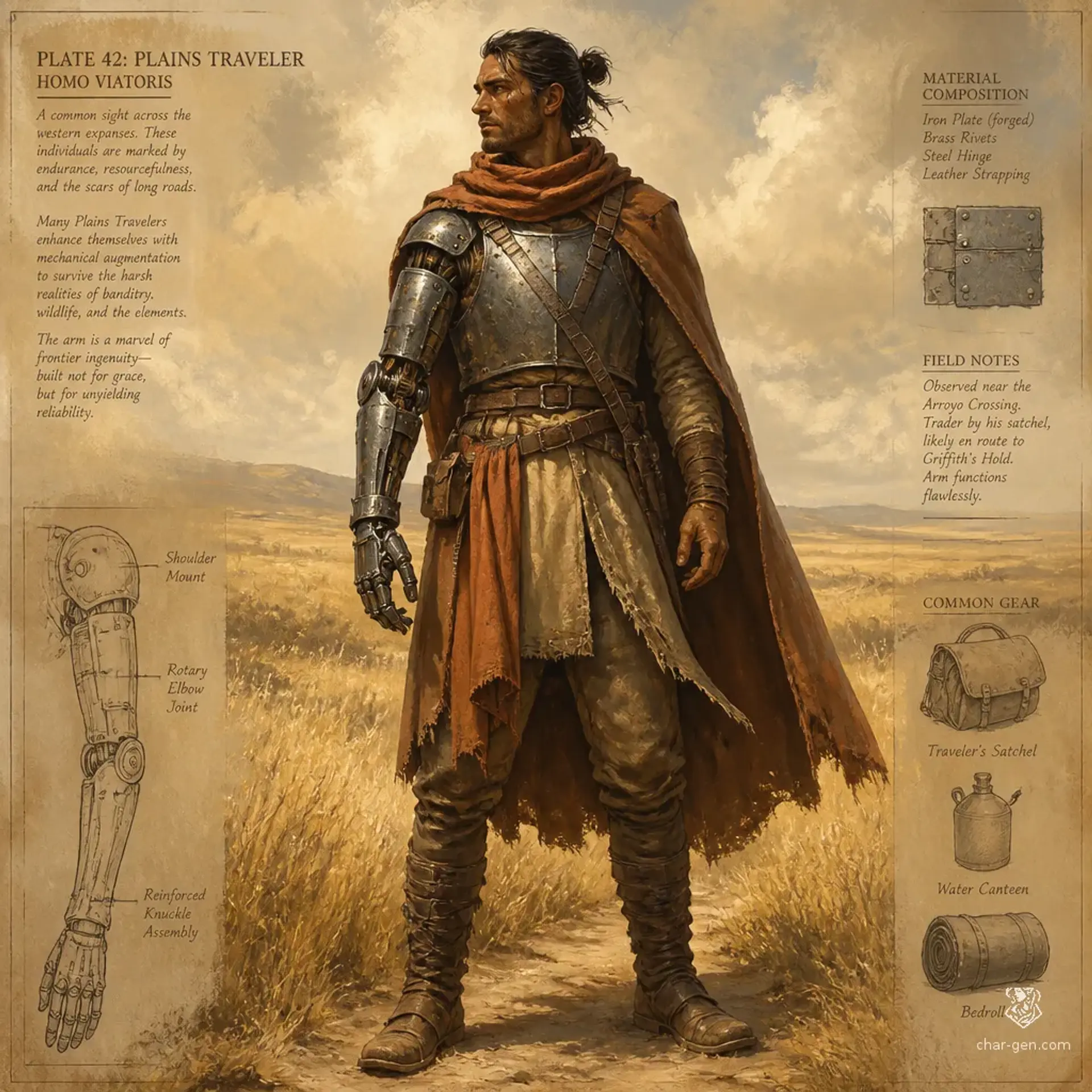
Ironlimb Plainsborn are human in origin and outwardly resemble any other plains-bred traveler at a glance, except for the unmistakable fact that one of their arms is not flesh. Their bodies are often tall and narrow from a life of hard miles, wind, and sparse meals. Hair is commonly worn short or tied back to keep it clear of straps and sparks. The mechanical arm is usually built from iron plates, visible hinges, pinned knuckles, and heavy joints that click softly with movement. It is not disguised as a natural limb. It is a statement, a tool, and often a family heirloom. Many wear reinforced sleeves, gloves, or painted lacquer to protect the metal from grit and weather, but they rarely hide it entirely. Their clothing favors layering and utility, with breastplates, cloaks, trousers, and rugged boots suited to dust, horsehair, and sudden storms.
Society & Culture
Their culture is built around the idea that a person can be remade without being diminished. A missing limb is not a source of pity but a milestone in a life that continued. Many communities keep a workshop fund for fittings, straps, replacement pins, and winter repairs. Stories celebrate not the accident itself, but the first time someone returned to the road after it. They value precision, debt, and mutual aid. A smith who refuses to mend a neighbor's joint is considered shameful. Children are taught to listen for the difference between a healthy click and a failing one, just as they are taught to notice weather, horse distress, and lies told around a campfire.
Religion & Alignment
Their faiths, when they have them, usually honor endurance, craft, seasons, and the mercy of repair. Some venerate storm spirits or ancestral smiths, believing the body is a temporary road and the soul is what learns to travel it. They are no more prone to any alignment than humans in general, though their culture strongly encourages practical compassion, stubborn independence, and a deep dislike of needless cruelty to the disabled.
Homelands & Architecture
Their homelands are broad grasslands where wind never stops moving and long roads matter more than walls. Settlements favor low, sturdy architecture that resists storms and can be repaired quickly, with workshops built around bellows, treadmills, and repair tables wide enough to cradle a body in pieces. Doorways are made generous to accommodate packs, carts, and bracework, while communal halls keep spare hinges, straps, and polished plates within arm's reach. They prize mobile craft over ornament, though a well-kept prosthetic is often decorated like a heraldic relic.
Relationships With Other Peoples
Most other peoples respect them when they can see the work that went into their survival, though some mistake them for artificers, veterans, or living relics. They often get along well with caravan folk, smiths, healers, and anyone who understands that repair is a form of love. Superstitious communities may fear the noise of the limb or assume it was gifted by a curse, while practical neighbors usually care far more about whether the person can keep a wagon moving or a fire lit. They are often suspicious of employers who praise strength but ignore injuries.
Visual sheet
Turn Ironlimb Plainsborn into a sheet
A high-res, share-ready sheet you can post or print.