Small or Medium, chosen when you select this species
Common
Humanoid
Humanoid·Small or Medium, chosen when you select this species
Cindervane
Cineravis urbanis
Speed
30 ft., climb 20 ft.
Lifespan
Cindervane mature at about 15 years and commonly live 70 to 90 years. Roostkeepers older than a century are rare but not unknown.
Darkvision
60 ft.
Habitat
Dense urban environments, especially old cities with layered districts, accessible rooftops, busy markets, bridges, bell towers, and extensive alleyways.
beast-folk
urban
courier
rooftop
observant
social
adaptable
SizeSmall or Medium, chosen when you select this species
Speed30 ft., climb 20 ft.
LifespanCindervane mature at about 15 years and commonly live 70 to 90 years. Roostkeepers older than a century are rare but not unknown.
Creature TypeHumanoid
Darkvision60 ft.
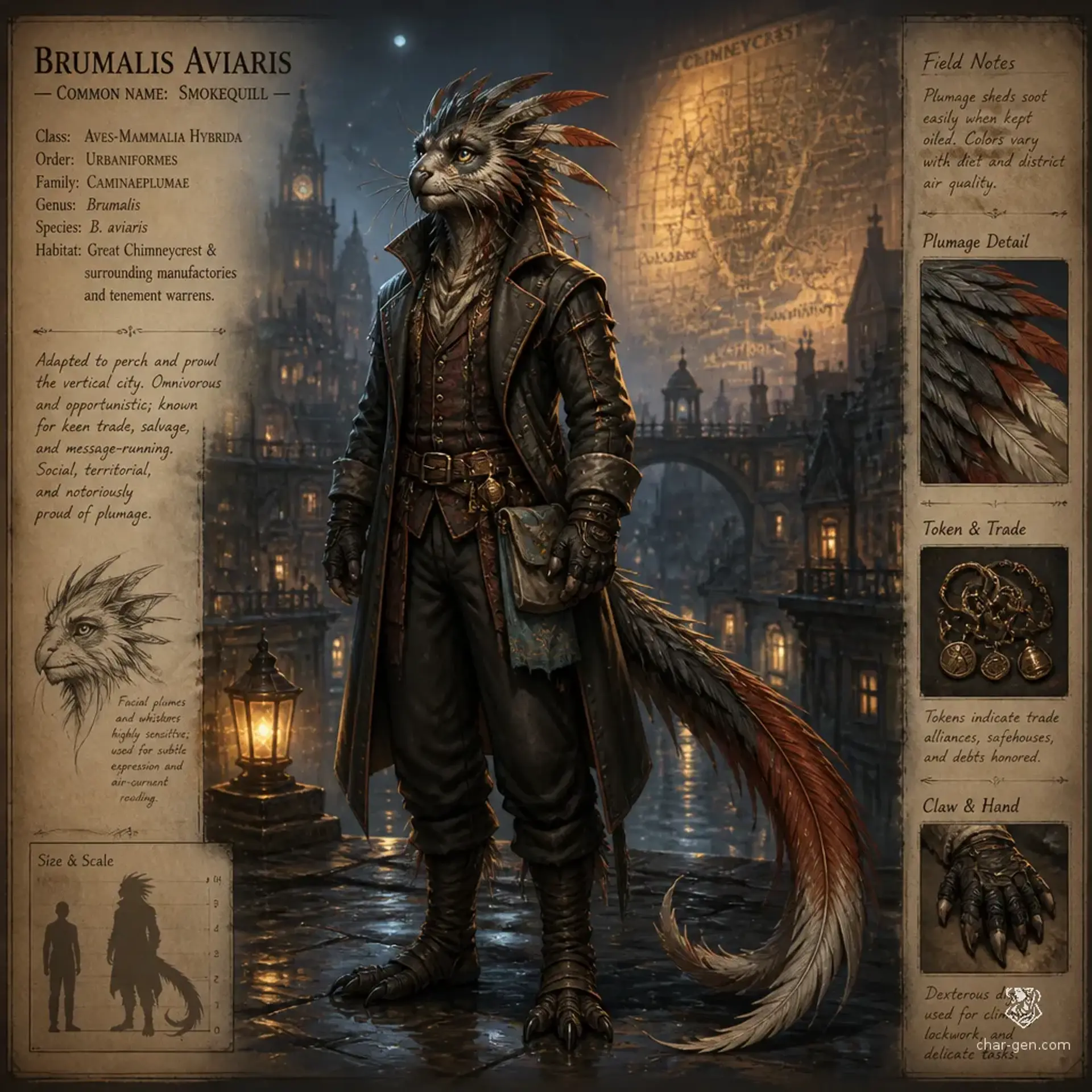
Cindervane are city-born beast-folk who know every shortcut, overheard rumor, and dangerous rooftop between the river and the old walls. They read urban life as a living map of voices, scents, bells, and footsteps, and they can turn a crowded street into sanctuary or disguise. To travel with a Cindervane is to gain a guide who notices the locked door, the nervous stranger, and the missing brick before anyone else does.
Physical Description
Cindervane are compact, feathered beast-folk with expressive faces, flexible hands, and long tails that help them balance along ledges and narrow beams. Their heads combine avian and mammalian features in varying proportions. Some have hooked beaks, others short muzzles, and many possess fanlike facial feathers or whisker plumes that tremble when they listen. Their plumage ranges from chimney gray and rust red to cream, indigo, glossy black, and green-bronze. Individual feathers often develop pale tips that resemble ash, sparks, or frost. Cindervane eyes are large and bright, commonly amber, silver, teal, or deep brown. They dress for movement, favoring layered coats, fingerless gloves, soft boots, and belts hung with tokens from places they have visited.
Society & Culture
Cindervane society is organized around roosts, which are extended households formed by blood, adoption, friendship, and mutual obligation. A roost may include couriers, cooks, shopkeepers, performers, widows, apprentices, and temporary guests. Their most valued virtue is reliable presence. A person who arrives when promised, remembers a name, or keeps a lamp burning during a crisis earns lasting respect. Cindervane settle disputes through witness circles, in which each participant recounts what they saw, heard, and felt before anyone argues about motive. Storytelling is both entertainment and civic duty. A well-told story preserves a route, warns against a hazard, honors a dead person, or reminds a powerful neighbor that the street is watching.
Religion & Alignment
Cindervane spirituality centers on the Hearth Above, a symbolic constellation said to hold the memories of every city that has ever been loved. Most Cindervane honor household ancestors, local spirits, civic saints, and the unnamed dead who keep cities standing through their labor. Their common rites involve lighting a small lamp, speaking one remembered name, and leaving an offering at a crossroads. Cindervane favor personal freedom tempered by responsibility to neighbors, making them often neutral, good, or chaotic in alignment, though every philosophy can be found among them.
Homelands & Architecture
Cindervane districts are woven through existing cities rather than separated from them. Their homes occupy attics, towers, abandoned aqueducts, bridge chambers, and buildings connected by hidden stairs. A typical roost contains a communal kitchen, a message wall, a quiet room for mourning, and a central balcony from which residents can observe the street. Cindervane architecture favors narrow entrances, many exits, sound-carrying courtyards, and bright copper fixtures that mark safe routes. Public buildings often include painted route maps that are updated each season.
Relationships With Other Peoples
Cindervane are deeply entangled with the wider city. They serve as messengers, witnesses, performers, artisans, street guides, archivists, investigators, and neighborhood organizers. Other peoples often find them charming but unsettling, particularly when a Cindervane repeats a private phrase heard days earlier. Cindervane communities welcome outsiders who respect local customs, yet they are wary of authorities who attempt to regulate movement, speech, or gathering places. They are especially protective of children, refugees, street vendors, and anyone whose name has been erased from official records.
Visual sheet
Turn Cindervane into a sheet
A high-res, share-ready sheet you can post or print.