
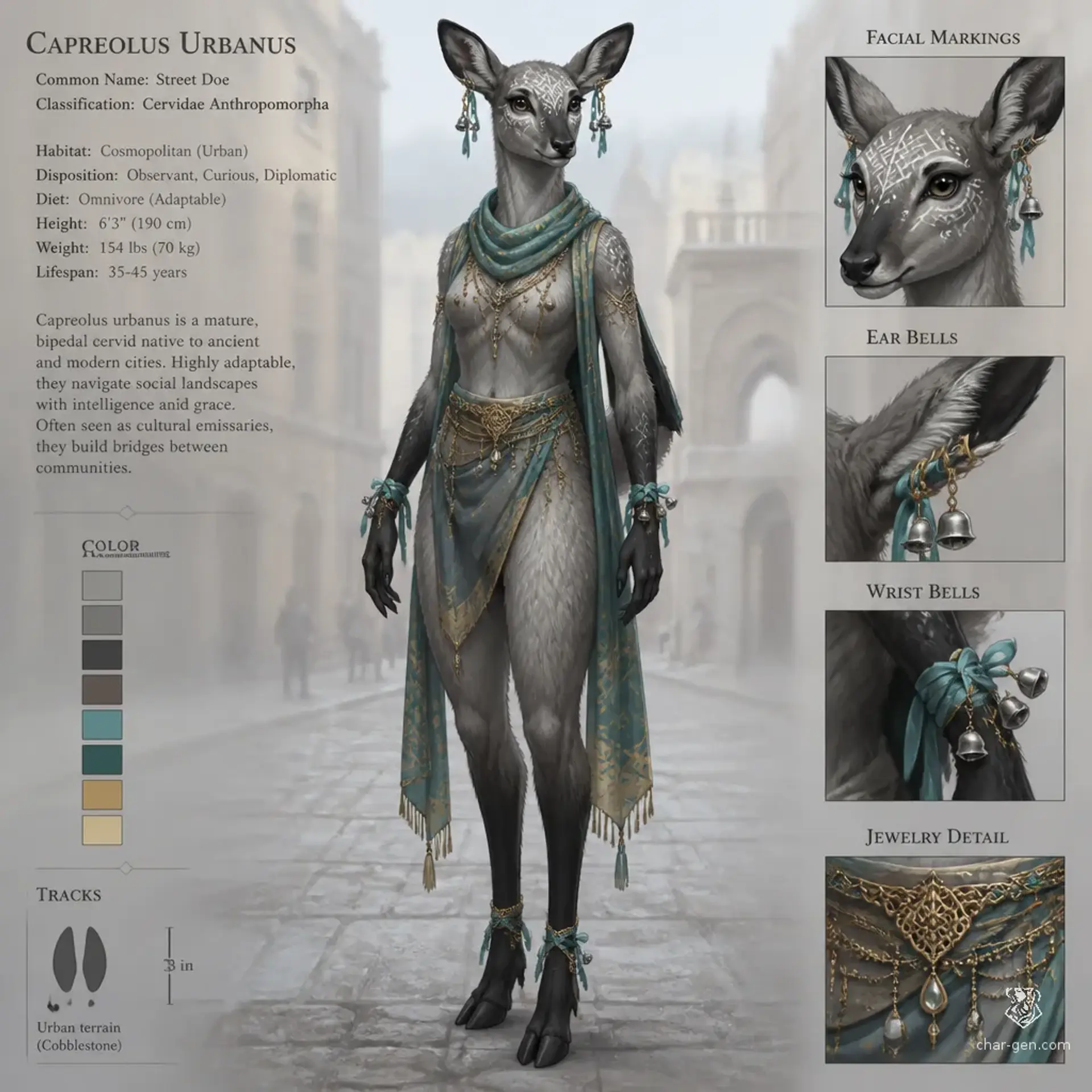
Greyglade doe-folk are the city’s midnight couriers, velvet-voiced buskers, and rooftop acrobats, built for stories that need motion as much as melody. They remember routes by smell and song, navigate crowds as if they were weather, and treat a good performance like a form of shelter. If your character can make a thousand strangers feel like an intimate audience, this is the ancestry for you.
Greyglade doe-folk are medium-sized beast-folk with soft grey fur, long lashes, dark alert eyes, and a graceful build suited to agile movement through crowded streets. In contrast to many reindeer-descended peoples, their brows are smooth and unadorned, with no horns or antlers at any age. Their ears are expressive and mobile, their muzzles narrow, and their lower legs strong enough for long runs across uneven stone. They are usually unclothed in the manner of their folk, though they often decorate themselves with scarves, bells, ribbons, paint, perfume, jewelry, or stage accessories that shift from practical to ceremonial depending on the hour.
Greyglade society is organized around ensembles rather than strict bloodlines. A household might include cousins, apprentices, musicians, runners, cooks, and aging neighbors who have simply stayed long enough to become family. Reputation matters, but so does practical kindness. A person known for keeping a beat, keeping a promise, or keeping panic away during a crisis is often granted more trust than a wealthy but unreliable patron. Their festivals are famous for lantern processions, masked comedy, call-and-response singing, and competitive storytelling that can last until dawn. Because they live in dense cities, they have a strong tradition of sharing resources, learning one another’s routes, and maintaining relationships with local guilds, theaters, and market wards.
Their faith is commonly woven from urban shrines, household charms, and seasonal festivals rather than grand temples. Many honor patrons of roads, moonlight, hearths, theater, and safe return. They are not locked to any alignment, though their culture strongly prizes generosity, mutual aid, and clever solutions that spare unnecessary harm. Even the most self-interested among them often draw the line at cruelty to guests, children, and performers.
Their oldest settlements are not wild tundra camps, but layered city neighborhoods where winter trade, music halls, bathhouses, and covered markets create an indoors of many outdoors. Greyglade builders favor high windows, warm stone, low roofs that shed snow, and stairways designed for quick movement. Their homes are often narrow at street level and unexpectedly broad above, with sleeping lofts, rehearsal corners, and communal cook spaces shared by extended families and close neighbors.
Greyglade doe-folk usually get along well with merchants, artisans, dockworkers, stage crews, and anyone who respects punctuality and good manners. They often have a playful rivalry with fox-like tricksters, a practical rapport with stoic stoneworkers, and a cautious respect for scholars who can preserve old songs without flattening them into museum pieces. They may seem flirtatious or theatrical to outsiders, but much of that is social dexterity rather than invitation. They distrust those who exploit public art, silence dissent, or treat service workers as invisible.
A high-res, share-ready sheet you can post or print.