Small or Medium, chosen when you select this species
Common
Humanoid
Humanoid·Small or Medium, chosen when you select this species
Veyru
Veyruca campestris
Speed
30 ft.
Lifespan
Veyru mature at about 20 years and commonly live 70 to 85 years, with some elders reaching their early nineties.
Habitat
Open plains, prairie, savanna, steppe, and the broad grasslands surrounding inland lakes
beast-folk
plains
migratory
caravan culture
antelope-like
mundane fantasy
subtle ancestry
SizeSmall or Medium, chosen when you select this species
Speed30 ft.
LifespanVeyru mature at about 20 years and commonly live 70 to 85 years, with some elders reaching their early nineties.
Creature TypeHumanoid
The Veyru are the people of the long horizon, born beneath wide skies and raised to read weather, hoofprints, smoke, and silence as fluently as written words. They travel in family caravans, maintain ancient routes across the grasslands, and measure wealth in trustworthy companions rather than permanent possessions. A Veyru adventurer may be a courier, exile, trail-keeper, wandering artisan, herd guardian, or simply someone who heard the road calling louder than home.
Physical Description
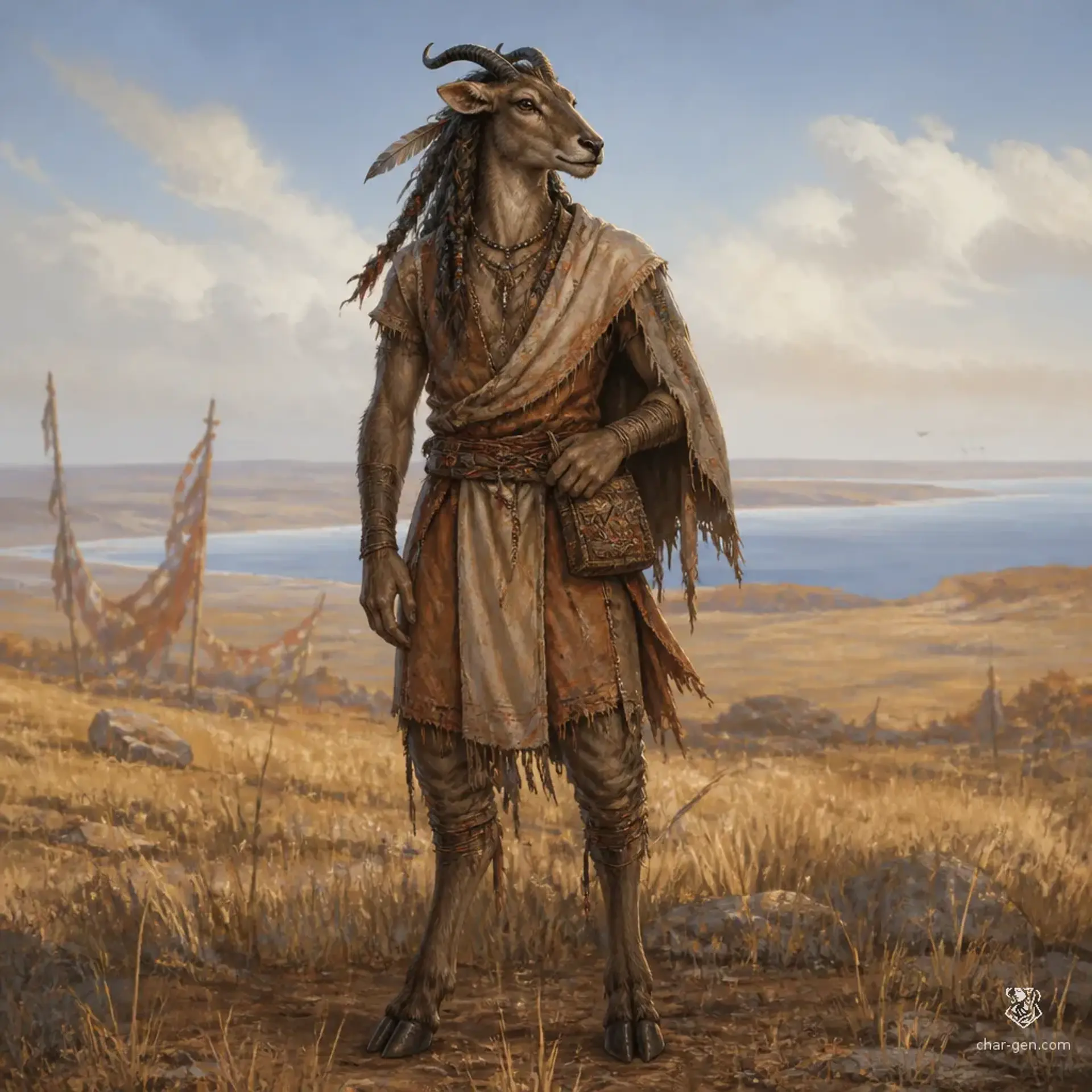
Veyru are lean, long-limbed beast-folk with the alert bearing of plains antelope. Their faces combine human and ungulate features, including broad nostrils, mobile ears, dark reflective eyes, and short muzzles. Most possess fine, close fur along the neck, shoulders, forearms, and lower legs, while the rest of the body bears humanlike skin in shades ranging from russet and tawny brown to charcoal, cream, and muted gray. Their hair is usually thick and coarse, often worn in braids decorated with beads, feathers, or bits of colored glass. Small horns are common but not universal, and their feet end in tough, split hooves that make them quiet and sure-footed across dry ground.
Society & Culture
Veyru society is organized around traveling households, extended clans, and temporary alliances formed for a particular season or journey. Children are taught practical skills by many adults, while elders preserve oral maps through recited place-names, songs, and stories. Disputes are usually settled by a circle of witnesses, with the goal of restoring a useful relationship rather than declaring a permanent victor. Marriage customs vary widely, but most Veyru recognize that loyalty can be built through shared hardship as surely as through birth. Their art favors portable forms: painted leather, beadwork, carved walking sticks, woven belts, wind instruments, and stories designed to be remembered while walking.
Religion & Alignment
Veyru spirituality centers on reciprocal obligations among living creatures, ancestors, weather, and the land. They honor named winds, remembered springs, and exemplary dead rather than maintaining a single universal priesthood. Most communities keep a small shrine of braided grass and polished bone near their central fire. Veyru commonly favor good or neutral alignments, valuing freedom and compassion, though some become stern traditionalists who place communal survival above individual wishes.
Homelands & Architecture
Veyru homelands are rarely marked by permanent walls. Their camps gather around low, circular windbreaks made from woven grass, leather, and flexible poles. Some clans build shallow earth lodges for winter, while wealthier settlements maintain broad communal halls with removable roofs. Paths are treated as architecture in their own right, marked by standing stones, painted posts, and strings of shells that record safe water, dangerous ground, and the names of those who maintain each route.
Relationships With Other Peoples
Veyru are generally regarded as reliable travelers, practical merchants, and capable guides, though settled societies sometimes mistake their seasonal movement for rootlessness. They maintain strong relationships with farming communities, whom they trade with during migration seasons, and complicated relationships with nobles who attempt to tax or control the roads. Veyru respect disciplined military cultures but distrust armies that destroy pasture without repairing wells or compensating local families. They are often welcomed by travelers, scouts, and caravaners, yet their habit of leaving without ceremony can be misunderstood as indifference.
Visual sheet
Turn Veyru into a sheet
A high-res, share-ready sheet you can post or print.