Retains the speed and movement modes of the parent ancestry
Lifespan
Everbound do not die of old age. Their bodies retain the apparent age at which the condition awakened, though they may change gradually in manner, posture, and expression.
Habitat
Everbound may arise among any humanoid population. They are most often found in places where ancestral magic, violent history, or prolonged exposure to death has left a mark on the land.
immortal
resurrection
regeneration
ancestral
deathless
rare
humanoid
SizeRetains the size of the parent ancestry
SpeedRetains the speed and movement modes of the parent ancestry
LifespanEverbound do not die of old age. Their bodies retain the apparent age at which the condition awakened, though they may change gradually in manner, posture, and expression.
Creature TypeHumanoid
You can kill an Everbound, but you cannot easily keep one dead. They walk among every ancestry, wearing the face, blood, and inherited gifts of the people who raised them, while carrying the private knowledge that the world has already mourned them. Every death is a disappearance, every return a scandal, and every fallen immortal of their own kind is a terrible inheritance waiting to be claimed.
Physical Description
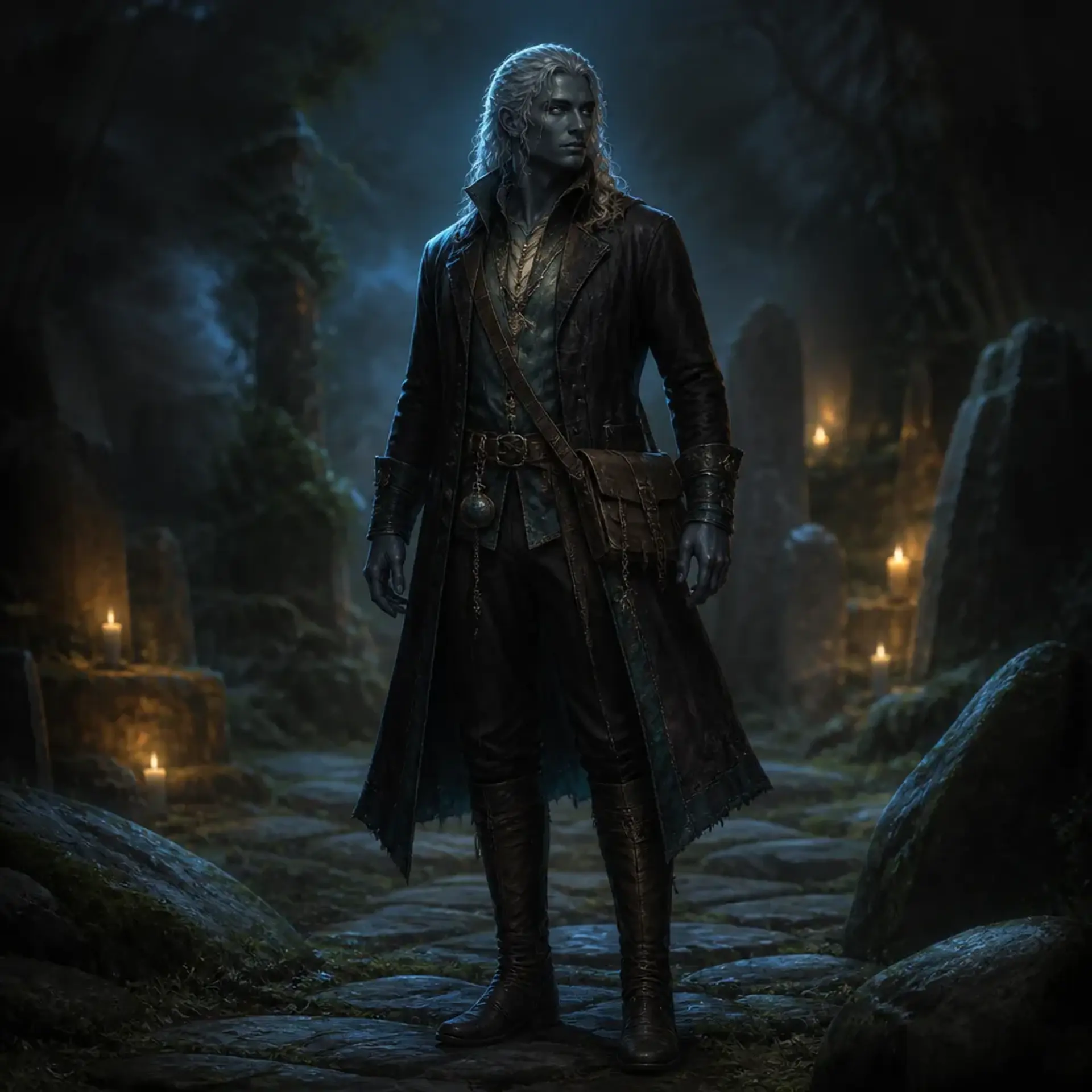
An Everbound looks like a member of their parent ancestry and retains that ancestry’s normal physical traits, movement, senses, and magical adaptations. Their bodies do not scar. Cuts close with swift, seamless growth, burns fade into unbroken flesh, and missing tissue reforms with unsettling certainty. Their eyes may briefly reflect the color or pattern of an ancestral trait they have absorbed. When killed, the body remains recognizably dead for a period ranging from several minutes to nearly twenty-four hours. Then breath, warmth, and movement return without visible injury. Some Everbound awaken with a gasp, while others simply sit up and continue a conversation as though death were an interruption.
Society & Culture
Everbound culture is built around continuity, secrecy, and the careful stewardship of identity. They maintain death ledgers recording where and how each member died, how long the return took, and whether anything changed afterward. Their communities often appoint Witnesses, trusted people who guard the body during the interval between death and resurrection. Since the Everbound do not need food, drink, air, or sleep, they can function as tireless sentinels, archivists, travelers, and emergency responders, though many deliberately imitate mortal habits to preserve intimacy with their communities. A long rest requires only four hours of light activity, such as reading or keeping watch. Their greatest taboo is predatory inheritance, the deliberate killing of another Everbound solely to absorb their collected ancestral traits.
Religion & Alignment
Everbound beliefs vary according to the parent ancestry. Some worship gods of death as custodians who repeatedly reject their souls, while others honor gods of life, renewal, memory, or fate. Many reject absolute claims about mortality and consider resurrection a biological or ancestral phenomenon rather than a divine gift. Their alignments tend toward whatever values shaped their first life, though centuries of survival often make them patient, pragmatic, and suspicious of simple moral categories.
Homelands & Architecture
The Everbound rarely build homelands of their own. Instead, they inhabit hidden sanctuaries within the settlements of their parent ancestries. These places commonly include resurrection chambers, memorial halls, sealed archives, and rooms designed for a body to be found safely after death. Their architecture favors thick walls, concealed entrances, observatories, and windows overlooking roads, since an Everbound community must always know who is arriving and who is returning.
Relationships With Other Peoples
Most Everbound remain embedded within their parent communities, where their condition is treated as a blessing, curse, military asset, religious omen, or family secret depending on local custom. Their relationship with other Everbound is more complicated. They recognize one another as members of a hidden lineage, yet each knows that another Everbound can inflict the only final death available to them. Killing an Everbound allows the victor to absorb all ancestral traits previously absorbed by the fallen immortal, creating both a grim incentive and a powerful taboo. An Everbound who kills a member of their own kind may gain extraordinary heritage, but they also inherit the victim’s enemies, memories, obligations, and unfinished grief. Everbound can retain and express any shapechanging ability granted by their parent ancestry, including the ability to alter their appearance and bodily form.
Visual sheet
Turn Everbound into a sheet
A high-res, share-ready sheet you can post or print.