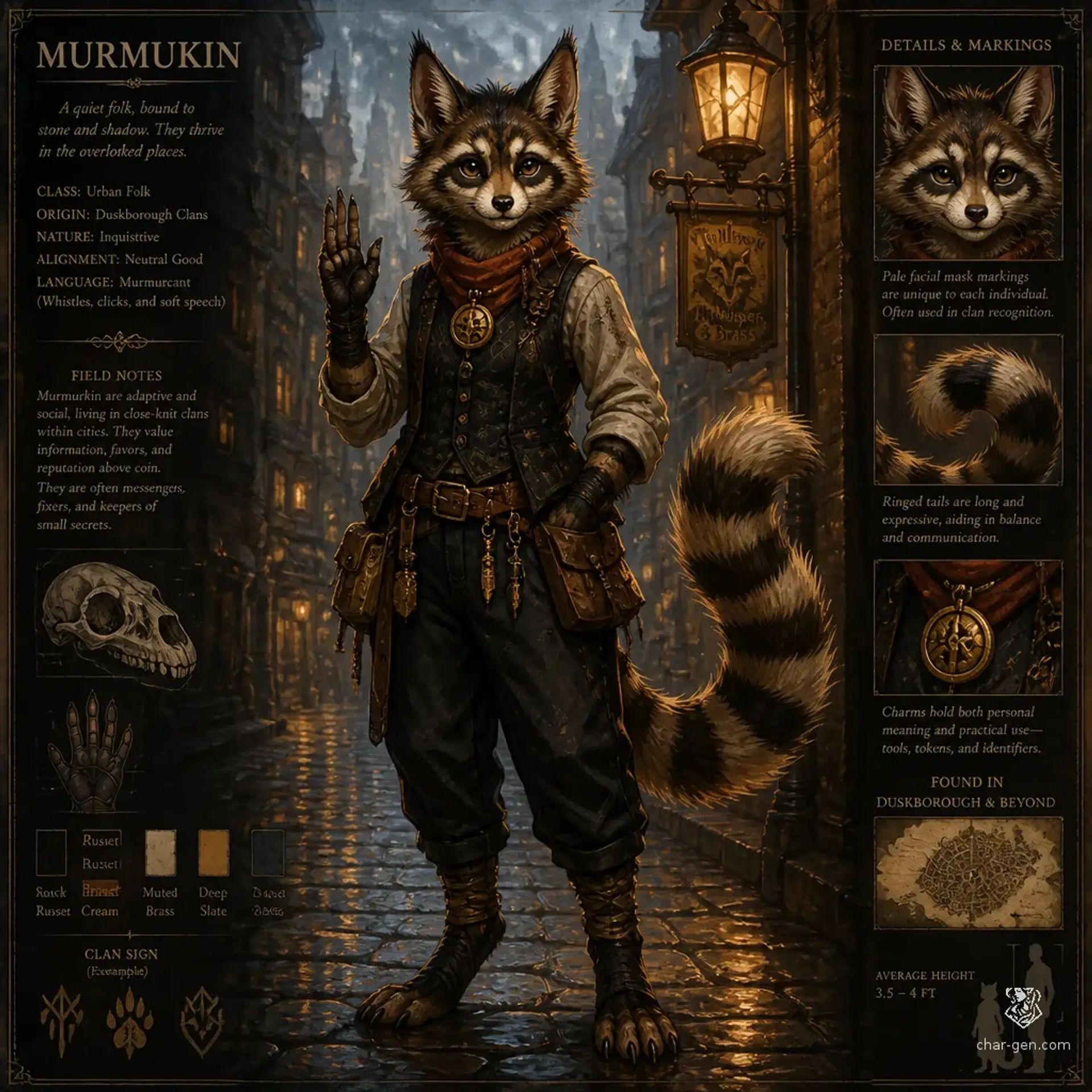
Small or Medium, chosen when you select this species
Common
Humanoid
Humanoid·Small or Medium, chosen when you select this species
Murmurkin
Vulpes urbanis sonorus
Speed
30 ft., climb 20 ft.
Lifespan
Murmurkin mature at about 15 and commonly live 70 to 90 years. Exceptionally careful elders may reach a century.
Darkvision
60 ft.
Habitat
Urban
beast-folk
urban
nimble
social
climber
courier
common ancestry
SizeSmall or Medium, chosen when you select this species
Speed30 ft., climb 20 ft.
LifespanMurmurkin mature at about 15 and commonly live 70 to 90 years. Exceptionally careful elders may reach a century.
Creature TypeHumanoid
Darkvision60 ft.
Murmurkin are the small, sharp-eyed people of crowded streets, hidden stairways, rooftop gardens, and midnight markets. They know which baker leaves bread by the back door, which magistrate takes bribes, and which old stones whisper when rain is coming. To outsiders, they may seem nosy, restless, or impossible to surprise. To one another, they are neighbors first and everything else afterward. A murmurkin adventurer leaves home not to escape the city, but to learn what lies beyond the last familiar bell.
Physical Description
Murmurkin are small to medium-sized beast-folk with flexible builds, pointed or rounded ears, expressive tails, and faces that combine foxlike, raccoonlike, civetlike, and small canine features. Their fur may be russet, soot-black, cream, silver, brindled, or patterned with pale masks and rings. Most have nimble hands with blunt claws suited to climbing, lockwork, cooking, and craft. Their voices are unusually resonant for their size, capable of carrying clearly through crowded streets without seeming loud. Clothing is practical but personal, often featuring layered vests, many pockets, bright scarves, and charms collected from different districts.
Society & Culture
Murmurkin society is organized around neighborhoods, households, guilds, and trusted routes rather than bloodline alone. A household may include relatives, apprentices, widows, close friends, and anyone who has been given a place at the table. Children learn by shadowing adults through the city, memorizing landmarks and social signals before they master formal lessons. Public festivals combine music, food, rooftop lanterns, and competitive storytelling. Disagreements are often settled through witnesses, shared meals, or the presentation of embarrassing but relevant family history. Murmurkin value privacy, but they consider deliberate isolation a sign of distress.
Religion & Alignment
Murmurkin religion is local, practical, and full of overlapping traditions. Many honor household spirits, ancestral wayfinders, saintly founders, city rivers, public hearths, and the unseen force they call the Listening Dark. Their priests often serve as mediators, archivists, healers, or keepers of communal kitchens. Murmurkin commonly favor good or neutral alignments, placing high value on mutual aid and personal freedom, though strict guild service and civic duty are also respected.
Homelands & Architecture
Murmurkin are born in cities, but rarely in the grand halls celebrated by historians. Their true homelands are the layered spaces between official plans: attic bridges, cellar markets, abandoned aqueducts, bell towers, service corridors, and rooftop gardens. Murmurkin architecture favors adaptability over permanence. A single building may contain folding stairways, hidden shutters, communal kitchens, and small doors designed for children, couriers, or emergency escape. In older districts, homes are often connected by coded bells or painted marks that form a private civic map.
Relationships With Other Peoples
Murmurkin are often valued as traders, messengers, entertainers, investigators, cooks, artisans, and neighborhood organizers. Larger folk may underestimate them, while wealthy institutions sometimes exploit their knowledge of overlooked spaces. Murmurkin communities respond strongly to mistreatment of children, tenants, laborers, and travelers. They form friendships quickly but distinguish between casual affection and the deeper obligation of kinship. Among other ancestries, they are especially comfortable with communities that value hospitality, craft, or oral history, though they are suspicious of anyone who treats a city as property rather than as a living web of relationships.
Visual sheet
Turn Murmurkin into a sheet
A high-res, share-ready sheet you can post or print.