Typically 90 to 140 years, with many remaining vigorous well past middle age if their element is respected and their body is not overtaxed.
Darkvision
60 ft.
Habitat
Places where an elemental presence is strong: desert basins, volcanic highlands, storm coasts, glacier holds, deep caverns, hot springs, and ancient sites of rite or sacrifice.
elemental
homebrew
humanoid
ancestry
genasi-inspired
D&D 5E 2024
medium
uncommon
field-guide
SizeMedium
Speed30 ft.
LifespanTypically 90 to 140 years, with many remaining vigorous well past middle age if their element is respected and their body is not overtaxed.
Creature TypeHumanoid
Darkvision60 ft.
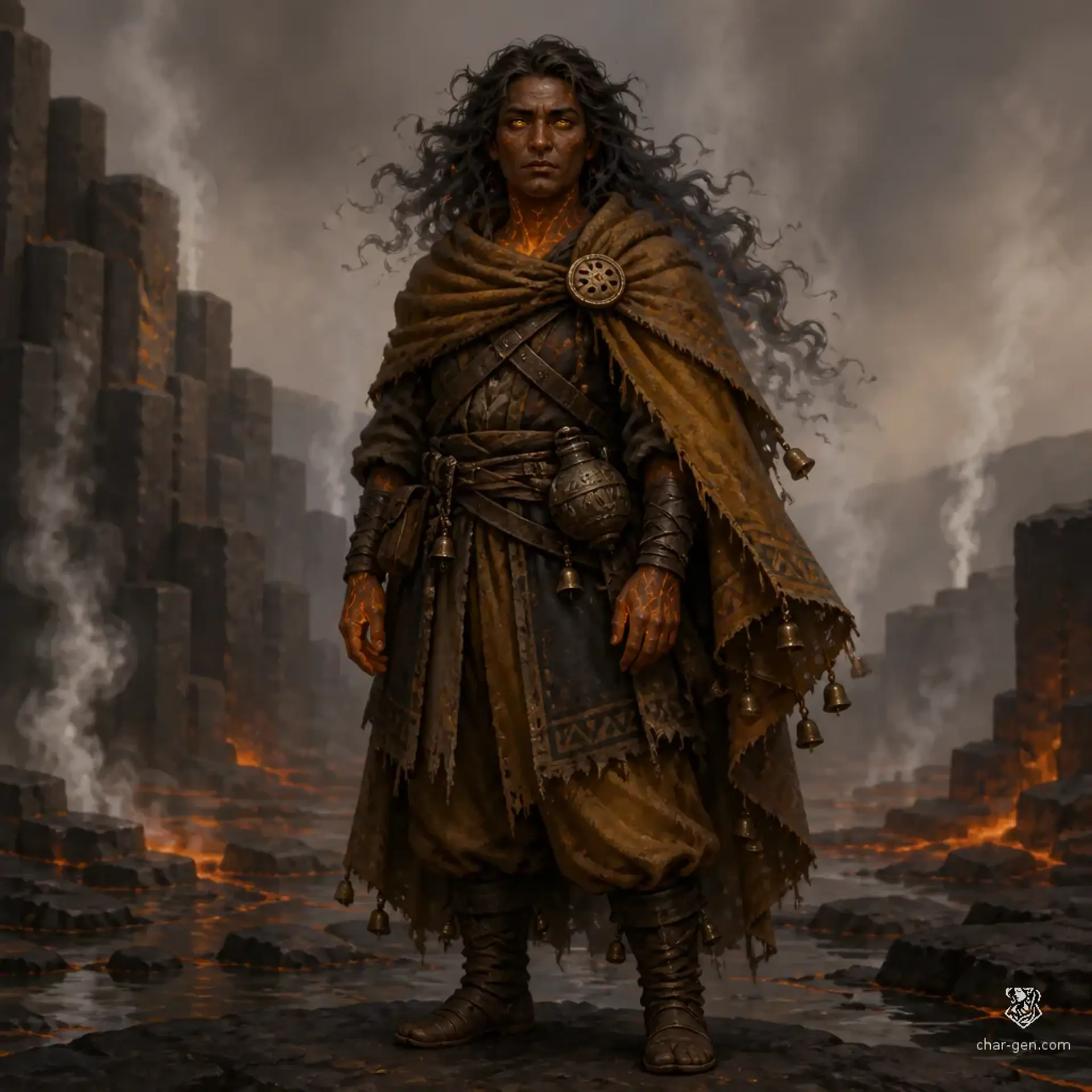
The Emberbound Folk are descendants of an ancient pact between mortal blood and the raw powers of the world. Some glow with furnace heat, some whisper with sea-salt mist, some carry the patience of stone, and some move like a front of weather made human. They are wanderers, guardians, artisans, and omens, equally at home in the halls of kings and at the edge of a lava field. A character like Kael Varr might be a calm heart wrapped around a dangerous inheritance, someone learning whether their blood is a blessing, a burden, or a map to something still sleeping beneath the world.
Physical Description
The Emberbound Folk are humanoid and unmistakably touched by the element running through their blood. Skin may gleam like polished stone, shimmer with heat haze, carry a pearl-wet sheen, or show faint currents of color that move when they are emotional. Hair often resembles smoke, sea foam, blown sand, or wind-tossed flame. Their eyes are the most telling feature, with irises that seem filled with stormlight, molten gold, glacier blue, ember red, or deep mineral green. Their bodies are not monstrous, but they are never wholly ordinary. Even at rest, they can seem as though the world is leaning slightly toward them.
Society & Culture
Emberbound culture is built around memory, weather, and obligation. Families often organize themselves into households or firesides rather than simple bloodlines, with apprentices, adopted kin, and ritual companions counted as fully belonging. Stories are told through labor as much as speech, in the pattern of a woven mat, the balance of a wall, the tuning of a bell, or the choreography of a dance meant to call rain. They value endurance, restraint, and craftsmanship, but their celebrations can be thunderous. A good omen is never ignored, and an insult to the land is remembered for generations. Many communities mark the turning of the seasons with communal trials, where young adults prove they can carry heat, hunger, cold, or loneliness without losing themselves.
Religion & Alignment
They are not bound to any single faith. Many honor elemental spirits, local gods, ancestor shrines, or the powers that shaped their home region. Their morality is equally varied. Some become stern protectors who prize order and stewardship, while others are fierce individualists, joyous destroyers of old constraints, or meditative guardians who seek perfect equilibrium. As a people, they understand that force without purpose is ruin, but they disagree passionately on what purpose should be.
Homelands & Architecture
Their homelands are rarely nations in the ordinary sense. They are usually networks of sanctuaries, caravan halls, cliff towns, canal cities, forge-districts, or sheltering enclaves built where the world itself feels alive. Their architecture favors practical harmony with the local element. Stone is left exposed where it can breathe, roofs are angled for rain or ash, courtyards collect wind or sunlight, and doors are marked with kiln-bright glaze, salt wash, or mineral paint so the buildings seem to belong to the land rather than conquer it.
Relationships With Other Peoples
Most other peoples find them fascinating, unsettling, or both. They are often welcomed as artisans, scouts, healers, and weather-sages, but also feared as harbingers of upheaval. Among planar scholars they are treated as living evidence that the world remembers its elemental origins. In everyday life they are most comfortable with communities that value competence over pedigree. They tend to respect builders, caretakers, herders, travelers, and anyone who learns to live honestly within harsh conditions. They can clash with rigid hierarchies, especially when those hierarchies try to claim ownership over land, water, fire, or sky.
Visual sheet
Turn Emberbound Folk into a sheet
A high-res, share-ready sheet you can post or print.