Variable, typically Medium, but some are Small or Large depending on the sculpted vessel
Uncommon
Construct
Construct·Variable, typically Medium, but some are Small or Large depending on the sculpted vessel
Hearthmade
*Animaformis terrigena*
Speed
30 ft.
Lifespan
Commonly 120 to 300 years, though bodies may last far longer with repair and careful ritual maintenance
Darkvision
60 ft.
Habitat
Found in workshops, ruined shrines, hidden kilns, deep quarries, forest clearings, volcanic vents, and anywhere a patient maker can gather suitable material and a willing or unwilling soul.
construct
golem-inspired
soulbound
homebrew species
variable size
5e 2014
field guide
clayfolk
crystal folk
living vessel
consent themes
crafted body
standard PC power level
SizeVariable, typically Medium, but some are Small or Large depending on the sculpted vessel
Speed30 ft.
LifespanCommonly 120 to 300 years, though bodies may last far longer with repair and careful ritual maintenance
Creature TypeConstruct
Darkvision60 ft.
The Hearthmade are people built from earth, stone, wood, crystal, and flame, then given life by a bound soul. Some were shaped as gifts, some as memorials, and some as bargains no one should have made. They walk the world in bodies that can be as humble as river clay or as wondrous as living diamond, carrying the memory of another life and the burden of being entirely new.
Physical Description
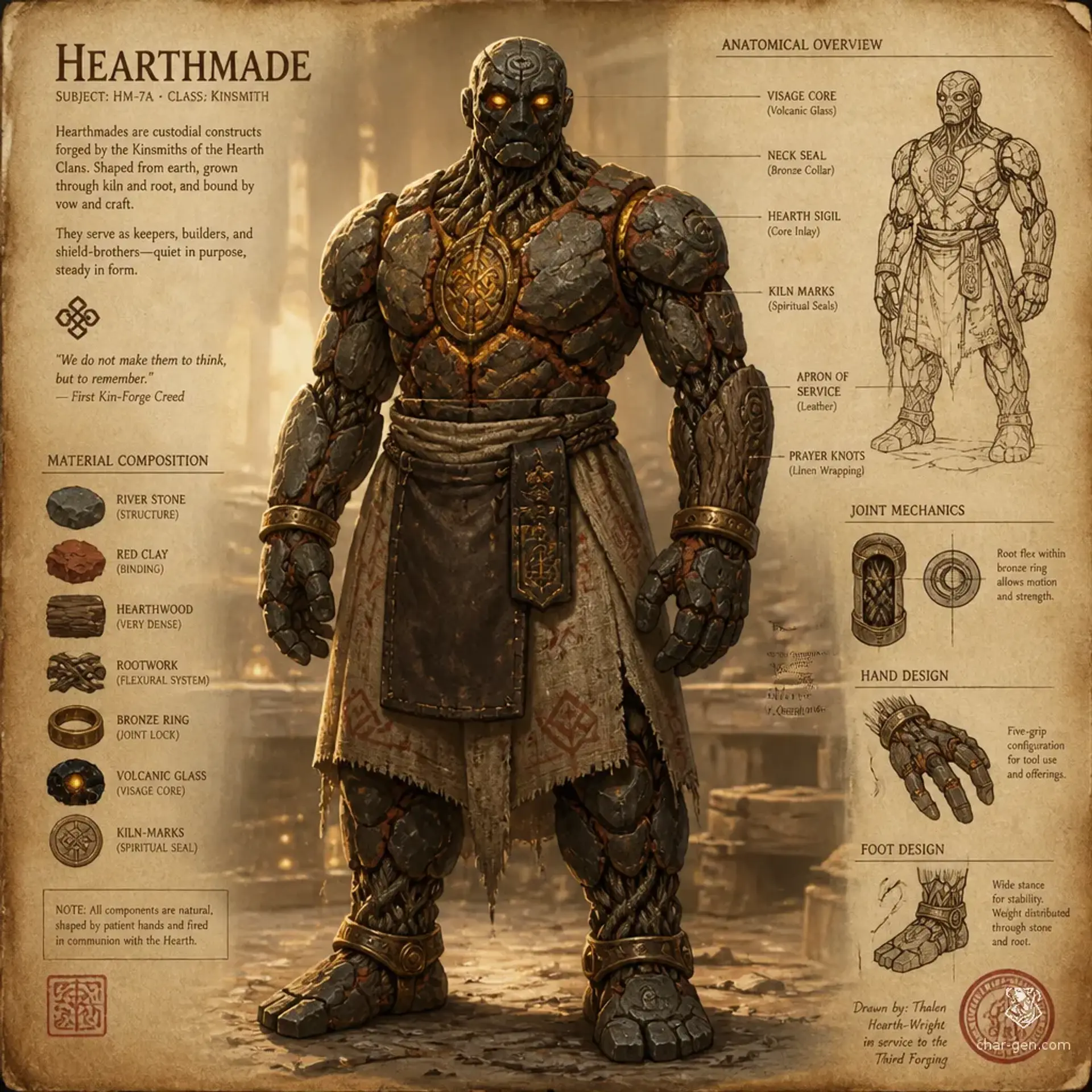
Hearthmade are construct folk assembled from naturally occurring materials and animated by a bound soul. Their bodies may be clay, packed earth, pale wood, river stone, volcanic glass, crystal, salt, bone, or rarer substances such as diamond or cooled lava. Their shapes are as varied as their makers’ grief, pride, and obsession. One may resemble a beloved spouse, another a tall house with arms, another a simple child-sized vessel for a beloved voice. Joints are often visible seams, carved rings, braided roots, or facets that catch the light. Some bodies bear deliberate symbols, kiln marks, prayer knots, or inlaid metals that declare the maker’s intent. Their faces are expressive when shaped to be, but many prefer forms that let their posture and voice speak for them.
Society & Culture
Hearthmade culture is built on upkeep, testimony, and chosen identity. A body is never only a shell. It is a record of origin, intention, and the hands that shaped it. Communities often keep ledgers of material source, creator, soul-name, and important repairs, not as bureaucracy but as genealogy. Coming-of-age may be marked by the first self-directed modification, such as changing a hand, resealing a shoulder, polishing a face, or replacing a cracked panel with a piece chosen by the soul itself. Music and dance are often slow, deliberate, and architectural, emphasizing posture, resonance, and weight. Many take pride in being hard to ruin, but even more pride in being worth maintaining. A Hearthmade that survives by constant patching is usually admired more than one that remains pristine and unused. Their jokes can be dry, their affection steady, and their grief very long.
Religion & Alignment
They are not naturally aligned to any single moral path. Bodies made as prison seals or war machines may breed resentment, while bodies made as memorials or shelter often foster compassion and patience. Their spiritual lives are shaped by the moment of binding. Some revere gods of craft, hearth, death, memory, or renewal. Others reject divinity entirely and honor the soul itself as the only sacred thing involved. Many maintain private rites of maintenance before prayer, believing that a clean seam is as holy as a candle.
Homelands & Architecture
Their homelands are rarely natural nations and more often maker-clans, sanctuaries, or labor enclaves built around material sources. Homes are usually deliberate and symbolic, matching the body’s substance: clay homes are low and round with broad thresholds, wooden settlements favor living supports and carved roots, crystal communities glitter with refracted light, and lava-forged enclaves use cooling channels and ash-baked vaults. Architecture is treated as biography. A house may be shaped like a guardian, a lost lover, a beast, or a memory of the creator’s old home, because to them form is a language of devotion.
Relationships With Other Peoples
Most societies treat them with a mixture of awe, unease, and practical interest. Rural folk may greet them as good omens if they are clearly voluntary creations, while city authorities often want permits, records, or proof of ownership that the Hearthmade finds demeaning. Clerics and philosophers debate whether the bound soul is rescued, stolen, blessed, or enslaved. Among themselves, they can be intensely protective of consent and identity, and they tend to remember the names of those who treated them as persons rather than property. Their relationships with makers are complicated. Some adore their creators, some resent them, and some spent their entire lives trying to answer one question: did you make me, or did you keep me?
Visual sheet
Turn Hearthmade into a sheet
A high-res, share-ready sheet you can post or print.