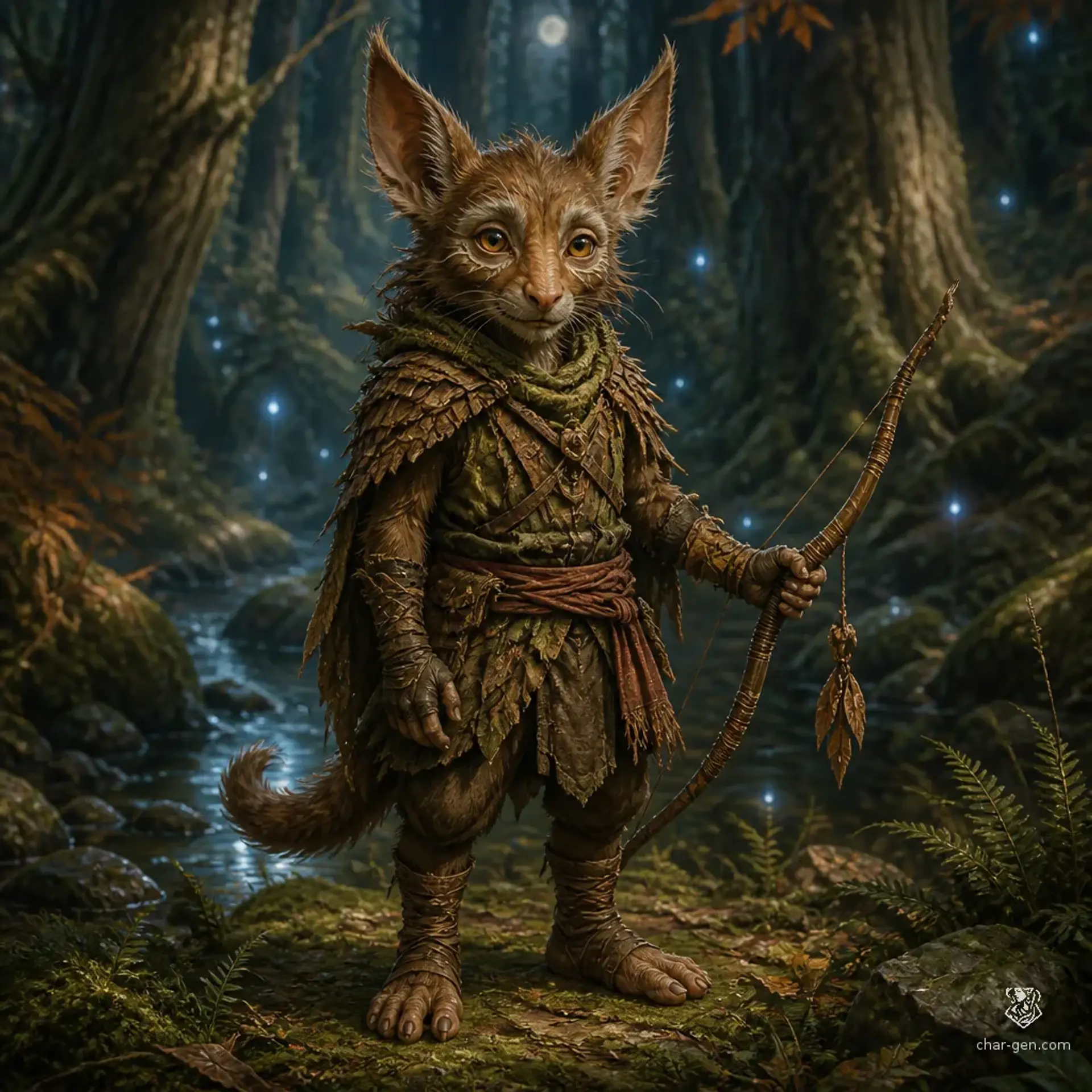
Grugai mature around age 18 and commonly live 70 to 90 years. Elders who spend their lives in close communion with the oldest forests sometimes reach a century.
Darkvision
60 ft.
Habitat
Temperate, boreal, and subtropical forests, especially old woodlands with clean streams and abundant animal life.
forest-dweller
archer
healer
spirit-worshipper
agile
small humanoid
woodland guardian
SizeSmall
Speed30 ft., climb 20 ft.
LifespanGrugai mature around age 18 and commonly live 70 to 90 years. Elders who spend their lives in close communion with the oldest forests sometimes reach a century.
Creature TypeHumanoid
Darkvision60 ft.
Small, brown-furred guardians of the deep woods, the grugai weave archery, healing, and reverence into every part of life. They thank the deer before taking its meat, ask the forest spirits to guide every cure, and treat kindness as a sacred duty. Yet beneath their warmth lies a fierce boundary: harm the forest or kill without respect, and the gentle woodland folk become swift, relentless protectors.
Physical Description
Grugai are small humanoids covered in dense brown fur ranging from cinnamon and russet to dark umber, with lighter muzzles, palms, and throats. Their large pointed ears pivot toward distant sounds, while their long, expressive noses give them an excellent sense of scent. Their eyes are commonly amber, hazel, green, or deep brown, and many bear subtle pale markings around the eyes that resemble leaf veins or dappled sunlight. Grugai move with quiet, agile confidence, able to scramble over roots, fallen trunks, and steep forest slopes with remarkable ease. Their hands are nimble, their feet broad and sure, and their tails, when present, are short and expressive rather than prehensile.
Society & Culture
Grugai society is organized around extended households, hunting circles, healer lodges, and spirit-keepers who preserve local stories and sacred agreements. Archery is both practical skill and religious discipline. A well-placed arrow represents focus, restraint, and respect for consequence. Young grugai practice by striking hanging seedpods, clay charms, and painted targets before they are permitted to hunt living game. Meals are communal, and meat is never served without a spoken acknowledgment of the animal's life. Even grugai who become adventurers often pause before eating, healing, or drawing a weapon to offer a brief word of thanks. Their warm-heartedness is genuine but conditional. A single careless act against the forest can turn a grugai from gracious host to implacable enemy.
Religion & Alignment
Grugai believe the spirits of the forest gave them life and continue to sustain the world through root, rain, fang, feather, and flame. Their religious traditions center on three sacred practices: hunting with gratitude, healing with humility, and kindness without expectation of reward. Before a hunt, an archer names the animal they hope to find and promises not to waste its life. When an animal dies, the hunter comforts it, thanks it, and returns part of the remains to the forest. When healing a person, a grugai asks the spirits for help and luck, then credits the living world rather than claiming personal mastery. Most grugai lean toward good and value freedom, community, and responsible stewardship, but their response to deliberate ecological harm can be severe.
Homelands & Architecture
Grugai settlements are tucked into living groves, hollow hills, and sheltered ravines where construction can follow the forest's shape rather than erase it. Homes are built from fallen timber, woven roots, bark shingles, clay, and carefully tended living branches. Paths curve around ancient trees, nesting sites, and medicinal gardens. A typical village includes an open archery ring, a healing house, and a quiet thankstone where hunters place offerings of water, herbs, and the first portion of every meal.
Relationships With Other Peoples
Grugai are often welcomed by farmers, herbalists, rangers, and communities that depend on healthy forests. They are wary of expansive cities, extractive industries, and hunting cultures that prize trophies over sustenance. They can form deep friendships with peoples of any ancestry, but they judge individuals by their treatment of the vulnerable and the natural world rather than by reputation or heritage. Grugai are especially protective of children, wounded creatures, and travelers who have become lost.
Visual sheet
Turn Grugai into a sheet
A high-res, share-ready sheet you can post or print.