Medium or Small, chosen when you select this species
Common
Humanoid
Humanoid·Medium or Small, chosen when you select this species
Prairie Striders
Vigilocervus campestris
Speed
30 ft.
Lifespan
They mature at roughly 16 years and commonly live 70 to 85 years. Exceptional elders may reach a century, though long life is uncommon among those who spend their lives on dangerous migrations.
Habitat
Open plains, dry steppes, prairie basins, savannas, and windswept uplands
beast-folk
plains
herd culture
mundane fantasy
migration
survival
community
variable size
SizeMedium or Small, chosen when you select this species
Speed30 ft.
LifespanThey mature at roughly 16 years and commonly live 70 to 85 years. Exceptional elders may reach a century, though long life is uncommon among those who spend their lives on dangerous migrations.
Creature TypeHumanoid
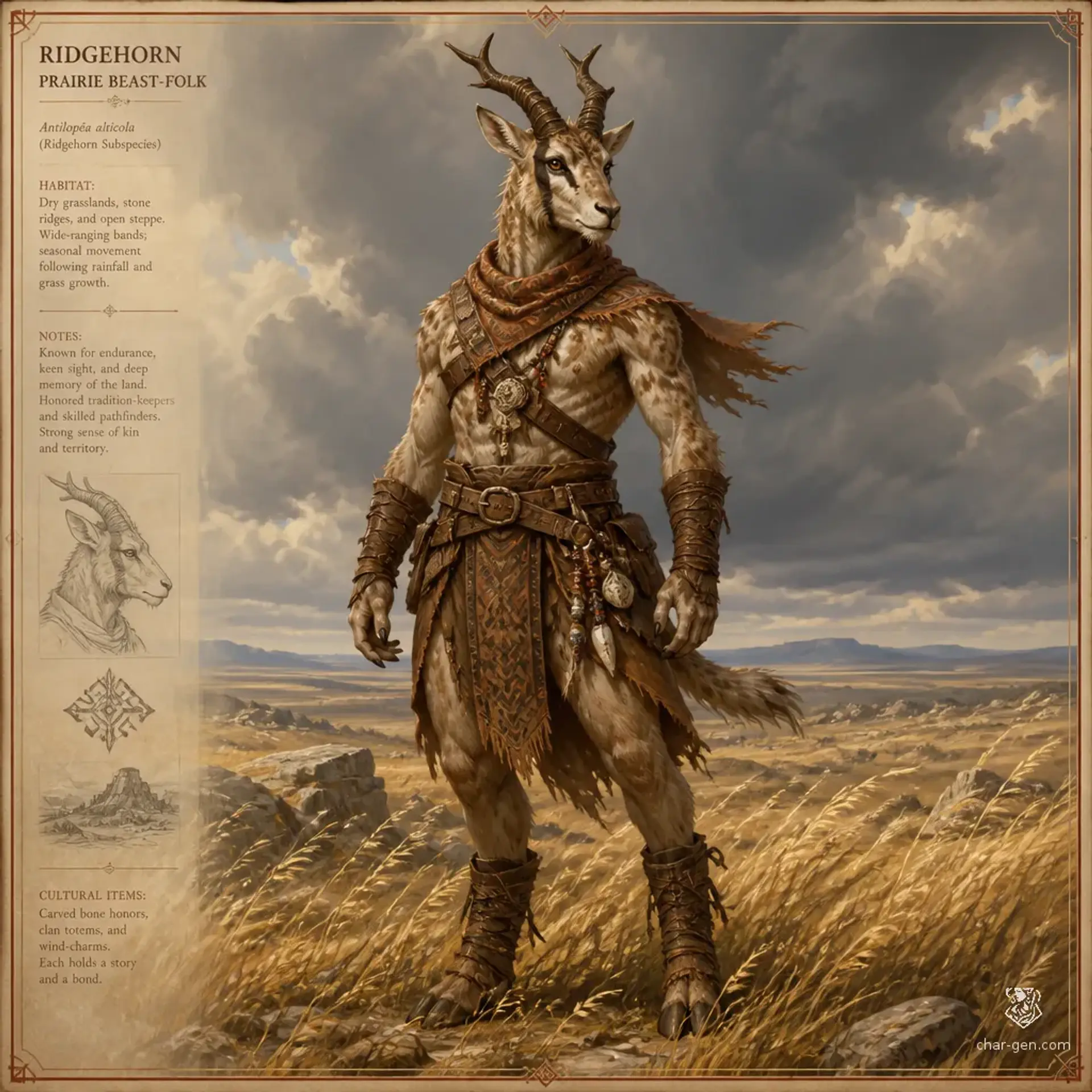
Prairie Striders are the people of the long horizon, beast-folk who read weather in a twitching ear, remember roads by the shape of grass, and measure wealth in water shared. They travel lightly, keep their promises stubbornly, and distrust anyone who mistakes open land for empty land. A Strider adventurer may be a wandering outrider, a displaced herder, a keeper of sacred routes, or simply someone who heard a call from beyond the next ridge and could not refuse it.
Physical Description
Prairie Striders are rangy beast-folk whose forms combine humanlike hands and expressive faces with the features of grazing animals. Their lineages may bear the ears, muzzles, horns, tails, coats, or digitigrade legs of antelope, deer, wild cattle, horses, gazelles, or other plains-dwelling herbivores. Their coats range from pale fawn and dun to chestnut, charcoal, cream, and mottled gray. Many have dark markings around the eyes that reduce glare, while their broad chests and efficient strides let them travel for hours without seeming hurried. Horns and antlers are common but not universal, and are treated as personal features rather than signs of rank.
Society & Culture
Prairie Strider society is organized around households, traveling bands, and seasonal councils. A band may include several related families, adopted companions, craftspeople, and honored outsiders. Decisions are commonly made after a period of silence in which every speaker is expected to consider the practical consequences of their proposal. Story, music, and route-memory are essential arts. Children learn history through songs that encode distances, water sources, warnings, and names of the dead. Hospitality is sacred, but it is not limitless. A guest who wastes water, abuses an animal, or lies about danger may be turned away from the fire without appeal.
Religion & Alignment
Their spirituality is animistic and local. They honor the remembered presence of rivers, storm fronts, old trees, ancestral camps, and particularly dangerous predators. Most households keep a small bundle of tokens representing places that sheltered them. Prairie Striders tend toward neutral alignments, valuing balance, custom, and communal obligation, but individuals may be fiercely benevolent protectors or calculating opportunists.
Homelands & Architecture
Their settlements are rarely fixed in the way outsiders expect. Households travel in compact wagon-camps, hide tents, and collapsible reed shelters, while permanent meeting grounds are marked by stone circles, wind poles, and buried caches. Where they build lasting structures, they favor low, rounded halls sunk into the earth for warmth and protection from storms. Roads matter less than remembered routes, and a skilled guide can navigate by grass color, bird movement, distant ridgelines, and the taste of the wind.
Relationships With Other Peoples
Prairie Striders welcome practical allies and judge strangers by whether they share burdens without being asked. They often trade with settled peoples, though they dislike permanent borders and private claims over water. They respect dwarven-like engineers who build reliable wells, halfling-like travelers who understand hospitality, and goblin-kin communities that make clever use of discarded tools. Relations with wealthy landholders, slavers, and expansionist kingdoms are frequently tense, especially when roads and fences threaten migration routes.
Visual sheet
Turn Prairie Striders into a sheet
A high-res, share-ready sheet you can post or print.