Witches generally live 80 to 110 years. Long service, repeated magical overexertion, and injuries from Abyssal warfare can shorten this span, while elder witches who retire early sometimes live considerably longer.
Darkvision
30 ft.
Habitat
Witches live wherever humanoid societies maintain organized defense, though they are especially common near fortified borders, arcane academies, and regions threatened by Abyssal incursions. Their communities often follow military roads and gather around veteran circles.
magic-users
military
familiars
animal spirits
elite warriors
anti-Abyss
humanoid
powerful
monstrous
SizeVariable, usually Medium
Speed30 ft.
LifespanWitches generally live 80 to 110 years. Long service, repeated magical overexertion, and injuries from Abyssal warfare can shorten this span, while elder witches who retire early sometimes live considerably longer.
Creature TypeHumanoid
Darkvision30 ft.
Every witch is born with the possibility of greatness, but only a rare few awaken the powers that can turn a battle. They march beneath the banners of the world's armies against the Abyssal born, shielded by animal spirits that share their senses, fears, and courage. When a witch calls upon her gift, ears and tail flare into being, and the air itself seems to recognize a predator. Most are disciplined soldiers with modest enhancements. The chosen elite are living weapons, scouts who see through darkness, force-wielders who break formations, and battle-mages who hurl concentrated power across the field.
Physical Description
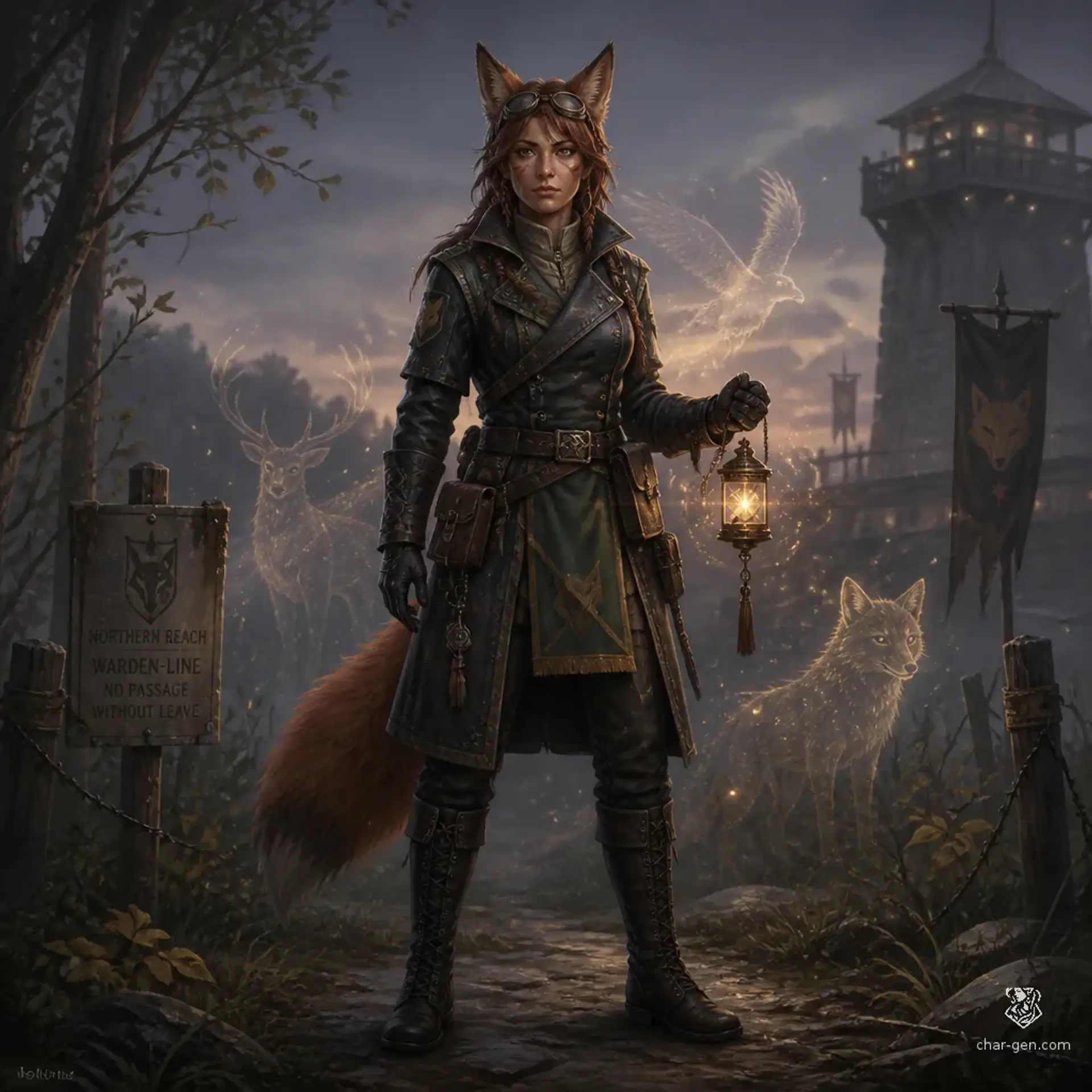
Witches are humanoid women whose appearance varies widely across the peoples from which they arise. They may be slender or broad, pale or dark, youthful-looking or weathered by service. Their most recognizable features are temporary. When a witch activates her magic, animal ears rise from her hair and a tail manifests behind her, each reflecting the nature or temperament of her familiar. A fox-eared witch may display a plume of russet fur, while one bonded to a heron might bear sleek feathers and a narrow, balanced tail. These features are tangible expressions of magic, not disguises or inherited animal traits, and fade when the power is dismissed. Witches often wear reinforced uniforms, charm-thread gloves, protective goggles, and collars or sashes bearing their unit's colors.
Society & Culture
Witch society is organized around circles, military companies, familiar lineages, and veteran households rather than a single nation. Every witch undergoes some form of aptitude examination, though the quality and ethics of those examinations differ dramatically between realms. Basic witchcraft includes bodily enhancement, protective barriers, sharpened reflexes, and the ability to communicate with one's familiar. These talents are useful but not considered extraordinary. A witch who manifests a special ability belongs to the elite from the moment of awakening. Such abilities fall into three recognized lineages. Telekinetic witches move objects, redirect weapons, and manipulate the battlefield. Attack witches condense magical power into destructive energy. Perception witches extend their senses, detect hidden forces, and read disturbances others cannot perceive. Elite witches are trained intensely, often at the cost of privacy and ordinary adulthood. Some embrace their status, while others resent becoming strategic assets before they have learned who they are. The familiar is central to witch culture. It may resemble a living animal, a spirit with animal habits, or an uncanny creature known only in dreams. Familiars advise, scout, comfort, and sometimes challenge their witches. Most witch circles consider mistreatment of a familiar a grave moral offense.
Religion & Alignment
Witches commonly revere guardian saints, war gods, hearth spirits, ancestral protectors, and old powers associated with animals or the wilderness. Their faith tends to emphasize vows, watchfulness, and responsibility rather than doctrine. Most witches lean toward lawful or compassionate ideals because military life rewards discipline and mutual trust, but prolonged war can produce ruthless pragmatists, bitter rebels, or pacifists who believe the armies perpetuate the very conflict they claim to end.
Homelands & Architecture
Witch settlements favor defensible, practical structures: watchtowers joined by covered bridges, barracks arranged around training yards, and homes built with broad roofs that accommodate familiars of many shapes. Important buildings contain quiet chambers for magical practice, shield drills, and the binding of communal oaths. Windows are often set high, not from fear of outsiders, but to give detection specialists unobstructed sightlines.
Relationships With Other Peoples
Witches are often honored as defenders and feared as potential weapons. Monarchs seek to recruit them, commanders seek to control them, and common people may treat them as protectors, omens, or dangerous curiosities. Relations between witches and ordinary soldiers vary by unit. Some companies regard witches as comrades, while others isolate them behind special ranks and privileges. Witches usually form strong bonds with other witches, especially those who have endured the same campaigns, but elite members can also become targets of jealousy or political exploitation. Their attitude toward the Abyssal born is shaped by experience. Some see them as monsters without exception, while others suspect that certain Abyssal creatures possess reason, loyalties, or motives that military doctrine refuses to acknowledge.
Visual sheet
Turn Witches into a sheet
A high-res, share-ready sheet you can post or print.